My family worshipped my sister like a saint — until thanksgiving, when i revealed i’m a multi-millionaire; she threw her wine, my mom had a breakdown, and my dad just whispered, “you lied to us…”
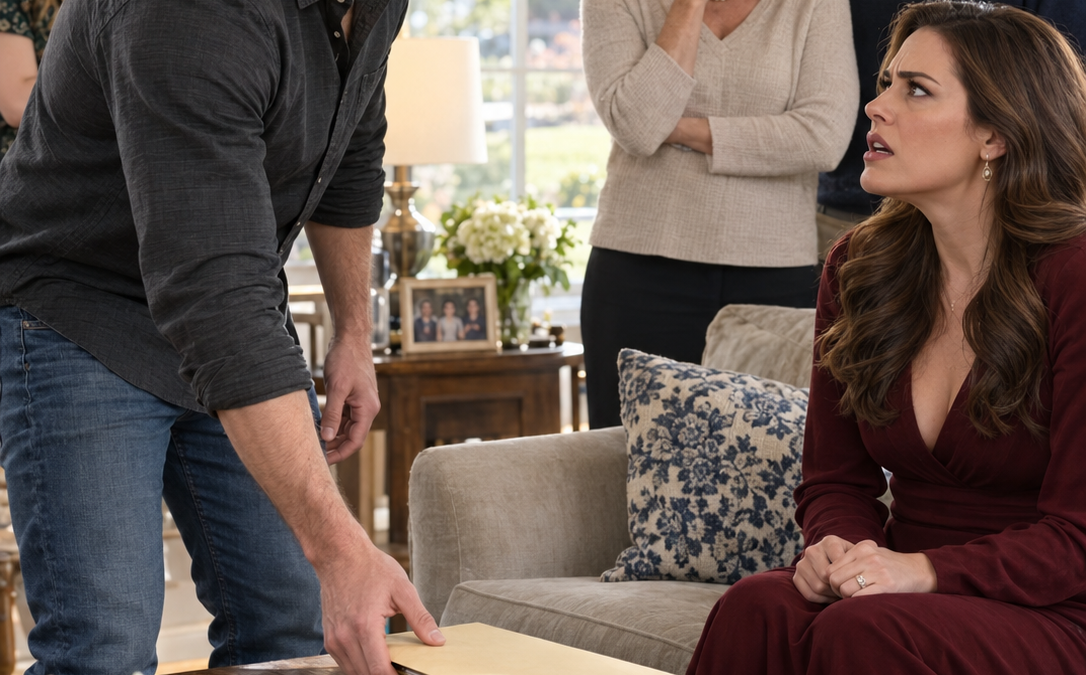
My parents, Mark and Denise, were both teachers. Dad taught high school history. Mom was an elementary school music teacher. They were strict but fair, or at least that was what everyone said.
But that only really applied if your name was Belle.
Belle was the kind of kid who could do no wrong. Straight A’s, ballet recitals, honor societies, all of it. Every refrigerator-magnet-worthy accomplishment belonged to her. And when she walked into a room, my parents practically stood at attention.
She didn’t just bring home report cards. She brought home prophecies.
“Belle is going places.”
“Belle’s going to be a doctor one day.”
“Belle is going to change the world.”
Meanwhile, if I brought home a B-plus in algebra, I got the what happened here? face and a reminder that I needed to try harder.
Don’t get me wrong. I wasn’t a bad kid. I kept to myself, got decent grades, had a few close friends, played guitar, and worked part-time at a bike shop in high school.
But I wasn’t spectacular.
Not in their eyes.
Maybe that would have been fine if they had simply treated us equally. But they didn’t. Not even close.
I remember one Christmas when Belle was fifteen and I was twelve. She opened her gift and found a brand-new laptop, one of those sleek white MacBooks that had just come out.
I opened mine and found a stack of used books about learning to focus.
Dad put his hand on my shoulder and said, “These will help you catch up to your sister.”
That was the year I stopped asking for anything.
Fast-forward to college. Belle went to Northwestern on a full ride—premed, fancy internships, the whole package. I applied to a small state school with a solid computer science program and got in without much fanfare.
When I told my parents I was majoring in computer engineering, my mom blinked and said, “Oh, but Belle’s working in oncology. Isn’t that exciting?”
That was the beginning of my silent years.
I stopped trying to impress them. I stopped sharing updates. I didn’t tell them when I got a research assistantship my junior year. I didn’t tell them when I graduated with honors. I didn’t even tell them when I moved to Seattle and landed my first six-figure job.
They didn’t ask, and I didn’t offer, because deep down, I already knew what they thought of me.
But here’s the thing about being ignored: sometimes it gives you space. Space to work. Space to build. Space to grow without interference.
Over the years, I taught myself everything I could about machine learning, data architecture, and back-end systems. At twenty-five, I joined a startup that got acquired two years later. I took my payout, invested half of it, and built my own company from the ground up.
We specialized in AI optimization for logistics firms. By the time I turned twenty-nine, I had eleven employees, four major clients, and a net worth just shy of $7.2 million.
I lived in a modest condo. Drove a used Lexus. Kept it quiet.
I still called home sometimes. Visited for holidays. Played my part.
“How’s work?” they’d ask.
“It’s going well,” I’d say.
Then they would immediately pivot to Belle’s latest grant or her fiancé, Dr. Daniel Whitman—of course—whom my mom kept referring to as “our future son-in-law” and “an actual neurosurgeon.”
“Isn’t that incredible?”
I think I could have told them I was designing a spaceship and they still would have asked what color scrubs Belle wore.
Now, I need to say this: I didn’t hate my sister. Not at first. She was doing her thing, and I was doing mine.
But over time, things shifted.
She got colder. Smugger. Like she had started believing the press releases our parents had spent her whole life writing about her.
At family gatherings, she’d say things like, “So, Landon, are you still doing computers?”
When I said yes, she’d chuckle and say, “Well, hey, we need tech guys too.”
That tech guy comment really stuck with me, especially because she said it last Thanksgiving while swirling a glass of red wine and telling everyone how Daniel had been invited to speak at a symposium in Geneva.
My parents clapped like seals.
I just nodded, went out to the porch, and stayed there for most of the night.
So this year, I decided to do something different.
I didn’t plan some grand reveal. I didn’t buy a sports car or show up in a tuxedo. I simply told myself I wasn’t going to hide anymore. If someone asked me a question, I’d answer honestly. I’d speak up. I wouldn’t downplay what I’d built.
Not out of spite. Not out of pride.
I was just tired of pretending I was still that twelve-year-old kid sitting beside a pile of self-help books.
Thanksgiving was at my parents’ house again. Belle and Daniel were already there when I arrived. She hugged me like she was greeting a distant relative and said, “Wow, you clean up nice.”
I was wearing a button-up shirt and jeans. Nothing fancy.
Daniel shook my hand and gave me that firm, overcompensating squeeze some men use when they want to remind you who’s taller.
Dinner started off fine. Turkey, mashed potatoes, the usual. Mom had put out name cards this year for the first time ever. Belle was at the head of the table, Daniel beside her. I was seated two spots down, between Uncle Rick and the sideboard.
I didn’t mind.
I’d been seated closer to the garage once.
The first crack came when my cousin Ashley, who was nineteen and majoring in graphic design, asked what I did for work.
“I run a software company,” I said, keeping it casual.
My mom jumped in. “Oh, Landon does IT support, I think.”
I paused. “Not quite. I founded a company that builds AI tools for optimizing freight and logistics. We’ve got contracts with some major shipping firms.”
There was a beat of silence.
Daniel raised an eyebrow. “Like what kind of contracts?”
I smiled. “Last quarter, we onboarded a client with an annual logistics spend of around four hundred million dollars. We helped them reduce waste and increase speed using predictive algorithms. It’s been going well.”
My dad blinked. “You never mentioned that before.”
“I guess no one asked.”
Belle laughed. “That’s cute, Landon. You always did have a vivid imagination.”
Ashley leaned forward. “Wait, are you serious? That sounds insane.”
I pulled out my phone, opened our website, and slid it over to her. “Here. That’s us.”
She scrolled, her eyes widening. “This is legit.”
That was the moment the temperature in the room changed.
It was subtle, but I felt it, like someone had turned the volume down on the Belle Show for the first time in decades.
My mom looked confused. My dad looked stunned. Belle looked annoyed—not threatened yet, but definitely annoyed.
Daniel just poured himself more wine.
Then the questions started coming faster. Uncle Rick asked how many people I employed. Aunt Joan asked which city I lived in now. My parents didn’t say much, but they kept glancing at each other as if they were trying to do the math in their heads.
Then Belle asked the question that finally cracked the mask.
“So, Landon, be honest. How much do you actually make? Like, salary-wise?”
I paused.
I could have laughed it off, dodged it, said something vague.
But I didn’t.
Not this time.
“Last year? About eight hundred and fifty thousand in salary and bonuses. But most of my wealth is in equity.”
Belle stared at me. “Equity?”
I nodded. “Company shares. I own eighty-three percent of the business.”
The silence that followed was loud. You could hear the clink of a fork against porcelain from across the room.
Then my mom said very softly, “You’re joking.”
I shook my head. “Nope.”
And that was when things started to spiral.
Belle leaned back in her chair, crossed her arms, and muttered, “That’s ridiculous.”
My mom’s eyes started to glisten. My dad looked at me like I’d just told him I was moving to Mars. Nobody said anything for another few seconds.
Then Daniel chuckled, slow and condescending.
“Come on, man. If that were true, why are you living in a condo and driving a ten-year-old Lexus?”
I looked him straight in the eye. “Because I don’t need to prove anything.”
Belle snorted. “Wow. So you’ve just been lying to everyone this whole time.”
That was when my mom stood up.
Her voice cracked when she said, “You lied to us, Landon.”
I just stared at her.
What stunned me wasn’t the words. It was how quickly the script had flipped.
Before I could even respond, Belle grabbed her wineglass and threw it.
The room froze.
The glass didn’t shatter. That’s the first thing I remember—how it should have shattered. It should have been one of those movie moments where it hit the floor and exploded into pieces, red wine splashing everywhere like blood at a crime scene.
Instead, it bounced.
It landed sideways on the carpet beside the china cabinet and rolled lazily to a stop while the wine soaked deep into the fibers.
My mother gasped like someone had died.
My father stood abruptly, his chair scraping across the hardwood floor, his jaw twitching as though he wanted to say something but couldn’t figure out where to begin.
And Belle?
She just sat there with her arms crossed, breathing heavily through her nose like some self-righteous dragon that had just torched a village and was waiting for applause.
“I can’t believe this,” my mom finally said, her voice trembling. “Why? Why would you hide something like this from us, Landon?”
That part still gets me.
Hide?
Like I had stashed away nuclear secrets or faked my death for insurance money.
I didn’t even know how to respond at first. My brain kept stuttering over the wine on the floor and the fact that I had just been accused not of doing something wrong, but of being something wrong.
“I wasn’t hiding anything,” I said slowly, keeping my tone calm. “I just stopped trying to impress people who didn’t want to listen.”
Dad scoffed. “That’s not fair.”
I looked at him. “Isn’t it?”
He opened his mouth, closed it again, looked at Belle like she might help him form a sentence, then sat back down heavily.
He didn’t say another word for five straight minutes.
Meanwhile, my mom turned her attention back to me, visibly trying to compose herself. She smoothed the front of her sweater as though that might settle her nerves.
“Landon, sweetheart, you have to understand how this looks. We’re your parents. We should have known. You should have told us.”
“You never asked,” I repeated.
“We assumed you were doing okay. We didn’t expect… this.”
She gestured vaguely toward me as if I were wearing a crown I hadn’t earned.
“It’s just a lot to take in.”
I could feel every eye at the table flicking back and forth between us like a tennis match. Cousin Ashley had gone quiet, her fork suspended halfway to her mouth. Uncle Rick chewed mechanically, pretending to be invisible.
Even Daniel looked like he wasn’t quite sure which team he was supposed to be on.
Belle broke the silence again.
“You always had a chip on your shoulder, Landon. Honestly, this explains so much.”
“Excuse me?”
She leaned forward, her wine-stained lips curling into a smirk. “You’ve always been resentful. I could feel it every time we were in the same room. You didn’t like being the underachiever. And now what? This whole millionaire-tech-genius thing is supposed to make up for it?”
That did it.
I looked her dead in the eye.
“No, Belle. This isn’t about you.”
She laughed. Full-on laughed.
“Oh, please. Of course it is. You had to make a scene. Had to steal the spotlight. Thanksgiving, of all times.”
“I didn’t steal anything,” I said. “You just assumed I’d stay quiet forever.”
And then, as if on cue, my mother placed her hand over Belle’s and said softly, “Belle, honey, maybe we should all just take a breath.”
There it was again.
That quiet gesture of comfort. That subtle alignment of sides.
No one had comforted me when the wine was thrown. No one had asked whether I was okay.
They had instinctively moved to protect her.
Something in me cracked.
I stood slowly and picked up my plate. “I think I’ll eat in the living room.”
My mom blinked. “Don’t be dramatic.”
“I’m not. I’m just done pretending this is normal.”
I walked out without waiting for a response.
The silence that followed me was heavier than the food in my hands.
In the living room, I sat on the couch and started cutting into my turkey. My hands were steady, but my jaw was clenched so tight I could hear it clicking.
A few minutes later, someone sat beside me.
I expected Ashley, or maybe one of my aunts.
It was Daniel.
“Hey,” he said casually.
I didn’t look up. “Hey.”
He cleared his throat. “So… you really built all that yourself?”
I finally turned toward him. “Yeah. Why?”
He gave a lopsided shrug. “Just surprised, that’s all. I always figured Belle was the overachiever in the family.”
“She is. At least that’s the official story.”
He chuckled like we were two guys swapping stories over beers. “Man, she’s going to lose it over this.”
“She already did.”
He tilted his head toward the dining room. “You know she’s in there telling them you probably faked all of it, right? That this is some long game to make her look bad?”
I froze in the middle of a bite.
“Of course she is.”
Daniel leaned back against the couch and stared at the ceiling like he’d seen this movie before.
“You know, I used to think the family adoration was cute. Like, wow, they really love their daughter. But after a while, I realized it’s a cult.”
That caught me off guard.
“A cult?”
He nodded. “You don’t notice it until you’re on the outside. Your mom talks about her like she’s a myth. Your dad quotes her like a political speech. And Belle? She believes it. Every word of it. I’ve never met someone so obsessed with her own reflection.”
I stared at him for a second, trying to decide whether this was a trap.
“Then why are you marrying her?”
He smirked.
“I didn’t say I was.”
That shut me up.
A moment later, he stood and brushed imaginary lint from his slacks. “Just thought you should know what’s being said back there. Good luck.”
Then he walked away, leaving me sitting there with a plate of turkey and a hundred thoughts bouncing around inside my skull like marbles in a tin can.
A few minutes later, Ashley slipped into the room. She perched on the armrest like a bird testing the air.
“Hey,” she said gently. “That was intense.”
“Yeah.”
She hesitated. “I just wanted to say… I think it’s really cool what you’ve built. Like, I had no idea. They never talk about you, you know.”
That part stung more than I expected.
“I know.”
She glanced toward the hallway, then back at me. “Anyway, I just wanted you to hear that someone’s proud of you.”
I nodded, grateful. “Thanks.”
She left a minute later, and I returned to my thoughts.
I kept waiting for someone—anyone—to come in and apologize.
No one did.
Instead, I heard muffled voices from the dining room, low and urgent. Then footsteps. Then the unmistakable sound of my mother crying.
It took everything in me not to roll my eyes, because I knew that cry.
It wasn’t the cry of someone who had been hurt. It was the cry of someone who had been cornered, someone trying to summon sympathy before the narrative slipped out of her control.
Sure enough, not five minutes later, my dad came in.
He didn’t sit. He just stood there awkwardly, like a substitute teacher about to deliver a lecture he hadn’t written.
“Son,” he began, “I think it’s time we had a serious conversation.”
Here we go.
I set my plate on the coffee table and leaned back, arms crossed.
“All right.”
He scratched the back of his neck. “This whole situation… it’s caught us off guard. And I get it. You’ve been working hard. That’s great. Really. But the way this all came out—it was aggressive. Disrespectful. Your mom’s really shaken up.”
“She’s shaken up because I told the truth.”
“No,” he said quickly. “She’s shaken up because it felt like a betrayal.”
I actually laughed.
“A betrayal?”
“You kept this part of your life hidden from us, and then you just dropped it on Thanksgiving like a grenade. That’s not fair, Landon.”
“You know what’s not fair? Spending thirty years being treated like a backup plan while Belle got a standing ovation for breathing.”
His expression hardened. “That’s not true.”
“Yes, it is,” I said, my voice rising. “Every birthday, every graduation, every family dinner—she was the main event, and I was the intermission.”
He looked genuinely stunned, like he had never even considered it before. Like the idea that their golden-child narrative had collateral damage was brand-new information.
“I’m not asking you to rewrite the past,” I said, quieter now. “I’m just asking you to stop acting like I owe you guilt for doing something right.”
He stared at me for a long moment, then gave a tight nod.
“We’ll talk more later.”
And just like that, he turned and walked away.
No apology. No acknowledgment.
Just a retreat.
By the time I went back to the dining room, dessert had been served. Pumpkin pie, whipped cream, coffee.
No one looked at me. Not even Belle.
She sat stiffly, red-eyed and silent, like she was mourning a tragedy no one else could see.
I quietly took my seat and reached for a slice of pie. As I lifted my fork, my mom finally broke the silence.
“Well, I hope you’re happy.”
I paused in the middle of a bite. “Excuse me?”
“You’ve humiliated your sister. You’ve embarrassed this family. And for what? To brag?”
I put the fork down.
There it was.
The final script rewrite. The last pivot.
I was no longer the disappointment.
I was the villain.
And I knew, right then and there, that something fundamental had shifted. Something that couldn’t be undone with polite smiles or obligatory phone calls.
This wasn’t just about Thanksgiving dinner anymore.
This was about the truth finally stepping into the light—and the people who couldn’t bear to see it.
But I wasn’t done yet.
Not even close.
I didn’t sleep that night.
After my mom’s final jab—“I hope you’re happy”—I left the dinner table with a slice of cold pumpkin pie wrapped in a paper towel and drove back to my Airbnb in silence.
No music. No calls.
Just the quiet hum of tires against pavement and the slow burn of betrayal creeping into my chest.
When I got there, I sat on the edge of the bed and stared at that slice of pie as if it might answer the question I couldn’t shake.
How did telling the truth make me the villain?
All my life, I had swallowed slights so small they seemed harmless on the surface. Comments. Glances. Omissions.
But together they had built a wall I wasn’t allowed to climb.
And when I finally stood at the top, looking down from a place I had built with my own hands, I was punished for not staying where they had left me.
I barely slept.
My mind kept replaying my mother’s face when I told her the truth.
Not proud. Not curious. Not surprised.
Hurt.
Like I had stabbed her in the back.
By morning, I had three texts.
One from Ashley:
You okay? Yesterday was… yeah. Let me know if you want to get out of the house today.
One from Daniel:
They’re spinning. Just FYI. Might want to get ahead of it.
And one from my mother:
Call me. We need to talk about what happened.
I ignored all three for an hour while I drank weak coffee and stared at a blank television screen.
Eventually, curiosity got the better of me, and I called my mother.
She picked up on the second ring.
“Landon.”
Her voice was tight. Rehearsed.
“I’m glad you called.”
“You asked me to.”
A pause.
“Well, yes. I wanted to clear the air.”
I waited.
“I’ve been thinking,” she continued, “and I realize things got out of hand yesterday. Emotions were high. But your sister is still processing everything, and so are we. This was a lot to take in.”
“I noticed.”
She ignored my tone.
“We’ve always wanted the best for you. But Belle—she’s had to work so hard to get where she is.”
“Right,” I said. “And I haven’t.”
“You know that’s not what I meant.”
“It’s exactly what you meant, Mom. That’s always what you’ve meant.”
Another pause.
I could hear her breathing through her nose the same way she used to when she was annoyed that I hadn’t emptied the dishwasher.
“I think it would be a good idea,” she finally said, “if you apologized to your sister.”
That actually made me laugh.
“You’re kidding.”
“She’s devastated. You humiliated her in front of the entire family. You ambushed us, Landon.”
I sat there in stunned silence for several seconds.
“You think I planned that?”
“Well…” She hesitated. “It certainly felt like a performance.”
“A performance would have involved fireworks and a saxophone solo. I answered a question. Honestly.”
“You showed off,” she snapped, finally dropping the gentle tone. “You made her feel small on purpose. You embarrassed her.”
I could feel something twisting inside me.
Not rage. Not yet.
A slow, tightening coil of clarity.
“Mom,” I said, keeping my voice low, “you do realize that she threw wine at me, right? That she insulted me? That you accused me of lying? But somehow you’re more upset that people stopped clapping for her for five minutes.”
She didn’t respond.
“I’m not apologizing for being successful,” I said. “And I’m definitely not apologizing for your discomfort.”
She exhaled sharply.
“Then I don’t know what else there is to say.”
“Maybe nothing.”
And I hung up.
That was the moment something snapped in me.
Not out of anger.
Out of resolve.
For the first time, I saw the situation not as a wounded son desperate for approval, but as a man realizing he didn’t owe anyone anything anymore.
But the betrayal didn’t end there.
Two days later, I got a text from Daniel.
Just three words.
Check your email.
I did.
And what I saw made my stomach drop.
Attached was a forwarded thread from Belle’s email. It had been sent to several people in the family—Uncle Rick, Aunt Joan, even Grandma Karen.
The subject line read:
Concerning Landon’s Claims.
The email was several paragraphs long.
I read it three times just to make sure I wasn’t misunderstanding.
In it, Belle calmly and professionally questioned the legitimacy of my company. She said she had done “a little digging” and couldn’t verify any of my client contracts. She implied that I might be involved in shady tech dealings or overstating my success for personal validation.
She even said I might be in a manic phase.
At the end, she included a casual little line:
I say all of this with love. I just think we need to be cautious before we enable any delusions. Landon clearly needs support, not applause.
Support, not applause.
I sat there stunned.
Not because she doubted me.
Because she was trying to make everyone else doubt me too.
And it worked.
Within hours, I received two more emails. One was from Aunt Joan asking whether I had exaggerated my story.
The other was from my mom.
Landon, your sister showed me the emails. I’m not sure what’s going on, but I think you need help. We love you, but we’re worried. Let us in.
That one broke me.
Let us in.
Where had they been when I was a teenager building code in my bedroom because I had no one to talk to? Where were they when I got my first patent approved, or when I landed my first client?
Let us in.
They had never even knocked.
I called Daniel.
He picked up on the first ring.
“I’m assuming you saw it.”
“Yeah,” I said, still trying to process it. “What is wrong with her?”
He sighed. “You want the truth?”
“Always.”
“She’s always been like this. But this? This is new. This is next level.”
“She’s trying to destroy my credibility.”
“She’s scared. The crown slipped, and she’s grabbing at anything she can to keep it.”
I paused.
“Why did you send it to me?”
“Because you deserve to know. And because I think I might be done with all this.”
There was something final in his voice.
“You’re leaving her?”
“I don’t know yet. But I see it now. The manipulation. The control. The way your parents feed it.”
We were quiet for a while.
Then he said, “You should come back. Say nothing. Just show up.”
“To what? Let them keep painting me as the delusional brother?”
“No. To show them you’re not going anywhere. To remind them you don’t need their approval.”
I didn’t respond.
But the idea planted itself like a seed.
The next day, I went back to my parents’ house.
I didn’t call ahead. I simply knocked on the door around three in the afternoon, wearing jeans and a black coat, with a thick folder tucked under my arm.
My mom answered, surprised.
“Landon. Are you all right?”
“I’d like to talk,” I said, stepping inside.
She hesitated, then nodded. “Of course.”
Dad was in the living room. Belle was sitting on the couch with a cup of tea and a smug expression that faltered the moment she noticed the folder in my hand.
“Good,” she said, setting down her cup. “I’m glad you came. We really need to discuss—”
“No,” I interrupted. “I need to say something.”
They all froze.
I sat across from them and placed the folder on the table.
Slowly, deliberately, I opened it and began laying out documents.
Company registration.
Bank statements.
A redacted client contract.
The most recent valuation letter from our accountant.
Shareholder breakdowns.
Tax filings.
Photos from the last investor meeting.
Then I opened my laptop and played a short, two-minute clip from a conference I had spoken at a few months earlier in San Diego.
There I was, onstage, fielding questions about neural-network scalability.
When the clip ended, I looked at them.
“I didn’t want to do this,” I said. “I didn’t want to prove anything. But since someone decided to smear me behind my back, I figured it was time to bring receipts.”
My dad’s face was unreadable.
My mom looked like someone had unplugged her brain.
And Belle’s expression twisted into something bitter and unfamiliar.
“I never meant to smear you,” she said, her voice trembling.
“You accused me of being mentally unstable,” I said. “You sent emails to the entire family saying I fabricated everything.”
“I was just worried,” she snapped. “You ambushed us. You lied.”
“I never lied,” I said, louder now. “I just stopped telling you things because you didn’t care. And now that I’ve built something real, something bigger than anything you imagined for me, you’re trying to tear it down because it doesn’t fit the story you wrote.”
“You’re twisting this,” she said, getting to her feet. “You think you’re so perfect? You think just because you made some money—”
“It’s not about money,” I interrupted. “It’s about respect. About finally being seen. And you—all of you—can’t handle the fact that I did it without you.”
My mom stepped forward as though she intended to calm things down, but I raised a hand.
“No. I’m not here for a group hug. I’m here to set the record straight.”
I packed the documents back into the folder, slid my laptop into my bag, and stood.
“For the last time,” I said, looking Belle dead in the eye, “I’m not your shadow. And I never was.”
Then I walked out.
For the first time in my life, I didn’t feel like I owed anyone an explanation.
I wasn’t running away from the family I had grown up with.
I was walking toward the man I had become.
I thought walking out of that house would feel like closure. I thought I would finally get to slam the door on decades of second place and sit with the satisfaction of having stood my ground.
But the truth was, I didn’t feel victorious.
I felt hollow.
Like I had just lit a match in a room full of childhood memories and watched them all go up in smoke.
The silence that followed my exit was deafening. No one chased after me. No one called my name.
No apology.
No acknowledgment.
Just the sound of the door quietly closing behind me as I stepped into the crisp Indiana air and walked to my car.
When I pulled out of the driveway, I didn’t know where I was going.
I just drove.
I drove through the neighborhoods I used to bike through as a kid. Past the library where I had first taught myself to code on their ancient, humming computers. Down the street where Belle once won a community science fair for building a vinegar-and-baking-soda volcano our mom talked about for six straight months.
Past the diner where we used to get pancakes after Sunday church, where Belle would get an extra scoop of whipped cream and I’d be told, “You can have more once you finish what’s on your plate.”
Every landmark felt tainted.
It was like walking through a museum curated by someone who had written me out of the script entirely.
Eventually, I stopped at a park. It was empty except for a squirrel tearing into a discarded sandwich wrapper near a bench.
I sat down and let the wind bite through my coat.
I tried to think.
But there was nothing left to think about.
Only to feel.
And I felt tired.
Not just physically tired, but exhausted somewhere deep in the bone.
I had fought so hard to become someone worth noticing. And in the moment when it finally mattered, when I pulled back the curtain and showed them what I had built, they still didn’t see me.
They saw a threat to their story.
And stories—especially family stories—don’t change easily.
It would have been easier if they had simply stayed quiet.
But they didn’t.
Because the next morning, it got worse.
There was a new email from my mom.
Subject line:
Landon, We Need to Discuss Boundaries.
I opened it with shaking hands.
I don’t know why I thought, even for a second, that it might be an olive branch.
It wasn’t.
She wrote that she and my father had “talked it over” and decided my presence at Christmas might be “too disruptive this year.” My outburst, she said, had created tension in the family. Everyone was still recovering emotionally.
Maybe some space would be healthier for everyone.
Space.
Like I was radioactive.
Like I hadn’t just spent the last decade sacrificing sleep and sanity to build something meaningful while they were too busy clapping for someone else’s success to even ask how I was doing.
I closed the email without responding.
Then I shut my laptop.
Then I sat there in the Airbnb kitchen with my hands pressed against my face, and for the first time in years, I cried.
Not big sobs. Not cinematic tears pouring down my face.
Just quiet, tight-chested grief.
The kind that leaks out in slow drops and tastes like mourning.
Because that was what it was.
I wasn’t mourning a person.
I was mourning the idea of a family. One I had spent years pretending I was part of. One that had never really been mine.
And it hit me in that moment that I had spent my whole life trying to earn their respect.
Maybe I never would.
I stayed in Indiana longer than I had planned. I originally booked the Airbnb for four days.
I extended it to ten.
I didn’t go out. Didn’t see friends. Didn’t answer most texts.
Ashley checked in a few times, and I sent her polite responses. Daniel texted once more—just a thumbs-up emoji and the words:
Saw the fallout. Good for you.
I didn’t reply.
I wasn’t angry anymore.
I was just done.
Emotionally fried.
And more than that, I was ashamed.
Not of who I was.
Of how long I had let them decide who I was supposed to be.
I ordered food in. Binged mindless shows I had already seen. Tried to read a book on leadership and couldn’t absorb a page.
I told myself I was relaxing.
I wasn’t.
I was grieving quietly, alone.
When I finally gathered the strength to check my phone again, I saw what I had missed.
A post from Belle on Facebook.
A smiling selfie with the caption:
Grateful for family this Thanksgiving. And for the strength to rise above toxic people, even when they share your DNA.
I stared at it for a long time.
The comments were exactly what you’d expect.
You’re so strong, Belle.
Ignore the haters.
You shine no matter what.
They’re just jealous of your success.
Family isn’t always blood. Stay close to the ones who support you.
I didn’t respond.
I didn’t need to.
That post told me everything I needed to know.
She wasn’t just rewriting the narrative.
She was weaponizing it.
I was now the toxic brother. The ungrateful one. The liar. The dramatic embarrassment who had tried to overshadow her at Thanksgiving.
And everyone was buying it—or at least everyone who mattered inside that insular little family bubble.
It was almost funny.
All this time, I had worked in silence. Built a life. Made something real.
And in one weekend, my own family decided reality was less believable than Belle’s version of events.
Worse, they preferred hers.
It wasn’t simply that they didn’t believe me.
They wanted not to believe me.
Because if I was telling the truth, then what did that say about them?
It was easier to cast me as the unstable one. The one with the outburst. The black sheep.
That way, they didn’t have to face the years of neglect, the favoritism, the quiet cruelty they had sworn was simply normal parenting.
I could have fought back.
I had proof. I had money. I had a bigger platform than they realized.
But I didn’t.
Because in that moment, I realized something I had been too hurt to see before.
You don’t win by proving them wrong.
You win by walking away.
And so that was what I started doing.
Quietly.
One step at a time.
I canceled the auto-renewal on the family cloud photo account I had been paying for. I unfollowed Belle on every platform. I turned off email notifications from my mother.
I blocked my father’s number—not out of rage, but because I knew he wouldn’t call anyway, and I didn’t want to keep looking at the silence.
Then I opened a spreadsheet and started making a plan.
Not a revenge plan.
Not yet.
A life plan.
One that didn’t orbit them.
One where the center of my universe wasn’t the hope of getting invited to Christmas or the pathetic thrill of hearing a halfhearted, We’re proud of you.
No.
I was done waiting for their applause.
And as I stared at the blinking cursor in that spreadsheet, I realized something that sent a chill down my spine.
They had no idea what I was really capable of.
They thought the success I had shared was the climax.
It wasn’t.
It was just the prologue.
I left Indiana in the middle of a snowstorm.
Not metaphorically.
An actual, heavy, blizzard-style whiteout swept across the state two days before my Airbnb reservation ended. It was like the universe wanted to put a final period on my time there, to make things as cold and brutal on the outside as they had been on the inside.
I packed my bags, loaded my laptop and files into the back seat, and started the long drive to Chicago, where my flight home waited.
The roads were slick. The radio was low.
I drove mostly in silence.
But somewhere inside that silence, something strange happened.
I wasn’t angry anymore.
I wasn’t hurt.
I wasn’t rehearsing speeches in my head or imagining some perfect gotcha moment that would turn the family tide in my favor.
I felt light.
Like I had finally stopped dragging a wagon full of bricks behind me.
Bricks labeled:
Prove yourself.
Make them proud.
Maybe this time they’ll listen.
It was over.
Not because I had lost.
Because I had finally stopped playing.
And that was when the rise truly began.
Not with some dramatic viral post or elaborate revenge scheme, but with the peace that came from letting go.
The silence wasn’t empty anymore.
It was full of space.
My space.
And I was going to build something new inside it.
Back in Seattle, my condo felt like stepping into an alternate life, like I had passed through a mirror and returned to a world that hadn’t changed while I had completely transformed.
The plants on my windowsill were still alive.
Barely.
My neighbor’s cat still patrolled the hallway like he paid rent. My startup Slack channel still pinged with deadlines, bugs, and inside jokes.
But I wasn’t the same Landon who had left for Indiana.
Not anymore.
The first thing I did was schedule an all-hands meeting with my team.
I logged in, turned on my camera, and watched all the familiar faces pop onto the screen. Julia from marketing. Aaron from sales. Raj from product. Three of the original developers who had helped me build the backbone of the company from scratch.
When everyone settled in and waited for me to speak, I didn’t give them the usual weekly update.
I gave them a story.
I told them about Thanksgiving.
Without naming names, I told them what it had been like to be treated as an afterthought my whole life. I told them about building in silence. About the moment I finally spoke the truth.
And about what happened next.
Then I said, “I want this company to be a place where no one ever has to shrink themselves to survive. Where no one ever feels like their story has to be watered down so somebody else can feel bigger.”
No one said anything at first.
Then Julia smiled.
“Well, damn. That’s the best Monday kickoff I’ve ever heard.”
Raj started clapping.
Aaron typed into the chat:
Landon. Main-character energy.
That meeting changed the tone of everything.
Over the next few months, we didn’t just grow.
We exploded.
We closed two new clients in Q1, both through referrals from connections who had seen our work online. One of our use-case demo videos went semi-viral on LinkedIn, and venture funds started paying attention.
I did two podcast interviews and one TED-style conference talk.
For the first time, I didn’t downplay our success.
I didn’t pretend we were “just a small shop,” because we weren’t.
We were making waves in one of the most competitive tech spaces in the country.
And I was the one at the helm.
With growth came money.
More money than I had ever really known what to do with.
I upgraded my condo—not to a mansion, but to a sleek, modern townhouse with a rooftop garden and enough space for a recording studio.
I started working with a personal trainer three times a week.
I hired a financial adviser, not because I was afraid of losing the money, but because I wanted to learn how to move it. How to make it work for causes I cared about.
And I began investing.
Quietly.
Strategically.
Not just in tech.
In people.
I reached out to small-business owners with good ideas but no resources. Artists who needed grants. Coders from underrepresented communities who only needed someone to believe in them.
I created a micro-investment fund and called it First Shadow.
The name meant nothing to anyone else.
It meant everything to me.
Because I had lived in the shadow.
Now I was giving other people light.
A few weeks after the launch, I received an email from Ashley.
The subject line read:
Uh, have you seen this?
Attached was a screenshot from a Facebook thread.
A cousin had posted about exciting career opportunities in the tech industry, and someone in the comments wrote:
You should talk to Landon. I heard he’s doing something huge out in Seattle.
Underneath it was a comment from my mother.
Let’s not exaggerate. He’s always been a bit theatrical.
That one stung.
Not because it shocked me.
Because it didn’t.
That was who she would always be.
Who all of them would always be.
And I wasn’t going to change them.
But I didn’t have to anymore.
Because for every one of them, there were ten other people now.
People who saw me.
Respected me.
Believed in me.
I was building something bigger than a company.
Bigger than revenge.
I was building a legacy.
The next milestone came six months after Thanksgiving.
One of the top five logistics firms in the country signed a seven-figure deal with us.
I flew out personally to finalize it.
At the signing table, their CEO looked at me and said, “I have to admit, when your name came across my desk, I thought you were older.”
“I get that a lot.”
“What you’ve built is impressive,” she added. “And fast. Where did you learn to do all this?”
I smiled.
“In a quiet house,” I said, “with a lot of time to think.”
She didn’t ask anything else.
She simply nodded.
Sometimes the people who get you don’t need the full story.
A week later, I got a call from Daniel.
We hadn’t spoken in months.
I answered, unsure what I was going to hear.
“Hey,” he said. “We never really finished our last conversation.”
I said nothing, letting the silence carry the weight.
“She knows,” he continued. “She knows I’m done.”
“You left?”
“Packed up and moved out three weeks ago. She’s still telling people I’m just taking space to ‘find myself,’ but I filed the paperwork already.”
I didn’t know what to say.
He let out a breath.
“She’s unraveling, Landon. Not just about the relationship. About you.”
“What do you mean?”
“She keeps bringing you up. Asking why you get attention now. Why everyone’s talking about you. It’s eating her alive.”
“That’s not what I wanted,” I said quietly.
“I know,” he replied. “But it’s what happened.”
I didn’t ask how the rest of the family was taking the breakup.
I didn’t care.
I only asked one thing.
“Do you regret it?”
He paused.
“No,” he said. “Not anymore.”
It was around that time that I started getting media attention.
Nothing huge.
Just mid-tier tech blogs and a few industry newsletters.
But one story really caught fire.
The headline was:
The Quiet Millionaire Who Built a Logistics Empire Without a Whiff of Silicon Valley.
It told the story of a soft-spoken founder who had built a multimillion-dollar AI company without venture capital, without legacy family support, and without the noise of constant self-promotion.
It talked about First Shadow. About the way I was investing in other people. About my belief in building something real instead of merely building something loud.
The story went viral in a way I wasn’t expecting.
New followers. New connections. Invitations to panels, podcasts, summits.
People loved the idea of a quiet disruptor.
And while I appreciated the attention, I didn’t need it.
Because I knew the truth.
I hadn’t done any of this for the spotlight.
I had done it to stop shrinking.
And now there was no going back.
Of all the ways the story could have ended, I never expected a wedding invitation to pull me back in.
It arrived in the mail one morning, tucked between a property-tax notice and a flyer advertising luxury tile installation.
I didn’t recognize the envelope at first.
Gold trim.
Heavy cardstock.
My name written in a perfectly rehearsed script that tried too hard to look handwritten.
Inside was a save-the-date card for Belle and Daniel’s wedding.
June 14.
4:00 p.m.
Heritage Ridge Country Club.
I sat there in my kitchen, my coffee still steaming beside me, and stared at it.
She was actually doing it.
After everything.
After the Thanksgiving wine throwing. The smear emails. The quiet character assassination. The breakup Daniel himself had told me about.
She was pretending none of it had happened.
Then I looked more closely at the card.
It wasn’t just a standard wedding invitation.
It was a showcase.
There was a full insert listing the venue, dress code, registry links, charity donation options, and even a QR code that opened a digital memory book containing their engagement story.
Which, for the record, was a lie.
I remembered the real story. She had told it over Thanksgiving dinner the year before, and it hadn’t involved any of the poetic lines she had now written into her fairy tale.
But what caught my eye most of all was a list of featured speakers.
Three names.
One was her college mentor.
One was a close friend from medical school.
And the third was Mark Thorne—Father of the Bride, Toastmaster.
No mention of me.
Not as a guest speaker. Not as a groomsman.
Just my name on the invitation, tucked in with 120 other guests.
And knowing Belle, that meant I was a seat filler.
A prop.
Another pair of clapping hands in the audience while she played the starring role in her carefully curated Cinderella moment.
But here’s what Belle didn’t know.
I had already started my revenge.
Not the screaming kind.
Not the petty, obvious kind.
The kind that moves quietly in the background, like a chess player sacrificing pawns for position.
And by the time the wedding came around, checkmate would already be in motion.
It started with a question.
Not How do I get revenge?
But Why?
What did I actually want?
A dramatic confrontation?
A public takedown?
No.
What I wanted was simpler than that.
I wanted truth.
I wanted her to feel, in front of every person who had ever praised her, the same sting I had felt sitting at Thanksgiving year after year while my own accomplishments were treated like background noise.
I wanted her perfect image to crack.
Not through force.
Through reality.
And reality, as it turned out, was on my side.
Because Daniel had told me something months earlier that I had never forgotten.
She’s unraveling.
So I started looking.
Not stalking.
Just observing.
Every public post. Every tagged photo. Every professional profile. Every small inconsistency between what she said and what was actually there.
It didn’t take long before I found one.
A discrepancy in her medical-board certification.
Now, let me be clear: I wasn’t digging through private files.
This was all public information.
Her LinkedIn profile claimed she was board-certified in neurology.
The official state licensing board, however, showed that she was still pending completion of her final specialization hours.
In other words, she had jumped the gun.
And in the medical world, that was a big deal.
Especially when your wedding was being framed as a networking gala with half the guest list made up of hospital executives and donors.
It wasn’t fraud.
Not legally.
But it was definitely a lie.
A calculated one.
And it gave me exactly the thread I needed to start pulling.
I reached out to a friend of mine named Clare, an investigative podcast host I had met during one of my TED-style events in Portland.
Clare had built a reputation for peeling back polished veneers and exposing the truth underneath. Her last exposé had gone viral after she uncovered a nonprofit’s misuse of grant funding.
I told her about Belle.
About the disparity in her credentials.
About the way she carefully sculpted her image for maximum applause.
Clare was intrigued, but cautious.
“She’s not running for office,” she said. “Why should people care?”
“Because this isn’t about one lie,” I told her. “It’s about how many people believe it.”
I sent her the engagement story. The fabricated speeches. Screenshots from Thanksgiving. The Facebook post calling me toxic after I exposed the truth.
I didn’t beg.
I didn’t exaggerate.
I just let the facts speak.
Clare agreed to feature Belle in a short-form series about professional pretenders—people who constructed elaborate public facades while quietly bending the truth behind the scenes.
Nothing illegal.
Just curated deception.
It would run the week before the wedding.
I didn’t give them the wedding date.
They found it on their own.
Meanwhile, I played my part.
I RSVP’d yes.
I bought a tailored suit. Subtle. Sharp. Charcoal gray.
I didn’t ask to bring a plus-one, but I knew I wouldn’t be coming alone because, at the last minute, I invited Ashley.
She had stayed quiet throughout all of this. Supportive, but cautious.
I didn’t blame her.
It’s hard to choose sides when one side is still the family you have to see at Christmas.
But when I told her what I was planning—not the specifics, just the broad strokes—she said one word.
“I’m in.”
She booked a flight that night.
The wedding day arrived with perfect weather.
Belle wouldn’t have allowed anything less.
The venue looked like something out of a bridal magazine. Strings of fairy lights. Glass chandeliers. Floral arches.
Guests arrived in tailored suits and floor-length dresses, champagne flutes already half-empty before the ceremony even began.
I kept a low profile.
I mingled politely. Shook hands. Complimented centerpieces.
But there was a different weight to my silence now.
People didn’t dismiss me.
They leaned closer.
Asked what I had been working on.
Made quiet jokes about the “family genius” finally coming out of hiding.
The podcast episode had dropped that morning.
By three in the afternoon, it had already hit seventy thousand downloads.
It wasn’t a takedown.
Just uncomfortable truth.
The episode was titled:
The Sisterhood Effect: When Applause Becomes Armor.
I didn’t need to quote it.
Everyone already was.
Snippets floated through the crowd in hushed murmurs.
“Did you know she’s not actually board-certified yet?”
“The podcast said her engagement story was made up.”
“I heard her brother runs some massive company.”
“Why isn’t he in the wedding party?”
“There’s something weird going on with that family.”
And Belle?
She smiled through all of it.
But I saw the strain.
The micro-tightening around her eyes. The way her posture stiffened with every toast. The way her laugh came half a second too loud whenever somebody mentioned the word podcast.
She knew.
But she couldn’t react.
Not without proving the story right.
And that was the beauty of it.
The revenge wasn’t in destroying her.
It was in making her live inside the truth she had tried to bury.
Every speech. Every photo. Every compliment.
All of it was now filtered through a lens she couldn’t control.
During dinner, I mostly kept to myself until Belle finally approached.
She waited until Daniel stepped away from the table, then slid into the seat across from me with a glass of wine in her hand.
The same vintage she had thrown at me the previous Thanksgiving.
“I know what you did,” she said under her breath, her smile frozen in place.
I didn’t flinch.
“Do you?”
She leaned closer. “You couldn’t just let me have this.”
“I did let you have it,” I said quietly. “You just couldn’t hold on to it.”
Her smile cracked.
Just a little.
“You think this makes you better than me?”
“No,” I said. “I know it does.”
She blinked, stunned by the calmness of it.
Then, like a true actress, she straightened and took a sip of wine.
“I should have cut you off years ago.”
“You never had that power,” I said. “And now everyone knows it.”
She didn’t reply.
She just stood and walked away, her heels clicking like gunshots across the polished floor.
Ashley nudged me from beside her.
“You okay?” she whispered.
I nodded.
Because for the first time in my life, I was.
Not because I had gotten revenge.
Because I had finally stopped waiting for the applause.
I wasn’t the side character anymore.
I was the author.
And the story?
It was just getting good.
The wedding ended the way most weddings do.
Laughter echoing beneath fairy lights. Cake smeared across plates. A tired DJ playing 2000s throwbacks for a slowly thinning crowd.
But beneath the gloss and sparkle, I could feel tension buzzing like faulty wiring behind drywall.
No one said it aloud.
But everyone knew something had shifted.
The next morning, my phone lit up with three missed calls from my mother, two from Dad, and one text from Belle.
You win. I hope it was worth it.
I didn’t respond.
Because it wasn’t about winning.
It never was.
It was about telling the truth in a place where the truth had never been welcome.
And finally, it was out.
Irreversible.
Standing in the daylight as if it had belonged there all along.
The podcast episode passed three hundred thousand plays by the end of the week.
Clare messaged me:
You underestimated how many people needed to hear this story.
I hadn’t done any interviews.
No post-wedding statements.
No cryptic social-media posts or subtweets.
I didn’t need to.
The silence said enough.
What happened next came slowly.
Then all at once.
Belle’s hospital board requested a formal review of her credentials.
Standard protocol, but humiliating for someone who had branded herself as a rising star in her department.
She wasn’t fired.
But the press made it clear she would need to clarify her “miscommunication.”
Her wedding photos were stunning.
None of the captions said what people were really thinking.
And Daniel?
He didn’t move back in.
Three weeks after the wedding, Ashley sent me a screenshot of his new LinkedIn job update.
Relocated to Portland. Available for consulting.
No mention of Belle.
My parents sent me a long email around that time.
A clumsy, overwritten olive branch.
No apology.
Not really.
Just vague lines like:
We were shocked by how things unfolded.
We still love you deeply even if we don’t always see eye to eye.
Family should stick together even when it’s hard.
I read it three times.
Then I archived it.
Because love without respect is just a softer form of control.
I wasn’t angry.
I wasn’t bitter.
I was simply done.
Life, meanwhile, kept moving.
My company hit another funding milestone. We opened an office in Austin.
I started mentoring a group of young founders—kids who reminded me of myself at nineteen, full of ideas with nowhere to put them.
I gave them space.
Tools.
The one thing I had never really had growing up.
Validation.
Sometimes they asked about my story.
I told them just enough to let them know where I came from, but never so much that it defined me.
Because that was the final part of the revenge.
Not the takedown.
Not the podcast.
Not the ruined fairy-tale wedding.
This.
The peace.
The kind that doesn’t need a spotlight.
The kind that doesn’t explain itself.
The kind that quietly builds a better life while the people who once dismissed you scramble to rewrite their roles in your success.
And one morning, almost a year after that unforgettable Thanksgiving, I received a package at my office.
No return address.
Inside was a hardcover family photo album, one of the old ones from the shelves in our living room.
A note had been taped to the inside cover.
Just six words in my mother’s handwriting:
We should have seen you sooner.
I didn’t cry.
I didn’t call.
I didn’t frame it, and I didn’t throw it away.
I simply placed it on the bottom shelf of my bookcase, where it would stay silent, heavy, untouched, like a chapter I had already finished.
Because my story wasn’t about them anymore.
It was about me.
And I was finally writing it in my own…








