My family only invited me to the reunion so they could brag about how my cousin just landed a “life-changing job,” everyone kept hyping him up like he was the next big thing, my aunt even whispered, “he’ll be a millionaire before thirty… unlike some people,” i just smiled and waited; when they finally asked what i’d been up to, i said, “not much, i just signed his paycheck last week,” the room went quiet, then my grandfather stood up and said—
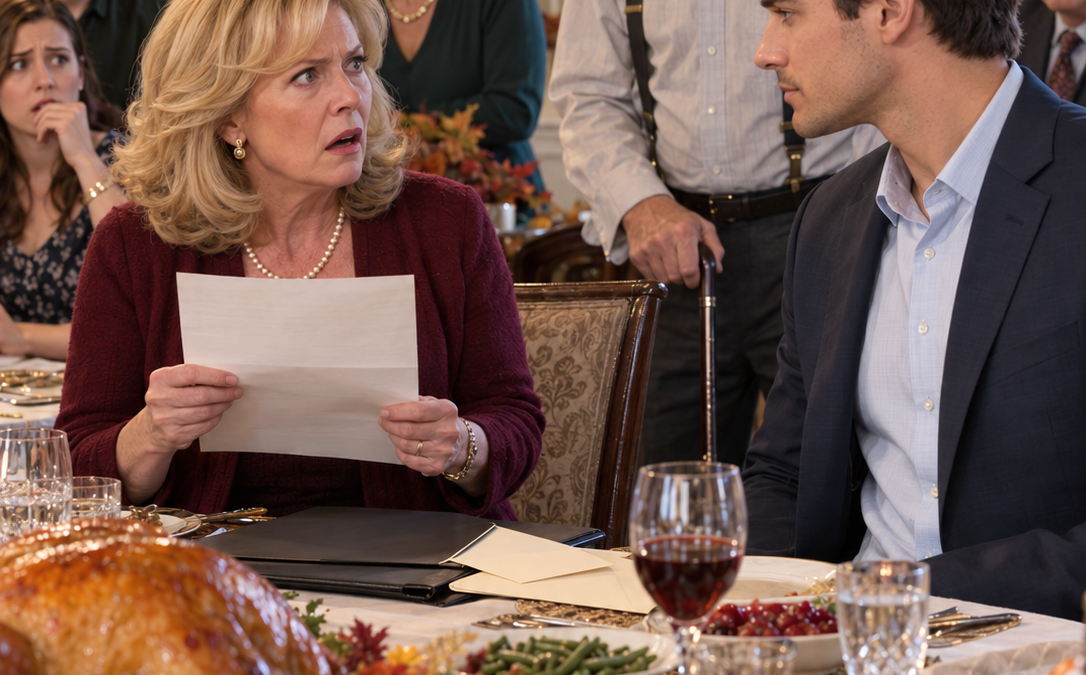
Let me tell you about Cousin Ryan. He’s 26, blond, big smile, permanent varsity-jacket energy. He’s the golden boy. Straight A’s in high school, business degree, summer internships at big firms. Your classic LinkedIn warrior. The family loved him.
And apparently, that afternoon was his coronation.
The second I walked in, Aunt Diane grabbed me by the wrist. Literally grabbed me.
“Josh! Oh my God, you’re here. Come say hi to Ryan. He just got hired at Nexra.”
Nexra.
I knew the name. It was a fintech startup that had recently completed a funding round, earned some flashy headlines, and picked up a big valuation. What Aunt Diane didn’t know was that Nexra was also one of the companies my firm now technically owned—not directly, but under our new parent company’s umbrella.
I blinked.
“Oh, wow,” I said with a smile. “That’s exciting.”
She leaned closer as though we were sharing gossip, except her voice carried loudly enough for the next ZIP code to hear.
“He’s going to be a millionaire before he’s 30. He’s just so brilliant.”
Then came the kicker.
“Unlike some people.”
She let those last three words dangle there like a cheap insult she assumed I wouldn’t catch.
I smiled again. Not because I wasn’t annoyed, but because moments like that were exactly why I’d come.
Ryan was standing at the center of the backyard surrounded by lawn chairs, lemonade, and admiration. He was talking about stock options like he’d personally invented them while a small crowd of cousins and uncles nodded along like disciples.
“It’s pre-IPO, so yeah, there’s risk,” he was saying. “But I’m not worried. We’re scaling fast. The CEO knows me by name.”
I stood at the edge of the group with my hands in my pockets, just observing.
Then Grandma asked the inevitable question.
“So, Josh, honey, what are you up to these days?”
The volume around us dipped. Not complete silence, but enough that I felt a dozen heads tilt toward me like sunflowers chasing the light.
I considered giving my usual vague answer.
Oh, you know. Work’s been good. Busy.
But that day felt different.
I wasn’t there to brag. I wasn’t there to perform. I was there to remind them—and maybe myself—that I existed outside the version of me they’d constructed in their heads.
“Not much,” I said, taking a sip of my drink. “I just signed Ryan’s paycheck last week.”
Silence.
Actual silence.
I don’t think I’d ever heard that many mouths close at once.
Even Ryan blinked like his brain couldn’t quite process what he’d heard. Aunt Diane’s smile twitched.
And that’s when Grandpa, who was 82, hard of hearing, and usually half asleep at these things, pushed himself up from his lawn chair, leaned on his cane, and said, “Wait a damn minute.”
But before I tell you what he said next, I need to rewind, because that moment wasn’t just some witty comeback.
It had been four years in the making.
And it started with a college dropout, a crappy apartment above a laundromat, and a family convinced I was wasting my life.
When I left college at 21, everyone thought I’d lost my mind. My dad stopped talking to me for a month. My mom cried. Aunt Diane told everyone I’d probably end up delivering food or starting a band.
I didn’t care.
I had an idea, and I wanted to build something. Not for clout. Not for applause. Just for me.
But that decision cost me a lot more than their approval.
Standing in that backyard years later, watching their smug smiles fade into confusion, I remembered everything they’d said along the way. I remembered the birthday I wasn’t invited to because they assumed I’d be “too busy with my startup thing.” I remembered the Thanksgiving when Ryan joked that I was “technically unemployed,” and everybody laughed.
Even my parents.
I remembered every ignored text, every eye roll, every forced smile when I tried to explain what I was building and got nothing but blank stares in return.
So no, my answer wasn’t about flexing.
It was about reclaiming space.
And as Grandpa adjusted his hearing aid and looked around at the stunned faces surrounding him, I realized the best part hadn’t even happened yet.
Because they hadn’t heard the full story.
Not even close.
Grandpa’s voice cut through the silence like a rusty saw.
“Wait a damn minute. You signed his paycheck?”
He squinted at me, then over at Ryan.
“What does that even mean?”
Every eye turned back toward me, and suddenly I could feel the weight of the moment pressing against my chest like a sandbag. My hand tightened around my drink.
I hadn’t meant to say it quite like that. It had just slipped out.
But now that the words were hanging in the air, there was no taking them back.
Ryan gave a short, awkward laugh.
“Ha-ha. Right, Josh? That’s a good one.”
He glanced around, hoping somebody would join in.
Nobody did.
I smiled gently.
“Yeah. Small world, right?”
But I didn’t offer anything else.
Not yet.
Let them stew.
Aunt Diane recovered first. She straightened her posture, tugged down her cardigan, and gave me that tight, dismissive smile she’d always used whenever she needed to reassert control.
“Well, I’m sure that’s a fun joke, Josh. But Ryan worked really hard to get where he is. He beat out over a hundred candidates for his position.”
“I know,” I replied. “I remember seeing the list.”
Another silence.
Grandpa lowered himself back into his chair, mumbling something about needing stronger coffee. Cousin Emily raised an eyebrow. Uncle Frank just looked confused.
And Ryan?
Ryan looked scared.
I could have ended it there. I could have said nothing more, let the curiosity simmer, and walked away.
But some deep, wounded part of me wanted more than that.
Not revenge, exactly.
Just balance.
And balance was long overdue.
When I was 22, I’d moved back in with my parents after burning through my savings. I was working sixteen-hour days trying to code the first prototype of my platform, barely sleeping, then delivering groceries at night just to cover my student loans.
At one point, I ate plain rice for dinner six days in a row.
You probably think I’m exaggerating.
I’m not. I have photos.
I used to joke with the one friend I had back then that if I ever made it, I’d buy myself a gold-plated rice cooker.
But the worst part wasn’t the struggle.
It was the pity.
Every dinner with my family felt like an intervention.
My mom would say things like, “Maybe you should just apply for something stable for now. You can always do your little business later.”
My dad would stare at the television and grunt.
My sister Claire, who was in medical school at the time, would chime in with stories about her residency and how she had no time for “distractions like that.”
The unspoken message was always the same.
Josh is wasting his potential.
Josh needs to grow up.
The day of Claire’s graduation party, I overheard my parents talking in the kitchen. My mom lowered her voice and whispered, “I just hope he doesn’t embarrass us in front of everyone.”
I didn’t even cry that time.
I simply left before the speeches started.
After that, I stopped showing up.
I built in silence. Learned in silence. Grew in silence.
Back in the backyard, the energy had shifted. Ryan was still talking, trying desperately to salvage the attention. He was saying something about his manager inviting him into a private Slack channel, but people weren’t listening quite as closely anymore.
The sparkle was gone.
Now they were looking at me.
For the first time in years, they actually wanted to hear what I had to say.
Before I could offer anything else, Aunt Diane struck again.
“You know what I think, Josh?” she said, folding her arms. “I think you’re jealous. You came here to cause a scene. You’ve always hated when someone else gets the spotlight.”
That stung.
Not because it was true, but because she said it so easily, so publicly, as if I’d been some bitter parasite my entire life.
“No,” I said calmly. “I came because Mom asked me to. And because I was hoping—naively, I guess—that maybe this year would be different.”
She laughed.
“Different how? We’re just proud of Ryan. He earned it. You don’t get to come in here after disappearing for years and act like you’re above everyone.”
“I’m not above anyone,” I said. “But I’m not beneath you either.”
That was when the gloves came off.
“Really?” she snapped. “Because last I checked, you dropped out of college, lived off your parents, and couldn’t even hold a real job. Ryan has a career. He’s going places. And you? What have you even done that’s worth clapping for?”
I could feel the back of my neck getting hot.
I looked at my mom. She was biting her lip, her eyes darting between us.
My dad stared down at his plate.
And just when I thought it couldn’t get worse, Claire walked over. She must have heard the last few lines. Her expression was unreadable.
“You know,” she said quietly, “it wouldn’t kill you to be happy for someone else’s success.”
That was it.
Not the words themselves.
The weight behind them.
The realization that even after all these years, even after everything I’d built, they still saw me as the family disappointment.
Not a self-made entrepreneur.
Not the guy who had turned a broke idea into a multimillion-dollar exit.
Not the man who stayed awake night after night teaching himself how to pitch, how to hire, how to survive.
Just the dropout.
The pity case.
The failure.
So I left.
I didn’t storm out. I didn’t make a scene. I simply walked back to my car, got in, and drove away.
I didn’t go home.
Instead, I parked beside the old high school field where I used to eat lunch alone after quitting soccer. I stared at the empty bleachers and thought about every moment that had brought me there.
Every comment.
Every slight.
Every backhanded compliment.
Then I called my old mentor.
He picked up on the second ring.
“Josh,” he said. “Everything okay?”
I hesitated.
“I think I want to do something petty.”
He laughed.
“Define petty.”
“I want to invite my entire family to dinner next weekend. I want to book the most expensive restaurant in the city. I want to pay for everything. But only after they sit through a presentation.”
He didn’t hesitate.
“Do it.”
So I did.
I waited a few days and let the tension simmer. Then I messaged my mom and asked her to help me invite everyone to a dinner to celebrate something important.
She didn’t ask many questions. She just said she was glad I was trying to reconnect.
I booked the private room at the most luxurious restaurant in the city, the kind of place with gold menus, valet parking, and a sommelier who makes you feel like wine is a religion.
I preordered everything.
Steak. Seafood. Dessert. Top-shelf drinks.
I told them to spare no expense.
Everyone RSVPed yes.
Of course they did.
They thought it was about them.
The night of the dinner, I wore a black suit and brought printed copies of something I’d been working on for several days.
It wasn’t a presentation.
It wasn’t even flashy.
It was a single page. A diagram showing our company’s organizational structure before and after the acquisition.
And there, in black and white, was Nexra listed beneath our parent brand, with my name near the top, directly below the CEO.
I arrived early, greeted every family member as they came in, smiled for photographs, and listened politely while Aunt Diane talked about how Ryan had been “handpicked” for a new client project.
Then, once everyone had their appetizers, I stood.
“I just want to say a few words,” I began.
Before I could continue, poor, sweet Ryan stood up.
“Before you go,” he said, “I just wanted to thank everyone for their support. This new job is a big deal for me, and I hope to make you all proud.”
There was polite applause.
I nodded.
“Thanks, Ryan. That’s actually a great segue.”
I handed out the sheets.
Then I watched them read.
I watched their eyes widen.
I watched Aunt Diane’s mouth fall open.
And then I delivered the line I’d rehearsed in the mirror.
“You were right. Ryan is going places. And lucky for him, one of those places is under my supervision.”
Gasps.
Forks dropped.
And just as the silence threatened to swallow the room whole, Grandpa stood.
At first, he didn’t say anything.
He looked at me, then at the page, then at Ryan.
Grandpa’s hand trembled slightly as he set the paper down. His eyes stayed fixed on me—blue-gray, weathered with age, but still sharp in the moments that mattered.
The room had gone almost reverently quiet, like we’d all somehow stepped into a church and nobody had told the priest he was allowed to speak.
Grandpa turned toward Ryan, who had frozen with his champagne glass halfway to his mouth.
“You work for him?” Grandpa asked slowly.
Ryan’s throat bobbed.
His eyes darted from me to his mother, then back to the paper.
“No. I—I mean, not directly. He’s not in my department. He doesn’t, like, oversee me or anything.”
I didn’t say a word.
I didn’t need to.
The paper spoke for itself.
My name was there: Vice President of Talent Infrastructure and Strategic Acquisitions, under the new holding company’s logo and just below the executive board.
Nexra was one of five acquisitions under our branch.
I had signed Ryan’s paycheck.
Technically, he was three levels below me. Two, if you counted the dotted-line reporting structure.
I didn’t flaunt it. I’d never even interacted with him on Slack.
But the organizational chart didn’t lie.
I could have flagged his performance review if I’d wanted to. I could approve or decline his bonus. I could assign his team to some obscure internal project just for fun.
And every person sitting in that room now understood it.
Grandpa chuckled.
Then he turned toward Aunt Diane.
“Well, would you look at that? You were so busy puffing up the boy, you didn’t see the man standing next to him.”
He looked back at me.
“I always knew you had fire, Josh.”
The old man gave me a nod I hadn’t seen since I was a kid building model trains in his garage. Then he sat back down and attacked his steak with renewed enthusiasm.
But the rest of the room hadn’t caught up.
Not yet.
Claire was silent, staring at the sheet as though it had personally betrayed her. My dad shifted uncomfortably and glanced at my mom like he needed permission to speak.
Aunt Diane had gone completely pale.
And Ryan—oh, Ryan—looked like he wanted to disappear.
But I wasn’t gloating.
I wasn’t even angry anymore.
That part had come and gone.
More than anything else, I felt tired.
As I sat down and took a slow sip of water, I realized this wasn’t the ending.
It was the middle.
Because there was another part of the story I’d skipped over earlier.
The part people don’t usually talk about when they tell you how they “made it.”
The part that hurts.
After I left Claire’s graduation party early, I moved out of my parents’ house and into an apartment I could barely afford above a laundromat. The ceiling leaked. The walls were paper-thin. I spent my nights delivering food and my days building the startup, cobbling together code and clunky prototypes from tutorials and late-night forum posts.
I had one friend, Jason, who believed in the idea enough to help me on weekends for free.
The first version of the platform crashed constantly.
The second was barely usable.
The third started to work.
Fourteen months in, we got our first paying customer.
A small firm in Ohio.
Ninety-nine dollars a month.
I cried when the Stripe notification came through.
Not out of joy.
Out of relief.
I wasn’t crazy.
The night we hit $500 in MRR, I bought two paper crowns from Burger King and made Jason wear one. We toasted with soda and talked like kings.
But growth was slow.
Money was tighter than ever.
Every dollar that came in went straight back into hosting fees, UX improvements, and customer support. I didn’t pay myself for 26 months.
My parents didn’t know that.
They assumed I was freeloading.
My dad once asked me if I was ever going to contribute to society.
I nodded and changed the subject.
I stopped going to family gatherings. Stopped answering texts.
I lived in that strange in-between place—too broke to feel successful and too stubborn to quit.
Then came my lowest point.
Year three.
We lost our biggest client because of a feature bug. Our churn spiked. Jason’s mom got sick, and he had to step away.
I was alone again.
I maxed out my last credit card just to keep the lights on. I applied for night shifts at a warehouse to scrape together enough money to survive.
One night, I sat in my car outside the warehouse orientation center, gripping the steering wheel until my knuckles went white, and asked myself one question.
Why?
Why keep going?
Why suffer?
Why not get a normal job and end this madness?
But there was something inside me—something small, quiet, and angry—that refused.
Maybe it was pride.
Maybe it was the fear of returning to those family dinners with nothing to show for myself.
Maybe it was the memory of Claire rolling her eyes when I first told her about my idea.
Whatever it was, it made me turn the key, drive back home, and fix the damn bug that night.
Two weeks later, we landed a call with an angel investor.
And everything changed.
His name was Mark. He wasn’t flashy, just a practical guy who liked our idea and saw potential in it.
He gave us $50,000 in seed money.
Enough to breathe.
Enough to hire one developer part-time.
From there, we grew slowly.
Then faster.
We signed new clients. Word spread. Two years later, a VC firm made an offer.
We countered.
Negotiated.
Signed.
I moved into a real apartment. Jason came back. We brought on a team—a real team.
Then came the acquisition.
$12.8 million.
Clean terms. No drama.
I walked away with a healthy slice. Not enough to retire forever, but enough that I’d never have to answer to anyone again if I didn’t want to.
I chose to stay.
They gave me a new role in strategic acquisitions and internal infrastructure, the part of the business where you help companies like ours grow smarter, faster, and better.
One of the first companies I helped acquire was Nexra.
I didn’t even know Ryan worked there until I saw his name on a personnel list. When I recognized it, I laughed.
But I didn’t say a word.
Not until the reunion.
Back at the restaurant, I watched my family pick at their food, too proud to speak and too shaken to pretend nothing had happened.
I gave a short toast. I thanked them for coming. I thanked my parents for raising me.
And quietly, I thanked Jason.
Then I paid the bill.
Every cent.
And I walked out.
Not with my chest puffed out.
Not with swagger.
Just peace.
But peace doesn’t erase the past.
The next week, my mom texted me.
“Can we talk?”
I called her.
She didn’t apologize right away. Instead, she asked questions.
Real questions.
About the company.
About my life.
I told her about the nights above the laundromat. The rice. The tears. The silence.
She didn’t say much.
She just listened.
And I think that hurt her more than anything else I could have said.
She hadn’t known.
I hadn’t told her.
We’d lived beneath the same roof, and she’d had no idea I was drowning.
She cried.
I almost did.
Claire sent me an email. Long, formal, apologetic. She said she admired me, even if she hadn’t shown it. She said she was proud.
I didn’t reply immediately.
Not because I was angry.
I simply wasn’t sure I believed her yet.
Ryan never reached out.
But I heard through the grapevine that he was keeping his head down at work.
Word travels, and it turns out people get a little more careful when they realize the guy they used to joke about now sits three rungs above them on the organizational chart.
As for Aunt Diane, she got strangely quiet on Facebook.
No more brag posts.
No more humblebrags about Ryan.
Just pictures of her garden and passive-aggressive quotes about how “real success is quiet.”
I smiled every time I saw one.
But here’s the truth.
Revenge felt good in the moment.
Peace felt better.
Not because they finally saw me.
Because I finally saw myself.
I didn’t need their applause. I didn’t need their validation. I’d spent so many years trying to prove I wasn’t a failure that I’d forgotten something important.
I already wasn’t one.
And maybe the real victory wasn’t that they knew that now.
Maybe it was that I no longer needed them to.
Still, the story wasn’t over.
Because something happened after that dinner that I never expected.
Something that would flip the entire family dynamic again.
And this time, not necessarily in my favor.
It started with a voicemail.
Three weeks after the dinner, I was flying home from Chicago, bleary-eyed and running on two hours of sleep. When I landed, I checked my phone.
Missed call: Dad.
Voicemail: one minute, twenty-three seconds.
Dad and I still didn’t talk much, even after everything. Our relationship hovered in a weird limbo where we were polite but distant, like two coworkers who used to be close but hadn’t figured out how to find their old rhythm again.
I played the message while waiting at baggage claim.
His voice sounded quiet.
Too quiet.
“Hey, Josh. Uh, listen. Something’s come up. Nothing urgent. Don’t worry. But your grandfather’s been asking about you. Wants to see you. I think it’s important. He’s not saying much, but when he asks twice, I listen. Call me.”
That was it.
My stomach tightened.
Grandpa had always been sharp, but his health wasn’t what it used to be. He still lived alone and refused to leave the house he’d built with his own two hands. Lately, though, Mom had been hinting that he was slowing down.
I called him the next morning.
“Josh!” he boomed when he answered. “You finally done playing with airplanes and meetings and all that jazz?”
I chuckled.
“Just landed. What’s up?”
There was a long pause.
“Come over tomorrow if you can. There’s something I want to show you.”
His house hadn’t changed.
The same peeling blue paint covered the porch rails. The same wind chimes clinked in the soft breeze. The same smell of coffee, cedar, and something faintly medicinal clung to the old walls and even older memories.
He was waiting on the porch in his usual suspenders and that flat cap that made him look like he’d wandered off the set of a 1950s baseball movie.
“You’re late,” he said.
I checked my watch.
I was five minutes early.
“Nice to see you too.”
He waved me inside without another word.
Grandpa led me into his study, a cluttered room filled with tools, old maps, stacks of yellowed newspaper clippings, and a locked cabinet I couldn’t remember ever seeing open.
He lowered himself into his worn leather chair and gestured toward the seat across from him.
Then he unlocked the cabinet.
He pulled out a manila folder and handed it to me.
Inside were a dozen old documents.
Property deeds.
Tax forms.
Letters.
Even a wrinkled photograph of a lake house I barely remembered from childhood.
I skimmed the top page, confused.
“I don’t understand. What is this?”
“That,” Grandpa said slowly, “is everything the family doesn’t know about.”
I looked up.
He leaned back with both hands resting on his cane.
“That lake house has been in the family since the seventies. Your grandmother and I bought it before any of your uncles got married. Never told anybody it was under my name only. Figured there’d be less of a fight when I passed.”
I kept reading.
Property titles.
Dated signatures.
My name appeared on several of them.
And the dates were recent.
Within the past year.
I looked at him.
“You transferred these to me.”
He nodded.
“Started the paperwork months ago. Made it official last week.”
I stared at him.
“Why me?”
Another pause.
He studied me with a strange intensity, as though he were trying to look through my skin and directly into my bones.
“Because you showed me something they didn’t. Grit. Fire. You earned everything you’ve got.”
He shifted forward.
“They—your father, Diane, Claire, the rest of them—they think success is owed to them because they checked the right boxes. Good grades. Good schools. Right job titles.”
He leaned toward me.
“But you? You built. And then you showed grace. You didn’t rub it in their faces, even when you had every right to.”
I didn’t know what to say.
So I said nothing.
His voice grew quieter.
“They think I’m leaving everything to your dad. Diane thinks Ryan is getting a share. But the truth is, I’ve watched how they treat people when they think they’re above them. And I’ve watched how you stayed humble when you didn’t have to.”
He tapped the folder.
“You’re the executor now. You hold the key. And when the time comes, it’s your call what happens next.”
My pulse quickened.
“Does anybody else know?”
Grandpa smiled.
“Nope. That’s the fun part.”
I left his house feeling as though someone had handed me a loaded weapon and told me to use it wisely.
I hadn’t asked for any of it.
At first, I wasn’t even sure I wanted it.
But the more I thought about the lake house, the accounts, and the forgotten shares in an old family business that still generated a small but steady income, the more clearly I understood what he’d really handed me.
Leverage.
And suddenly, old memories started resurfacing.
Claire laughing in my face when I’d asked her to look over a contract during the early days of the company.
“I’m a doctor, not a magician,” she’d said.
Diane telling my mother behind my back that I was a hopeless case and that my parents should start planning for “when he comes crawling back.”
Ryan bragging at a wedding that some people thought startups were a ticket to easy money but didn’t understand “the real world.”
I remembered all of it.
And now I held the strings.
Over the next few weeks, I started planning.
Not out of spite.
Not out of revenge.
At least, not entirely.
I wanted clarity.
A little justice.
And maybe—just maybe—a spectacle.
First, I called my lawyer. I had him review every document Grandpa had given me. We confirmed the transfers, filed the quiet paperwork needed to complete a few lingering deeds, and put legal protections in place.
Bit by bit, the authority shifted into my name.
Then I checked the old business registry for a company called Pinerove Utility LLC.
The family had mostly forgotten about it after it was sold in the late 2000s.
But someone had retained a minority stake.
That someone was Grandpa.
Seven percent.
And that seven-percent stake was now mine.
More interestingly, there was a buyer knocking at the door.
$280,000.
I signed the papers.
Suddenly I had liquid cash and legal control over three parcels of land, one cabin, and a family trust account I hadn’t even known existed.
The irony was almost ridiculous.
The entire family thought Grandpa was becoming forgetful. They talked as if he needed help managing his affairs.
They were already circling like vultures, assuming that when he died, they’d divide up whatever was left.
They had no idea the will had already changed.
They had no idea I was the executor.
They had no idea I now held the passwords to every account he’d ever touched.
I waited until Thanksgiving.
Dinner was at Diane’s house that year.
It was the usual circus.
Roast turkey.
Polite insults.
Performative laughter.
Ryan was quieter than normal. He kept his head down, though I caught him glancing at me every now and then like he still wasn’t sure whether he was allowed to be angry or impressed.
Claire had brought her new boyfriend, a surgeon.
She introduced him three times as if none of us had heard her the first two.
And Diane?
Diane was in full hostess mode.
“This turkey is from that specialty farm near the vineyard,” she bragged. “Nothing frozen here. And we only use ceramic knives now. Better for the environment.”
I smiled.
Said nothing.
Let her talk.
Let all of them talk.
Then dessert arrived.
I clinked my glass.
“Hey, everyone,” I said, standing. “Can I have five minutes?”
They turned toward me.
Even Grandpa looked up from his pumpkin pie.
I took a small black folder and placed it gently on the table.
“This,” I said, “is the updated deed to the lake house.”
Diane blinked.
“The lake house?”
“It’s in my name now,” I said calmly. “Grandpa transferred it last month, along with a few other assets.”
You could practically hear the blood draining from their faces.
Claire frowned.
“What are you talking about?”
I opened the folder to the notarized document and turned it around so everyone could see.
Aunt Diane went rigid.
“That—that has to be a mistake. That property belongs to the family. To us.”
Grandpa cleared his throat.
“I am the family,” he said. “And I made my choice.”
I let that hang there for a moment.
“I’m not doing anything with the property right now,” I continued, “but I will be restructuring a few things. Which means that if anyone had plans to use the house next summer without permission, they might want to rethink that.”
Claire’s boyfriend looked like he wanted to excuse himself from the entire family.
Ryan looked as if he’d swallowed a spoon.
Diane shot to her feet.
“This is insane. You—this is manipulation. You convinced an old man to sign over our family’s property!”
“No,” Grandpa said firmly. “I gave it to someone who earned it.”
Then he added, “And I made him executor. When I pass, Josh has final say. Over everything.”
The silence that followed wasn’t like the silence at the restaurant.
That silence had been surprise.
This one was heavy.
Ugly.
Final.
But I wasn’t finished.
Because this wasn’t only about land.
It wasn’t only about money.
It was about truth.
And it was time to show them what truth looked like when it walked into the room carrying a folder and a plan.
That’s when I dropped the final envelope onto the table.
Aunt Diane’s name was printed across the front.
Inside was something she’d never expected to see again.
Something she should have remembered.
A mistake she’d made years before.
And I had the receipts.
But I’m getting ahead of myself.
Because it was the moment she opened that envelope—the moment her face changed—that everything truly began to unravel.
Diane’s fingers trembled as she slid out the paper.
She unfolded it with the caution of someone who already knew she was holding something dangerous.
Her eyes moved quickly across the page.
Then faster.
Her breath caught.
By the time she reached the signature at the bottom, her face had gone completely still.
Expressionless.
But pale enough to tell us everything.
I didn’t say anything.
I wanted her to speak first.
“Where did you get this?” she finally whispered, gripping the page a little too tightly.
“It was in one of Grandpa’s old files,” I said. “With the rest of the trust documents.”
“You went through his private things,” she snapped.
Her voice rose an octave.
She was desperate now.
“You manipulated him. You must have. He would never give you this. You’ve always hated me.”
“Stop,” Grandpa said.
His voice was low but firm.
“He didn’t manipulate anything. I gave it to him.”
The room fell silent again, except this time the silence seemed to vibrate under the surface, like the air itself was waiting to crack.
Claire leaned over, trying to see the document in Diane’s hand.
“What is it?”
I turned toward Claire.
“A promissory note,” I said. “Signed by Aunt Diane 23 years ago for a $37,000 loan Grandpa gave her and Uncle Ron when they wanted to start that landscaping business. The one that failed after a year.”
Diane’s eyes widened.
“He said it was a gift. We were family. It was—he said not to worry about it.”
Grandpa shook his head.
“I said, ‘Don’t worry about paying it yet.’ I never forgave that debt. I just waited. Waited to see whether you’d bring it up.”
He looked directly at her.
“You never did.”
Diane began stammering, rage and fear colliding behind her eyes.
“That was twenty years ago. It’s irrelevant now. And anyway, any lawyer would tell you the statute of limitations—”
“It’s not about suing you,” I said, folding my hands in my lap. “It’s about family. It’s about fairness.”
She stared at me.
“You’ve spent decades treating people like they were beneath you. Bragging about your money. Making jabs about people’s careers and choices. My mom. My dad. Me.”
I leaned slightly forward.
“And the whole time, you never once thought about the help you got when you were starting out.”
Claire spoke cautiously.
“Okay, but that was a long time ago, Josh. Why bring it up now?”
“Because,” I said, turning to the rest of the table, “this family has spent years rewarding arrogance and punishing humility.”
Nobody interrupted me.
“I watched all of you treat me like I was broken because I didn’t follow the same path you did. You mocked me for trying to build something from scratch. You belittled me when I was at my lowest. You ignored me unless you needed something to gossip about.”
I paused.
Let the tension rise.
“And now I’m the one holding the keys. To the property. To the accounts. To this family’s legacy.”
Diane stood again.
“You’re only doing this for revenge. You always were jealous of Ryan. Of Claire.”
I tilted my head.
“You keep saying that word. Jealous.”
I looked around the room.
“But let’s be honest. What exactly do you think I’m jealous of?”
Nobody answered.
So I continued.
“Claire’s success? She earned that. I respect her. Even if she can be cold sometimes, she works for what she has.”
Claire stiffened, but she didn’t interrupt.
“Ryan? I was never jealous of Ryan. But you made sure the entire family believed I should be. Every dinner. Every party. You made him the star and turned me into the cautionary tale. You created a narrative and kept feeding it until everyone treated it like gospel.”
Grandpa chuckled softly.
I looked at Diane.
“Well, guess what? The story changed.”
Then I nodded toward the paper in her hands.
“You owe $37,000. I don’t need the money. But I do want a statement—a signed letter acknowledging the loan, the terms, and the fact that you misrepresented it as a gift to avoid repayment.”
She scoffed.
“You’re joking.”
I pulled another sheet from my folder.
“I’ve drafted it for you.”
“You can’t make me sign that.”
“No,” I said. “I can’t. But if you don’t, I’ll file it with Grandpa’s full estate records. Under the terms of the updated trust, failure to acknowledge a documented debt to the trust originator can bar you from inheritance distributions.”
Diane opened her mouth.
Nothing came out.
Ryan looked like he was watching a live car crash and couldn’t decide which side of the windshield he was on.
Claire sat perfectly still with her eyes fixed on me.
She wasn’t angry anymore.
She was curious.
For once, she was actually listening.
I turned toward the entire group.
“And just so everyone is clear, this isn’t about punishing her. It’s about accountability. I was called a failure for years. I was excluded from birthdays, mocked at reunions, judged because I wasn’t moving on the same timeline as everybody else.”
I shook my head.
“Now that I’m successful, you want me to pretend none of that happened.”
I looked around the table.
“I won’t. I’m not looking for applause. But I am looking for honesty.”
Then I took a breath.
“So here’s how this is going to work.”
I met their eyes one by one.
“One: if you want access to the lake house, you come through me.”
No one spoke.
“Two: I’m revising the family trust rules. That includes limiting access to discretionary funds and implementing contribution-based equity for future use of shared properties.”
Diane’s jaw tightened.
“Three: no more backroom deals. No more he-said-she-said nonsense. I’m setting up quarterly reports for every shared asset. Full transparency.”
Then I looked at Claire.
“You’re a doctor. You understand systems. If you want to help me manage this as co-executor, I’d welcome it. But not as a favor to me. As an act of atonement.”
She studied me for a moment.
Then she nodded slowly.
“I’d be okay with that.”
“Four: Ryan.”
He looked up like a teacher had suddenly called on him in class.
“You don’t owe me anything. But we’re in the same company now. If you ever want to talk about your role, your growth, or how to actually succeed in the startup world, my door is open.”
I paused.
“But I’m not protecting you. If you slack off, you’ll be fired like anybody else. Earn your place.”
Ryan nodded once.
Hesitant.
But grateful.
“And five.”
I turned back toward Diane.
“You have until the end of the weekend to sign that letter. Otherwise, your name comes off the list.”
She stared at me for several seconds.
Then she slowly sat down.
She didn’t say another word for the rest of the night.
The fallout wasn’t immediate.
It trickled in during the weeks that followed.
First came the apology texts from Claire.
Then my mom.
Then cousins who hadn’t said two words to me in years.
Suddenly, everybody was reflective.
Suddenly, everybody was fascinated by “my journey.”
They wanted to know what I’d gone through.
What I’d built.
What they’d missed.
I answered when I could.
Politely.
But not always warmly.
Some bridges, once burned, don’t need to be rebuilt.
Ryan started coming to work earlier.
I noticed his Slack activity.
I noticed that he started asking smarter questions.
He was trying, in his own way, to change.
And I respected that.
A month later, Claire invited me to a hospital fundraiser where she was speaking.
I went.
She introduced me to people as “my brilliant brother who built something from scratch when none of us believed in him.”
It didn’t feel performative.
It felt real.
That night, we didn’t talk much about the past.
We talked about the future.
We weren’t suddenly best friends again, but for the first time in years, it felt like we were walking in the same direction.
Diane eventually signed the letter.
She hasn’t spoken to me since.
I’m okay with that.
She doesn’t control the narrative anymore.
As for me, I still run my division at the company. I still invest in small startups. I still live in the same apartment.
I still drive the same Tesla.
But I visit the lake house now.
I fixed it up.
Sometimes I spend weekends there alone. Sometimes I bring people I actually care about.
I built a fire pit out back. Put in a new dock. Planted trees.
It’s peaceful.
Quiet.
No tension.
No comparisons.
No noise.
Just me, the water, and the crackle of the fire.
In the end, it wasn’t about money.
It never was.
It’s about knowing who you are when nobody is clapping for you.
And knowing who they are when the clapping stops.
That’s the real inheritance.








