I woke up after a 9-hour spine surgery to 73 missed calls, my dad’s voicemail said: “we sold your condo to pay for your sister’s wedding, you were out cold so we signed the papers,” $425,000 gone, the wedding is in 3 weeks, i made one phone call, by the next day…
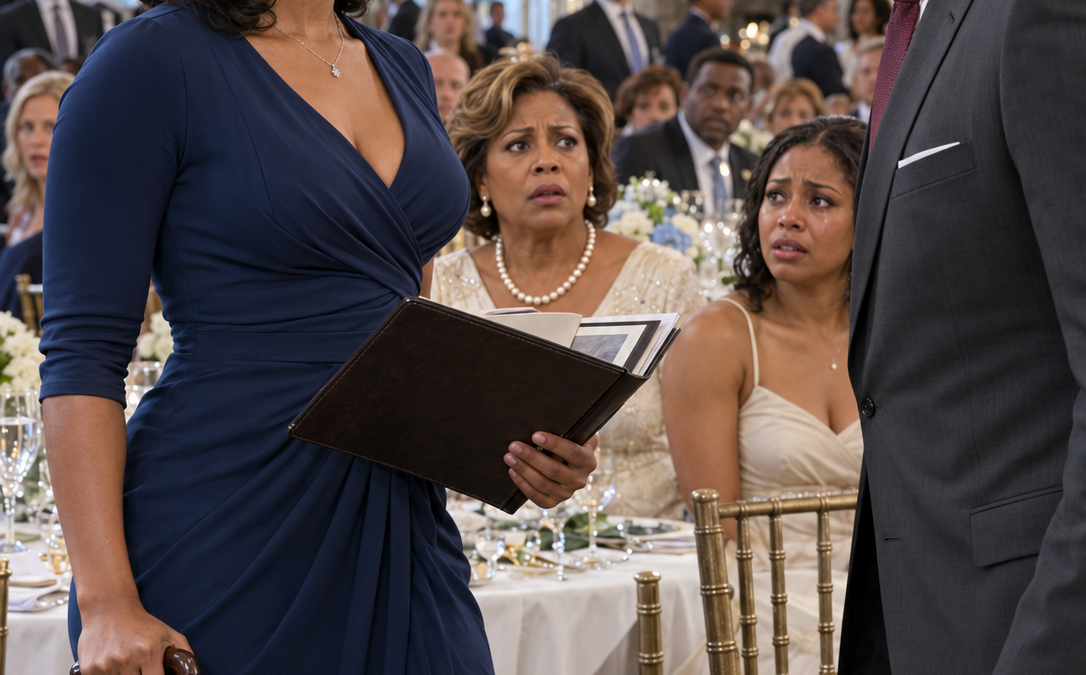
Nine hours on an operating table, and I woke up to 73 missed calls.
My throat felt scraped raw from the breathing tube. My mouth tasted like plastic and old pennies. My back was locked inside a brace I could not feel yet because half my body still belonged to anesthesia.
The phone on the tray table kept lighting up.
Missed call after missed call.
Mom. Dad. Mom again. Dad again. My sister, Brianna.
Then my father’s voicemail.
I dragged the phone close with fingers that barely worked and pressed play. His voice came through calm, almost cheerful, the way he sounded when he had already decided I would understand.
“Baby, don’t get upset. We sold your condo to pay for your sister’s wedding. You were out cold, so we signed the papers for you. Four hundred twenty-five thousand. It’s handled.”
Handled.
My home was gone while a machine breathed for me.
My sister’s wedding was three weeks away. I could barely lift my arm. But I made one phone call. And by the time that wedding rehearsal dinner started, the whole family learned something they should have known before touching my name.
A woman flat on her back can still keep records.
My name is Carmen Sanders. I am 34 years old, and I have spent most of my life being the calm one in rooms where everybody else gets to fall apart.
In my Black family, they loved the word strong when it meant I would absorb the impact.
In the Sanders house, strong was not a compliment.
It was an assignment.
That was my job in the Army. I served two deployments as a medic before I became a surgical nurse back home in Columbus, Ohio. I learned to hear panic without catching it. I learned to read a room, check the bleeding, check the airway, check the pulse, and move in order.
That training saved other people first.
Then it saved me.
The nurse who came in after surgery was a young woman named Elena Pritchard. She checked my blood pressure, adjusted the monitor leads on my chest, and told me the surgeon was pleased.
Three spinal levels fused. Old damage finally repaired. Nine hours, no major complications.
I had been the nurse with the clipboard a thousand times. Now I was the patient in the bed, and I hated it.
“Can you play that voicemail again?” I asked.
My voice came out like gravel.
Nurse Pritchard frowned, but she tapped the screen for me.
My father’s voice filled the little recovery room again.
“We sold your condo. You were out cold. We signed the papers for you. It’s handled.”
I stared at the ceiling tiles while the words settled into facts.
Sold.
Signed.
Out cold.
Three facts stacked in my mind like a triage board.
I am a surgical nurse. I do not panic in the first ten seconds.
I assess.
Somebody had put my name on a document while I was unconscious in this hospital.
That was not family helping.
That was a signature that should not exist.
“Nurse Pritchard,” I said, “I need a copy of my anesthesia record. Complete. Times included.”
She blinked, and for one second I saw her decide whether the drugs were talking.
They were not.
“I can tell medical records you’ll be requesting it,” she said carefully.
“Thank you.”
She looked at me a little differently after that. Not like a confused patient. Like a woman in a brace had just started building a case from a hospital bed.
To understand what they took, you need to understand what that condo was.
It was not just square footage.
I bought it at 28, two years after my second deployment.
The bank officer looked at me like a single woman on a government nurse’s salary should be renting something small and thanking God for the roof. I had a bad back from an old injury, two duffel bags of Army habits, and a savings account I had built one boring lunch at a time.
I packed my food. I worked doubles. I said no to trips I wanted. I kept the same car even when the heat started blowing only on the driver’s-side floor.
I saved like it was a mission because that is how I knew how to survive.
The condo was on the third floor of a plain brick building near the hospital. No fancy view. Just a parking lot, a strip of sky, and one maple tree that turned red early every fall.
The first night I owned it, I sat on the living room floor because I did not have furniture yet. I cried with the key in my hand.
Not loud.
Just enough to let my body know the door was mine.
Six years I paid that mortgage down.
Six years of extra shifts, no vacations, cheap coffee, and sleeping with ice packs when my spine ached after long cases.
By the time I went in for surgery, I had close to $300,000 in equity.
That number was not greed.
It was my Sundays, my sore feet, my packed lunches, my first safe door.
My family knew exactly what that place meant.
That is the part I still cannot make soft.
Four months before my surgery, my father asked me about it at Sunday dinner.
We were at my parents’ house, and my mother, Claudia, had the whole family around the table. My little sister Brianna’s wedding binder sat beside the blue glass punch bowl like it needed its own chair.
To anyone looking in, we were a steady Black family having an ordinary Sunday meal.
To me, by the time my father cleared his throat, it felt like a budget meeting I had not agreed to attend.
My father, Gregory Sanders, leaned back and said, “You ever think about pulling some equity out of that condo?”
He said it lightly, in that half-joking tone people use when they are testing whether stealing from you will be easy.
“No,” I said.
He smiled.
“I just mean Brianna’s wedding is getting bigger than expected. Family helps family.”
“My condo is not part of anybody’s wedding budget.”
Brianna rolled her eyes.
“Nobody said it was.”
My mother patted her hand.
“Your sister is just practical,” she said, which in our family meant cold.
I looked at my father.
His jaw had tightened for half a second before he covered it with a laugh.
I saw it.
People think I trusted them because I did not fight louder.
I saw plenty.
That week, I did three things.
First, I told my father again, plainly, that my condo was mine and I was not borrowing against it.
Second, I called my bank and asked them to add extra verification for large transactions because something in his face had stayed with me.
Third, I pulled out an old power of attorney.
Years earlier, before my second deployment, I had signed an emergency POA naming my father. If I was hurt overseas, he could handle bills, my lease, basic property matters, and anything that had to be handled while I was unreachable.
I came home.
I bought the condo.
I forgot to revoke it.
That was my mistake, but not the kind of mistake that gives people permission to use your name while you are unconscious.
Two days before surgery, while I was organizing pre-op instructions and moving a grabber tool beside my bed, I signed a written revocation of that power of attorney.
I scanned it.
I photographed it.
I emailed a copy to myself and to an old JAG contact from my Army days because overseas taught me to back up important paper three ways.
Then I drove to my parents’ house and handed my father a paper copy across his kitchen table.
“Just cleaning up old documents before I go under,” I said.
He took it.
He nodded.
He set it near the fruit bowl.
I felt safe.
That may be the cruelest part of the whole story.
Not the betrayal itself, but the small, clean moment when you think you have protected yourself.
Because somehow, while I was under general anesthesia, my signature still ended up on a deed.
Before I go further, tell me where you’re listening from tonight. I always wonder whose kitchen, truck, night shift, break room, or quiet porch these stories reach.
They discharged me four days after surgery.
The surgeon was happy. The hardware looked good. My pain was controlled enough for insurance to want the bed back, which is how hospitals measure miracles.
I could shuffle down the hallway with a walker.
I could stand long enough to brush my teeth.
I could repeat the rules.
No bending. No twisting. No lifting more than a gallon of milk.
I was in the discharge wheelchair when the practical problem hit me.
I had nowhere to go.
My condo—the place I had set up for recovery with the raised toilet seat and bed rails and freezer meals—technically belonged to someone else now.
I could not drive. I was taking pain medicine and muscle relaxers. The brace ran from my hips to my shoulder blades. Every bump in the hallway made my spine ring like struck metal.
So I called Tasha Ellis.
Tasha had been my friend since nursing orientation twelve years earlier, the kind of friend who shows up with a cooler, a pill organizer, and a look that says she will ask questions once you are fed.
She picked me up, drove me to a short-term rental two miles from the hospital, and helped me into a beige furnished bedroom that smelled like somebody else’s beach trip.
She lined up my medicine bottles on the nightstand, set soup beside the bed, and then watched me reach for a notebook.
“Carmen,” she said gently, “you just had spine surgery.”
“I know.”
“Who are you calling first? Your mother?”
“No.”
That surprised even me.
The first call was to a real estate attorney.
His name was Leonard Brooks. A coworker had recommended him years before after a nasty divorce.
I called from that rented bed with three pillows behind me and described what happened in the flat voice I use for handoff reports.
Patient stable. Home sold. Signature impossible. Old POA possibly involved. Revocation signed before surgery.
Leonard listened without interrupting.
Then he asked three questions.
“Was there ever a power of attorney naming your father?”
“Yes.”
“Did you revoke it?”
“Yes. Two days before surgery. In writing.”
“Who bought the condo?”
“I don’t know yet.”
There was a pause.
Then he said, “If a deed was signed under authority you had already revoked, and if your name was signed while you were under anesthesia, that deed may not be worth the paper it was printed on. But we prove this step by step. Nobody hands that to you.”
Nobody hands that to you.
I almost laughed.
Nobody had ever handed me anything.
“Get me the recorded deed,” he said. “The settlement statement, the notary block, any closing file we can pull. Do not argue with your family about details. If they talk, listen and write it down.”
I hung up and opened my notebook.
On the first page, I wrote:
Surgery date. Voicemail time. Closing date. Who signed. Who notarized. Who bought.
I left wide margins.
The Army taught me that when everything is chaos, you make a list and work the list.
My parents showed up that afternoon.
My mother came in first with grocery-store flowers and a foil-covered casserole, as if noodles could cover a felony.
She was a neat woman, always had been. Brown skin, smooth under careful makeup, hair pressed into a silver-streaked bob, church earrings in on a weekday.
My father came behind her with his hands in his pockets, wearing the wounded face he used when he wanted credit for being reasonable.
“Baby,” my mother said, “we’ve been worried sick.”
I looked at the flowers.
“You called 73 times after the surgery. Not before.”
She set the casserole down and started talking too fast.
They had no choice. The venue needed money. The photographer had another offer. The market was good. They would make sure I was taken care of. I should not stress while healing.
Then she said the line that still makes my jaw ache.
“Honey, it is just a condo. Your sister only gets married once.”
Just a condo.
The same woman had helped me carry boxes into that condo. She had stood in my empty kitchen and said she was proud of me. She had used my guest bathroom. She had asked to borrow my parking pass when her car was in the shop.
Now it was just a condo.
My father finally spoke.
“You were always the strong one, Carmen. We knew you would understand. Brianna needed this. You didn’t.”
I did not raise my voice.
Pain had sharpened me down to essentials.
“Who notarized my signature?”
The steam from the casserole curled between us.
My mother looked at my father.
My father looked at the carpet.
“Everything was handled properly,” he said.
That is what people say when nothing was.
Then he made his first mistake.
“Russell handled the paperwork.”
Russell.
I wrote the name in my notebook the moment they left and drew a box around it.
Before leaving, my mother tried the part meant to trap me.
The money was already moving. Deposits down. Dress paid. Rehearsal dinner booked. The Colemans—Brianna’s future in-laws—were important people.
The wedding was three weeks away.
“If you do anything rash,” she said, smoothing the blanket over my knees like I was eight, “you’ll ruin your sister’s wedding.”
There it was.
The deadline as a weapon.
They thought three weeks was on their side.
They thought I would not blow up a wedding already in motion.
They thought I would swallow a stolen home to keep the family picture pretty.
For one tired, drugged minute, I almost understood their math.
Then the medic in me took over.
A deadline is not an emotion.
A deadline is a number on a timeline.
And timelines are very useful when you know how to read them.
Three weeks was not their advantage.
Three weeks was my window.
The first thing I tried to do was get into my own condo.
That sounds simple until your spine has been opened and closed like a repair job and your family has already started treating your property like a dead person’s estate.
Tasha drove me there the next morning because I could not stand the thought of sitting in that rental while strangers touched my walls.
We pulled into the visitor space behind the building, and for a second I just stared up at my balcony.
Third floor, second from the end.
The little metal chair was still outside. The basil plant I had forgotten to ask anyone to water was bent over in its pot, dry and defeated. My wind chime moved in the breeze.
Everything looked normal from the parking lot.
That made it worse.
Normal is cruel when it belongs to somebody who has just been robbed.
Tasha helped me out of the car.
I had a walker then, not even the cane yet, and the brace made me turn my whole body like a door on bad hinges.
The elevator smelled like floor cleaner and somebody’s fast food.
When the doors opened on the third floor, my neighbor, Mrs. Bernice Walker, was standing by the mailboxes with a canvas grocery bag.
Mrs. Walker was 72, a retired postal clerk with white hair cut short and a habit of knowing every delivery schedule in the building.
She saw me in the brace and put one hand over her mouth.
“Carmen, baby, what happened?”
“Surgery,” I said. “Long story.”
Her eyes moved to Tasha, then back to me.
“I saw men in your place.”
My stomach tightened.
“When?”
“Two days ago. Your daddy was with them. Two movers and that man he knows. Tall one. Always wears those shiny shoes.”
“Russell?”
“Did they take anything?”
“Boxes,” she said. “A lamp. Looked like some files, too. I thought you knew. Your father told me you were moving closer to family while you recovered.”
There it was.
A lie laid down in the hallway so nobody would trip over the truth.
I leaned against the wall and breathed through a spike of pain.
Tasha’s face had gone flat in the way nurses get when somebody hurts a patient on purpose.
“Did the building camera catch it?” she asked.
Mrs. Walker nodded toward the ceiling.
“Camera right there, and one by the elevator. Management keeps thirty days.”
I wrote that in my notebook with a hand that shook from pain and anger both.
Camera. Movers. Files.
When we reached my door, my key would not turn.
For six years, that key had slid into the lock like a promise.
That morning, it hit new metal and stopped.
They had changed the lock.
I did not cry.
I wanted to, but I had learned in the Army that sometimes you cannot bleed until the scene is secure.
So I took a picture of the lock.
I took a picture of the door.
I took a picture of my dead basil plant through the balcony view from the hall window, just because my body needed proof that my life had still been there yesterday.
Tasha knocked hard enough to scare the walls.
No one answered.
Mrs. Walker stood beside us, lips pressed together.
“You want me to write down what I saw?” she asked.
I looked at her.
“Yes, ma’am. If you’re willing.”
“I delivered mail for 34 years,” she said. “I know dates.”
That was the first witness who was not on my payroll.
Not my friend. Not my family.
Just a woman who had seen a lie walk past her door carrying my boxes.
The building manager was less warm, but more useful.
His name was Mr. Feldman, and he did not want trouble in his lobby.
Tasha explained that I was recovering from surgery and believed my unit had been entered without permission.
I explained less and showed more.
My ID. My old owner portal. A property tax notice still in my email. The recorded deed I had just received.
The manager looked at the deed, then at me in the brace.
“According to this, ownership changed.”
“According to my anesthesia record,” I said, “I was unconscious when the paper says I signed.”
He stopped.
That is a sentence that changes how people stand.
He would not give me footage directly without a request, which was fair. But he confirmed the hallway cameras existed, confirmed the footage retention period, and said he would preserve it if my attorney sent a letter by end of day.
I called Leonard from the lobby.
He sent the preservation letter within the hour.
By evening, we had another piece on the board.
Video of my father, Russell Monroe, and two movers entering my condo with boxes while I was still in the hospital.
Not enough to win the case by itself, but proof that the story my father told the building was already different from the one he told me.
To me, he said he sold it for my sister.
To Mrs. Walker, he said I was moving closer to family.
To the title company, he had apparently said I personally appeared and signed.
Lies are like bad stitches.
Pull one, and the whole seam starts puckering.
Leonard moved fast.
Within two days, he pulled the recorded deed and closing documents.
Tasha held my laptop steady because sitting upright made my back spasm.
There it was.
The deed that had tried to erase six years of my life.
Buyer: Russell Monroe.
I knew that name.
Russell was my father’s business partner.
The man who had sat at our Thanksgiving table complaining about contractors. The man who shook hands too long and called my mother Miss Claudia even though he had known her for twenty years.
The sale price was not $425,000.
It was $300,000.
All cash.
My home, worth around $425,000, had been sold for $300,000 to my father’s own business partner.
Even through pain medication, I knew what that was.
That was not a sale.
That was a fire sale to a friend.
And it meant my father’s voicemail had lied, too.
The $425,000 he said so calmly had never happened.
My home had been moved cheap and fast, with the wedding used as the ribbon on top.
Leonard said it plainly.
“An undermarket cash sale to a close associate of the person claiming authority? That is not a red flag. That is a parade.”
The title company was one my father had used for years.
Small office. Golf buddies. Church fundraiser sponsors.
Every door led back to the same men smiling over paper no one else was supposed to inspect.
The title company’s name was Buckeye Settlement Services, a little storefront tucked between an insurance agency and a nail salon.
My father had used them for business deals for as long as I could remember. When I was a teenager, he used to bring home calendars with their logo on top—boats, golf courses, sunsets.
Men in his circle loved giving each other calendars, pens, and favors.
Leonard told me not to go there.
He was right.
So, of course, I wanted to.
Not to threaten anyone. Not to make a scene.
I was in too much pain for a scene.
I wanted to look at the place where somebody had stamped a lie over my name.
Tasha drove.
She stayed in the car with the engine running and said, “If you’re not back in ten minutes, I’m coming in with nurse face.”
“Nurse face is a federal weapon.”
“Exactly.”
Inside, the office smelled like printer toner and vanilla plug-ins.
A receptionist with red glasses asked if I had an appointment.
I gave her my name.
Her smile moved and then disappeared.
“One moment.”
She went into the back.
A man came out. Late fifties, pink cheeks, wedding ring, golf shirt under a blazer.
I recognized him from my father’s cookouts.
Martin Hail.
Owner. Notary supervisor. The kind of man who says young lady to women old enough to intubate him.
“Carmen,” he said. “Goodness, I heard you had surgery.”
“You also heard I sold my condo.”
His eyes flicked toward the receptionist.
“I can’t discuss a closing file in the lobby.”
“Then you can discuss this with my attorney.”
“That would be best.”
I should have left it there.
But I looked at him and thought about 1:47 p.m.
“Did your notary see me?”
He smoothed his jacket.
“As I said, I can’t discuss details.”
“Because if she saw me at 1:47, she saw a miracle. I was under anesthesia.”
His face changed.
It was tiny.
A blink held too long. A breath caught halfway.
But I knew the look.
I had seen it on surgeons when a count was off.
The room may still be calm, but the body knows danger first.
“Have your attorney call,” he said.
“He already has.”
I turned to leave.
At the door, he said, “These things are usually misunderstandings.”
I looked back.
“No,” I said. “A misunderstanding is when somebody brings you the wrong coffee. This is a timestamp.”
Then I walked out before my legs gave me away.
That visit did not produce a confession.
Real people rarely confess in convenient lines.
But it told me something useful.
They knew.
Or they knew enough to be afraid of what the paper would show.
Then Leonard said, “I need you to look at the signature.”
Tasha enlarged it on the screen.
My real signature has a hard downstroke on the C and a quick slash through the rest. Years of signing charts fast had turned it into muscle memory.
The signature on the deed was rounder, slower, careful in the wrong places.
Close enough for a stranger.
Not close enough for me.
But the notary block was the part that turned my stomach.
The notary had certified that Carmen Sanders personally appeared, proved identity, and signed the document.
The date was the day of my surgery.
Leonard told me he had requested the notary journal.
“A careful notary logs the time,” he said.
The journal came back the next morning.
Signing time: 1:47 p.m.
I read it three times.
At 1:47 in the afternoon, a notary swore I stood in front of her and signed away my condo.
I knew roughly where I had been at 1:47.
But roughly would not be enough.
I needed it nailed to the minute, in writing, on hospital paper.
That is where the anesthesia record came in.
Anesthesia records are beautiful when you need an alibi.
They are boring until they save your life twice.
Every few minutes, the team logs what your body is doing.
Blood pressure. Oxygen. Heart rate. Medications. Airway position. Start time. Stop time. Events.
When my record arrived, I read it like any chart.
Induction at 10:58 a.m.
Intubation at 11:03.
Prone positioning confirmed.
Surgical start.
Vitals every five minutes.
At 1:45 p.m., my blood pressure was logged, oxygen steady, anesthesia maintained, surgeon working at the second fusion level.
At 1:50 p.m., same.
At 1:47 p.m.—the exact minute the notary claimed I signed a deed—I was face down on an operating table with a tube in my throat and another person’s hands inside my open back.
There is no family version of that.
No softer explanation.
No misunderstanding.
I could not have signed because I was not available to my own body.
When I read the times to Leonard, his voice changed.
“That is about as strong as an alibi gets,” he said. “But we still need the revocation. If we prove the POA was revoked before the closing and your signature was impossible, we argue the deed is void.”
The revocation.
The paper copy was in my deployment binder.
The binder was in a file box.
The file box was in the condo.
The condo I no longer had keys to.
For one night, I thought the most important proof was locked inside the thing they stole.
I lay awake until three in the morning, back aching, brace digging, mind circling the same locked closet.
Then I remembered.
I am careful.
Careful in the way people mock until they need you.
I had scanned the revocation.
I had emailed it to myself and to my old JAG contact.
I grabbed my phone, opened my sent folder, and searched POA revocation.
There it was.
Sent two days before surgery.
Attached: signed revocation of power of attorney.
Date. Time. My real signature.
I forwarded it to Leonard at 3:18 in the morning with one line.
Found it. Check the date.
He called at seven.
“Carmen,” he said, and I could hear the smile he was trying to keep professional. “This changes the fight. We have revoked authority before the deed. We have an impossible notarization. We have an undermarket sale to your father’s associate. I like our odds.”
Then he laid out the tools.
First, a quiet title action asking a court to declare the deed void.
Second, a lis pendens recorded against the condo so Russell could not sell or refinance it while the case was pending.
Third, a claim to the title company and its underwriter because their notary had certified an impossible signature.
Fourth, a criminal referral to financial crimes.
“I draft,” Leonard said. “You decide. Every filing is your choice.”
That mattered.
Nobody was rescuing me.
I was using tools.
The hard part was not fear of being called ungrateful.
I had been called that in every polite way possible.
The hard part was knowing my father could face real consequences.
Criminal ones.
My mother smelled it coming.
That evening, she called crying.
“Carmen, please,” she said. “Whatever you’re doing, don’t.”
“Do you want to send your father to prison over a building?”
Over a building.
Even then, I let her words land.
I let myself feel the weight of what she was asking me to stop.
Then I thought about the math they had done.
My home for Brianna’s wedding.
My signature for my father’s debt.
My recovery for their appearance.
“Mom,” I said, “I did not forge a deed.”
“He was desperate.”
“So was I when I woke up without a home.”
“You’re being cold.”
“No,” I said. “I’m being clear. Those look the same to people who count on your warmth to cover what they did.”
I hung up gently.
Then I told Leonard to file.
The legal machine started moving.
The quiet title complaint went to civil court.
The lis pendens was recorded, freezing the condo in place.
Russell Monroe could not sell it, refinance it, or move it quietly to another buyer.
The title company got notice.
So did its underwriter.
Leonard sent the package to the financial crimes unit.
Detective Simone Reigns called me herself to confirm the timeline.
I read her the anesthesia times.
I read her the notary time.
I read her the revocation date.
There was a silence on her end that I knew well from hospital work.
The silence of someone realizing the case is not subtle.
“We’ll be in touch,” she said.
My family’s tone changed after that.
The flowers stopped.
The casserole stopped.
The texts changed from sweetheart to how could you?
Russell called my father in a panic when the lis pendens showed up in a routine title check.
I heard that from Brianna, who called me the next morning with her voice shaking.
“What is actually happening?” she asked.
That was the first useful question my sister had asked in this whole story.
So I answered it.
I told her about the old power of attorney.
The revocation signed before surgery.
The forged signature.
The notary journal.
The anesthesia record.
Russell.
The undermarket cash sale.
The debt my father owed him.
I did not shout.
I laid it out like a chart.
When I finished, Brianna was quiet so long I thought the call had dropped.
Then she whispered, “They told me you agreed.”
“I was unconscious.”
“They said you wanted to help.”
“I was unconscious, Brianna.”
The second time landed.
I heard her breathing change.
“The wedding,” she said. “The venue, the dress, all of it.”
“A lot of it.”
“It was your home.”
“Yes.”
She did not apologize then.
Not really.
People rarely leap straight from protected ignorance to courage.
But something moved in her.
“I have to go,” she said.
And she hung up.
Later, I found out what happened after that call.
Brianna drove to our parents’ house and asked to see the wedding spreadsheet.
She had never asked before.
She had let our mother and my father say things were handled because handled felt good when you wanted to be a bride instead of an accountant.
That afternoon, handled stopped feeling good.
She opened the binder on the dining room table, the same table where my father had once asked about my equity.
There were receipts in plastic sleeves.
Venue. Florist. Dress. Band. Photographer.
Deposits paid in cashier’s checks and wires that did not match any account she knew.
“Where did this money come from?” she asked.
My mother cried first.
My father got angry second.
That is how they usually worked.
Tears softened the room.
Anger guarded the door.
Brianna called me from her car afterward.
“They said you’re trying to punish us because you’re lonely.”
I was sitting on the rental bed with an ice pack against my hip.
“Do you believe that?”
She did not answer right away.
“I don’t know what I believe,” she said. “But I know they won’t show me the closing papers.”
“That’s a start.”
“A start to what?”
“Knowing what you don’t know.”
She let out a breath that sounded like it hurt.
“Gavin’s parents are going to ask questions if this gets out.”
“It’s already out,” I said. “A lis pendens is public. The lawsuit is public. The deed is public. The only thing private was everybody pretending not to see it.”
“I didn’t want this.”
“I believe you.”
And I did.
I did not believe she was innocent.
Those are different things.
Brianna had enjoyed the benefits of not asking. She had let my home become lace and lighting and a country club menu.
But there was a difference between designing the theft and accepting the silence that made it possible.
That difference mattered.
Not enough to save the wedding.
Enough to leave one small bridge between us.
My father came to the rental two days later alone.
No flowers. No casserole. No act.
He looked older than I had ever seen him.
Gray at the beard line. Shirt wrinkled. Eyes swollen like he had slept badly or not at all.
He sat on the beige couch Tasha hated and put both hands over his face.
“The Riverside project went under,” he said.
I waited.
“I owed Russell $140,000. I couldn’t pay. Brianna was marrying into the Coleman family. Edward Coleman owns three dealerships. Patrice has real pearls for breakfast. I couldn’t have them think we were nothing.”
There it was.
Not love.
Not wedding joy.
Shame.
My father sold my home because he was scared rich people would see him clearly.
“I didn’t know how else to fix it,” he said.
The awful part is that I believed him.
I believed he was ashamed.
I believed he was desperate.
I believed he had convinced himself that my home was the softest place to steal from because I had spent my whole life absorbing impact.
And it changed nothing.
Because then he lifted his face and asked the only thing he had really come to ask.
“Drop the lawsuit until after the wedding. Please. Let your sister have her day. After that, we’ll figure out the condo.”
Even broken, he was still asking me to pay.
Not lend.
Pay.
I looked at him.
“You didn’t borrow from me, Dad. You didn’t even take from me. You erased me. You put a stranger’s hand on my name and sold the one thing I built without you.”
His face hardened.
That is how pride works when pity fails.
“You’ll embarrass this family,” he said.
“No,” I said. “You already did.”
After he left, I built the cleanest folder of my life.
One page: the revocation of power of attorney, signed and dated, with the email timestamp printed beside it.
One page: the deed with the signature that was not mine.
One page: the notary journal entry saying I appeared at 1:47 p.m.
One page: the anesthesia record showing my vitals at 1:45 and 1:50, under general anesthesia, face down, intubated.
One page: the recorded sale to Russell Monroe for $300,000 cash.
One page: a short letter from Leonard explaining that a deed executed under a revoked power with an impossible signature was being challenged as void.
I made three copies.
I did not rehearse a speech.
The documents were the speech.
What I rehearsed was standing.
Tasha had brought me a cane that did not look medical.
Dark wood. Simple handle. Almost elegant.
I practiced walking from the rental bedroom to the kitchen and back, braced, height straight, breath measured, each turn careful.
My physical therapist would have been proud and horrified.
Every step hurt.
Every step belonged to me.
The rehearsal dinner was at Brook Haven Country Club, the kind of place with valet parking, soft carpet, and a fireplace big enough to host its own wedding.
The Colemans were paying for the dinner, which my mother had mentioned about forty times because the Colemans were the whole reason my father had been so desperate not to look broke.
Edward Coleman owned car dealerships.
Patrice Coleman wore pearls that were not borrowed.
Their son, Gavin, was polite in the way men get when they have never had to wonder if the rent would clear.
My parents had sold my home to impress those people.
So those people would hear the truth.
I confirmed I would attend.
My mother sounded relieved.
“It means everything that you’ll be there as family,” she said.
As family.
They thought my coming meant surrender.
They thought I would sit quietly, smile through pain, let everyone call me strong, and sort out the lawsuit later like I sorted out everything else.
I laid out a dark blue dress that hid the brace.
Flat shoes.
Small earrings.
The leather bag with the folders.
Tasha drove me because I was not cleared yet and because she said, “If you fall in front of these people, I’m suing the carpet.”
I laughed all the way to the valet stand.
My mother found me in the lobby twenty minutes before dinner.
She had borrowed pearls.
I knew because Claudia Sanders did not own pearls like that.
Her smile was careful, church-polished, and her hand closed around my elbow as if she still had the right to steer me.
“Listen,” she murmured, smiling at a passing couple. “Whatever is going on with lawyers, this is not the night. The Colemans are here. Edward’s family is here. If you embarrass us in front of them, you’ll lose this family for good.”
I looked down at her hand on my arm.
“Is a building worth that?” she asked.
Just a building now.
The condo had been a condo when she wanted me to minimize it.
A building when she wanted me to feel foolish.
Never home.
Never mine.
“It was never just a building,” I said. “It was the one thing in this family none of you helped me build. That’s why taking it felt easy.”
Her smile twitched.
“You’re being dramatic.”
“I’m being calm,” I said. “You should be grateful. A dramatic person would have called the Colemans last week.”
Her face went pale.
Across the lobby, a bell rang for dinner.
I removed my arm from her hand.
“Let’s go in,” I said. “I’d hate to be late. I have a toast to give.”
The dining room glowed with candlelight and money.
Forty people sat at long tables.
My parents performed warmth so hard it looked painful.
Brianna sat near the head table in a cream dress, her face tight, not glowing like a bride three weeks from her wedding should glow.
She had heard enough to be afraid.
My father spotted me and came over with a face full of relief and dread.
“Carmen,” he said too loudly. “There she is.”
He guided me toward Edward and Patrice Coleman like I was proof of something.
“This is our older daughter,” he said. “Surgical nurse. Army medic. Served two tours. Strongest woman I know. Always taking care of the whole family.”
I shook Edward’s hand.
I shook Patrice’s.
I let my father stand there inside the lie for one more minute.
The higher people climb on a false story, the less help you need when gravity starts.
Dinner began.
Salads came.
Wine was poured.
People talked about honeymoon weather and flower deliveries.
I sat with the leather bag beside my chair and the cane against my knee.
My back burned.
My throat stayed calm.
Then my father stood and tapped his glass.
The room quieted.
“I just want to thank everyone,” he said, voice thick with feeling, “for being here as these two families come together. A wedding like this takes love. It takes sacrifice. It takes a family willing to pull together and give what they can.”
He lifted his glass toward me.
“And I’m proud to say our family has always known how to sacrifice for each other.”
There it was.
The opening.
I set my napkin down and stood slowly.
The brace held my spine straight.
The cane took my weight.
Every person in that room turned toward me.
“Since we’re talking about sacrifice,” I said, “I’d like to say a few words about my sister.”
The room softened.
People smiled politely.
Brianna went still.
I looked at her first.
“Brianna, I’ve loved you since the day they brought you home. None of what I’m about to say is because I want to hurt you.”
My father lowered his glass.
“Carmen,” my mother whispered.
I reached into the leather bag.
“Three weeks ago, I had nine hours of spine surgery under general anesthesia,” I said. “While I was unconscious, someone signed my name to a deed selling my condo. My home—a home worth about $425,000—sold for $300,000 cash to my father’s business partner, Russell Monroe.”
A murmur moved down the table.
I placed the deed on the linen tablecloth near Edward Coleman.
“The deed says I signed it.”
Then I placed the notary journal page beside it.
“The notary journal says I appeared before her at 1:47 in the afternoon.”
I placed the anesthesia record next.
“This is my surgical chart. At 1:47 in the afternoon, I was under general anesthesia, intubated, face down. My vital signs were being recorded while a surgeon worked on my spine.”
The room went silent.
Not quiet.
Silent.
“So the question is simple,” I said. “Whose hand signed my name?”
My father stood too fast.
His chair scraped back.
“How dare you?”
His voice boomed through the dining room.
That helped me more than he knew.
He was shaking.
I was not.
“How dare you do this here?” he said. “In front of everyone?”
“Because everyone was told this wedding was paid for by family sacrifice,” I said. “They should know whose sacrifice.”
My mother was crying now, reaching toward Patrice Coleman like the woman might pull her out of the room.
“It’s a misunderstanding,” she said. “Please. Carmen has been under stress.”
I placed the revocation page on the table.
“Two days before surgery, I revoked the old power of attorney my father had from my deployment years. I gave him a copy. I emailed a scanned copy to myself and to a military legal contact. The timestamp is printed here.”
Edward Coleman picked up the anesthesia record.
Patrice picked up the deed.
Gavin, the groom, looked from one page to another, his face changing as the story arranged itself in front of him.
I kept going.
“A quiet title action has been filed. A lis pendens has been recorded against the condo. That means the property is frozen. The title company and its underwriter have been notified. The financial crimes unit has the same documents.”
My father’s face lost color.
“You called the police,” he said.
“I reported a forged deed.”
“This is your family.”
“That is my name.”
The room held its breath.
I looked at my father.
“Dad, you sold the proof that I ever stood on my own. You didn’t help me. You didn’t ask me. You put a stranger’s hand on my name and tried to spend my home before I could stand up.”
Then I looked at my mother.
“And you called it just a condo because calling it my life would have made it harder to take.”
My mother sobbed into a napkin.
For once, nobody moved to comfort her quickly.
Some truths slow the room down.
I slid one full folder toward my parents.
“This copy is for you,” I said, “so there is no confusion later about what was said tonight.”
Then Brianna stood.
Her chair moved softly, but everyone heard it.
She walked around the table, past my father, past my mother, and stopped beside me.
Her face was wet.
Her hands shook.
“I didn’t know it was this,” she said.
Her voice carried.
“I swear I didn’t know she was unconscious. I should have asked. I should have asked where the money came from.”
It was not enough to repair everything.
But it was the first true sentence my sister had spoken since I woke up.
I took her hand just for a second.
Then I picked up my cane.
“I didn’t come here to ruin a wedding,” I said to the room. “I came so nobody could pretend this didn’t happen.”
Every step to the door hurt.
The brace dug into my ribs.
My back screamed.
My cane tapped the country club floor with a sound too small for how big it felt inside me.
I walked out on my own two feet.
Tasha was waiting by the entrance, arms folded.
“You good?” she asked.
“No.”
“Can you walk to the car?”
“Yes.”
“Then we’ll count the rest later.”
That sounded like love to me.
The legal fight did not end the next morning.
Real consequences move slower than family gossip.
But they moved.
The lis pendens did its job.
Russell could not sell the condo, refinance it, or hand the problem to some innocent buyer.
The title company’s underwriter took one look at the notary journal and my anesthesia record and understood exactly what kind of disaster they had insured.
There were filings, declarations, calls, a hearing date, more paper than any dramatic movie would have patience for.
Russell’s attorney eventually told him what Leonard had known from the start.
Defending a deed signed by a woman who was provably under general anesthesia was not a winning plan.
Rather than gamble at trial, Russell agreed to a consent judgment.
The court declared the deed void.
Title returned to my name, where legally it should have stayed the whole time.
The title underwriter settled separately, covering my legal fees and some additional damages because their notary had certified the impossible.
I did not get rich.
That is not how these stories usually work when lawyers and time get involved.
But I was made whole enough to breathe.
Detective Reigns interviewed my father and Russell.
I did not attend.
I gave my statement.
I handed over records.
Then I let the system carry what I could not keep carrying.
Russell, who had told me, “Good luck proving anything from a hospital bed,” had to explain why he paid $300,000 cash for a $425,000 home owned by a woman in surgery.
My father had to explain why he used authority he had been told in writing was revoked.
The notary had to explain how I personally appeared before her while I was intubated.
Those conversations had consequences.
Slow ones.
Paper ones.
The kind that follow a person longer than a shouted scene.
The building footage became part of the civil file, too.
It showed my father and Russell entering with movers two days after surgery.
It showed boxes coming out.
My old deployment binder was visible in one mover’s arms because I had labeled it in thick black marker like the careful woman everyone found so useful.
DEPLOYMENT. MEDICAL. LEGAL.
I watched that clip once in Leonard’s office.
Only once.
There is something strange about seeing people carry your life on silent video.
No sound.
No apology.
No dramatic music.
Just men doing a job, a neighbor walking past with groceries, my father holding the door.
Leonard paused the footage where my father looked straight up at the hallway camera.
“He knew it was there,” Leonard said.
“He thought nobody would ask for it.”
That was the whole story in one sentence.
They thought nobody would ask.
Not the notary.
Not the title company.
Not Russell.
Not my sister.
Not the building manager.
Not the family at the rehearsal dinner.
They all counted on the same thing my family had counted on for years.
Carmen will handle the loss quietly.
Carmen will not want trouble.
Carmen will be too hurt, too tired, too responsible, too strong.
They forgot that strong people know how to work while injured.
The title company fired the notary before the case settled.
Martin Hail stepped down from the hospital charity board after Detective Reigns visited his office.
Nobody sent me an apology from Buckeye Settlement Services, but the settlement check cleared, and the underwriter’s letter used phrases like process failure and insured risk, which is business language for we know exactly how bad this looks.
Mrs. Walker wrote her statement in neat blue pen, the way a retired postal clerk writes when she knows somebody official will read it.
I saw Mr. Sanders on Tuesday with two movers and Mr. Monroe. He told me Miss Carmen was moving closer to family. Miss Carmen was not present.
That sentence did not win the case alone.
But it mattered to me because after all the signatures and stamps and filings, there was still one neighbor willing to say what she saw.
Sometimes justice is not one big hammer.
Sometimes it is a dozen small honest things stacked high enough that a lie cannot see over them.
The wedding did not happen as planned.
The Colemans lost their appetite for joining a family under financial crimes investigation.
Brianna postponed it.
For a while, she and Gavin were not even sure they would stay together.
That part was not my doing.
It was the cost of building a wedding on a stolen floor.
Brianna and I are careful now.
Careful is not bad.
Careful is honest.
She came to my condo two months after the judgment, carrying a plant and looking like she might run if I spoke too sharply.
“I know a plant is stupid,” she said.
“It is a little stupid.”
She laughed and cried at the same time.
Then she said, “They told me you wanted to help. I believed it because it made my life easier.”
That was the apology I needed more than tears.
Specific.
Ugly.
True.
“Thank you for saying that,” I said.
She helped me pick out a new couch because Russell had cleared out furniture he never had the right to touch.
She never once called the condo just a building.
My parents and I speak rarely.
I did not cut them off with some grand speech.
I simply stopped being the account they could draw from.
My mother still sends messages about forgiveness, by which she usually means forgetting.
I answer kindly when I can and briefly when I cannot.
My father’s case moved through the system at its own gray pace.
I will not pretend that was easy.
There were nights I looked at old pictures and wished he had only been the man who taught me to change a tire in the rain.
But people are not only their best afternoon.
They are also what they do when they think you cannot fight back.
A few months after the judgment, I stood in my living room again.
Empty walls.
Bare floor.
Afternoon light through the window, falling across the spot where I had sat crying with my key six years earlier.
My back still hurt.
I had a cane in one hand and a new key in the other.
I stood there a long time.
No music.
No speech.
No family watching.
Just me and a door that was mine again.
I walked room to room slowly.
The bedroom closet was empty except for one broken hanger.
The kitchen drawers had been cleared.
The bathroom rails I had installed before surgery were still there, which almost made me laugh.
They had taken my furniture, my files, my lamps, and still left the thing I needed to recover because nobody stealing a life thinks about recovery.
In the hall closet, pushed behind the vacuum, I found one box the movers had missed.
Not the deployment binder.
That was long gone and already replaced by scans.
This was a smaller box with old photos, my first condo insurance policy, two Christmas ornaments, and the card my unit gave me when I came home from my second deployment.
On the front was a cartoon medic with a coffee cup.
Inside, half a dozen people had written jokes and blessings, and one line from my old sergeant.
Sanders, you are hard to knock down because you learned how to land.
I sat on the floor right there in the closet.
It took me a full minute to get down safely.
It took longer to get up.
But I sat there anyway, holding that card, because sometimes you need to be alone in the room that was almost taken from you and remember all the versions of yourself who paid for it.
The medic.
The nurse.
The woman on the operating table.
The woman with the folder.
All of them had come home.
Tasha came by later with takeout.
She walked in, looked around, and said, “This place needs a chair.”
“It needs a lot of things.”
“Good,” she said. “We can start with one.”
That is how rebuilding actually happens.
One chair.
One form.
One court order.
One real signature at a time.
I went back to work when my surgeon cleared me.
Back to the operating room.
Back to being the calm woman beside the sterile table, counting instruments and reading the room.
Only now, when anesthesia starts and the chart begins logging every few minutes, I think about what those numbers did for me.
They were written to protect my body.
They ended up protecting my name.
That is—








