At my birthday dinner mom whispered to dad, “while everyone’s here tell your son to go change the locks at her apartment”, my brother nodded and left for an hour, he came back paler than the tablecloth and whispered, “mom… there…”
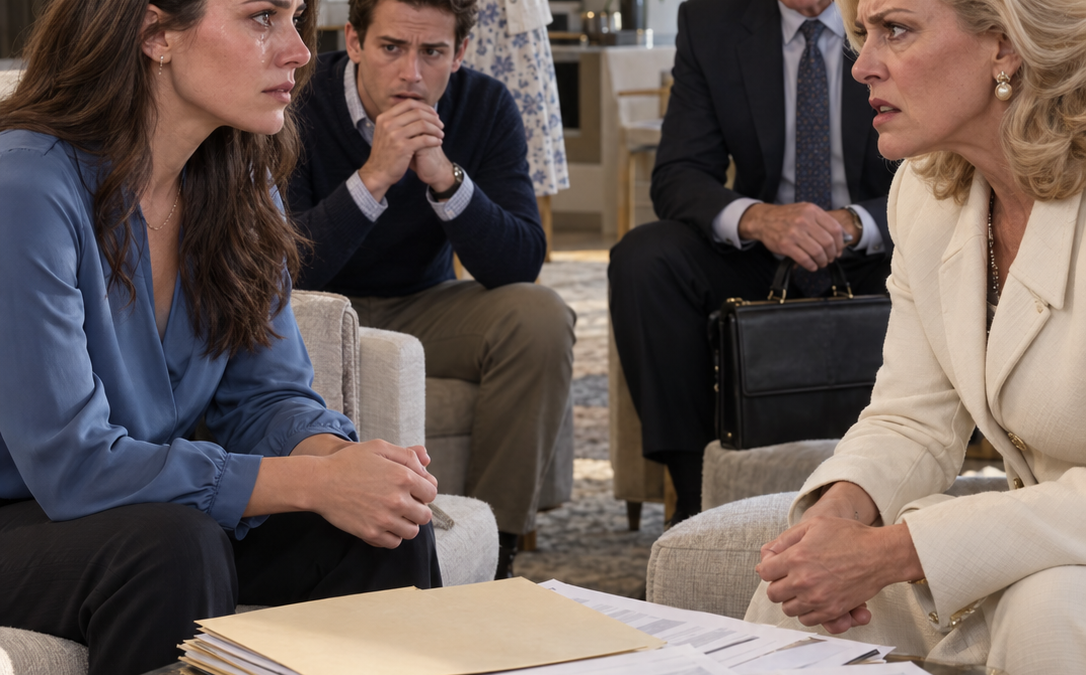
At my birthday dinner in a café, Mom whispered to Dad, “While everyone’s here, tell your son to go change the locks at her apartment.”
My brother nodded and left for an hour. He came back paler than the tablecloth and whispered, “Mom, there…”
My name is Andrea Jackson. I’m 30. And if you think this ends with cake and casual toasts, keep watching. Secrets are about to surface in ways that shatter everything.
It was supposed to be a low-key celebration, a momentary pause in the family friction. My parents, my brother, his wife, and a handful of relatives were all squeezed around a table in this old Philadelphia café I’d footed the bill for. I told myself this year could be different, that Mom wouldn’t hijack my moment for one of her maneuvers.
But she pivoted right to it, transforming my party into her covert operation.
I overheard her sharp words piercing the clatter of forks and hollow chitchat.
“Change her locks,” she urged, as if I were invisible across the table.
Dad relayed it without pause.
“Handle it now,” he grumbled.
I held my ground, flashed a grin, dished out more cake, and watched my brother disappear, his keys clinking like a countdown.
An hour dragged by, and his return hit like a storm—face drained, eyes wide with whatever horror he had uncovered.
If twisted family plots like this grip you, smash that like button and subscribe for more shocking reveals. Don’t miss what unfolds next.
The party had started at seven that evening in the downtown Philadelphia café, with its worn brick walls and the low hum of city traffic outside. My parents, my brother and his wife, and a few relatives crammed around the long wooden table, plates scattered with appetizers and glasses half-filled with soda or wine.
I’d arranged the whole thing and picked up the tab, swiping my card at the counter earlier without a second thought, figuring it might buy some goodwill for once.
But as conversations bounced around, I noticed how the group settled into familiar patterns. Mom held court at one end. Dad nodded along to whatever she said. Everyone else fell into line.
Among the relatives were my cousin Brandon Williams, who always backed Mom’s ideas with enthusiastic agreement, leaning in to echo her complaints about city living costs, and his sister, Lindsay Williams, who usually nodded quietly but shot approving glances Mom’s way whenever she spoke.
They acted like her unofficial allies, quick to defend her whenever anyone questioned her decisions.
My sister sat across from me, picking at her salad without saying much, her eyes darting away whenever the tension rose. The air felt thick with forced politeness, laughs that didn’t quite land, and side conversations about work or weather meant to fill the gaps.
Then Mom leaned toward Dad, her voice low but clear enough for me to catch over the clink of utensils.
“While everyone’s here, tell your son to go change the locks at her apartment,” she murmured, her tone as casual as if she were discussing dessert options.
Dad didn’t miss a beat. He turned toward my brother with a subtle tilt of his head.
“Do it after the main course,” he added under his breath.
I froze inside but kept my face neutral, forcing a smile as I passed the bread basket around, pretending the words hadn’t landed like a slap.
No one else seemed to notice. Or, if they did, they ignored it.
Brandon even chuckled at some unrelated joke while Lindsay adjusted her napkin without a word. My brother nodded once, slipped his phone back into his pocket, and excused himself with a vague mention of needing to run an errand.
His keys jingled softly as he stood, the sound cutting through the chatter like a signal only I recognized.
He wove through the tables toward the exit, his coat over his arm, leaving behind an empty chair no one commented on.
I turned back to the group and picked up the knife to slice into the chocolate cake the waiter had just brought out, distributing pieces with steady hands even as my mind raced.
“Who wants extra frosting?” I asked lightly.
I plated a generous portion for Dad first, then Mom, watching as she accepted hers with a satisfied nod.
As forks dug into cake, I scanned the faces around the table and noticed the subtle dynamics I’d overlooked before. Mom dominated the conversation, steering it toward family updates that somehow always circled back to her expectations.
Dad stayed quiet, content to let her lead. Brandon jumped in with support, praising her latest business move, and Lindsay followed with affirming hums.
But my sister caught my attention most.
She avoided my gaze, stirring her coffee endlessly. Her silence felt heavier than usual, as though she knew something but wouldn’t speak up.
For the first time that night, I began to wonder if this celebration was just another layer in their control.
The cake tasted bitter on my tongue, but I swallowed it down and kept up the act until the moment passed.
About an hour later, my brother reappeared at the café entrance.
His posture was slumped, and the color had drained from his face as he made his way back toward us. The group noticed immediately. Conversation faded as heads turned, everyone sensing the shift in his demeanor.
He dropped heavily into his chair, his hands trembling slightly, then bent toward Mom with urgency.
“Mom, there’s a security alert wrapped around her door.”
The words stumbled out of him in a rush that hinted at more trouble ahead. He quietly added details, mentioning yellow tape blocking the entrance and a guard posted outside. His voice cracked as he described the scene near the Schuylkill River.
The reactions hit like a wave.
Forks clattered onto plates. Relatives leaned forward with widened eyes, surprise evident in their stiff postures.
Crystal’s hand tightened around her napkin, her usual control slipping.
“Alert for what? Did you get close enough to see?”
Brandon jumped in immediately, concern edging his voice.
“Was it a neighbor complaint or something serious, like vandalism?”
His question encouraged everyone else to chime in. One relative asked about possible witnesses while Dad rubbed his chin silently, absorbing the news without comment.
The table buzzed with speculation. Whispers grew as confusion mounted, turning the atmosphere from festive to fraught.
Lindsay seized the opportunity to stir things up. She leaned toward the person beside her, her voice sly.
“This has to be her doing. She’s always stirring up drama with that solo lifestyle.”
She said it softly, but the accusation spread quickly. Another relative nodded in agreement.
Soon the gossip took hold, accompanied by sideways glances in my direction, as though I had somehow invited whatever chaos this was.
My sister shifted uncomfortably, her lips pressed into a thin line, but she said nothing. Her silence only added to the undercurrent of judgment.
I felt the weight of their stares, my pulse quickening, yet I held steady amid the rising tension.
Then my phone lit up again.
This time, the message came from an unknown number, and everything suddenly became sharper.
“Ms. Jackson, Officer Joshua Williams here. Urgent matter at your unit. Please respond.”
The text cut through the murmurs and confirmed that this wasn’t some mix-up.
I stood abruptly, the legs of my chair scraping loudly against the floor, and slung my bag over my shoulder as questions flew at me from every direction.
Crystal’s voice came first, sharp and probing.
“Where are you going?”
Then Dad, lower and more demanding.
“Explain yourself.”
Brandon followed.
“You owe us details.”
Lindsay added in a hushed voice, “Running off won’t fix your mess.”
Someone else called out, “Is it safe?”
Their voices overlapped in a chaotic blend, but I pushed past them without answering and headed straight for the door.
Outside, the Philadelphia evening chill sharpened my focus. I unlocked my car, and the engine turned over with its familiar rumble.
I pulled into the street, headlights cutting through the dusk, my mind fixed on the apartment complex ahead.
Traffic was light, but every red light felt endless, building the anticipation of whatever was waiting for me.
When I finally turned into the parking lot, two patrol cars sat idling. Their red and blue lights pulsed against the buildings, drawing me straight into the unfolding situation.
As I pulled up to the apartment complex, the flashing lights washed over the brick façade in alternating colors, intensifying the knot that had formed in my stomach during the drive.
An officer stepped forward as I parked. His uniform looked sharp beneath the overhead lights, and he held a clipboard in one hand, ready to take notes.
“Ms. Jackson?” he asked, his voice calm but authoritative.
I nodded quickly, my pulse still racing from leaving the café.
He wasted no time explaining the basics. A neighbor had reported unusual activity, prompting officers to respond quickly.
He introduced himself as Officer Joshua Williams with the Philadelphia Police Department and explained that they had secured the scene. They needed me to walk through the apartment and identify anything unusual.
We approached my unit.
The signs of unauthorized entry were obvious.
Fresh scratches marked the doorjamb where some kind of tool had been used. Splinters dotted the threshold, and the handle sat slightly askew from being manipulated.
Officer Joshua Williams illuminated the damage with his flashlight, explaining that the breach appeared deliberate rather than amateurish. Whoever had done it seemed to have tried to avoid major damage so the intrusion would blend in.
Inside, the living room looked almost exactly as I had left it. The items on the coffee table remained in place, and the curtains were still drawn.
But the intention behind the intrusion hung heavily in the room, making the familiar space feel violated.
“Take your time looking around,” Officer Joshua Williams said. “No rush.”
His tone was patient as he let me assess the room. Preliminary checks suggested that nothing had been stolen. It looked more like someone had been searching for something.
While probing for leads, the officers had checked the apartment complex’s surveillance system, which provided crucial evidence.
“The cameras caught the whole thing,” Officer Joshua Williams said.
He pulled up footage on his tablet.
The video showed a figure approaching cautiously and inserting a key. It turned smoothly in the lock without any jiggling, making it obvious that the person had a working duplicate.
“We’ve identified him as Anthony Williams, your landlord’s nephew. He does maintenance work here.”
Officer Joshua Williams pulled up a matching photograph from the building’s records to confirm the identification.
Seeing Anthony’s face in the still image sent a wave of disbelief through me.
His role had always seemed routine. Now it had been twisted into something far more troubling, raising questions about how long this had been planned.
As we discussed possible motives, my attention shifted toward an envelope sitting on the coffee table.
It had been positioned too neatly among my usual clutter.
Officer Joshua Williams confirmed that it had been there, untouched, when police arrived. Wearing gloves to preserve any fingerprints, I carefully opened it.
Inside was a single sheet of paper with a printed message.
Tell your mother the truth.
My stomach twisted.
The directness of those words stirred a mixture of anger and confusion. The implication felt too pointed to be coincidence, echoing family tensions I had spent years pushing aside.
Then my phone buzzed.
My sister’s name appeared on the screen.
At that exact moment.
I signaled to Officer Joshua Williams that I needed a moment. He nodded and stepped aside to consult with his partner.
“What is it?” I answered quietly.
“Andrea, be careful with Mom,” my sister whispered.
There was hesitation in her voice, the kind that suggested she knew far more than she was willing to say.
“What do you mean? Tell me now.”
She faltered.
“I can’t get into it here. If she finds out…” Her voice dropped. “It’ll be over for me.”
Then she hung up.
Her fear had been obvious in those few hurried words, leaving me with a cryptic warning and an even deeper understanding of what her years of silence might mean.
Officer Joshua Williams rejoined me and asked whether the envelope had triggered any memories.
I described the message but left out my sister’s call, emphasizing the note’s strange, personal nature.
He wrote everything down and suggested that forensics might be able to trace the paper, printer, or ink for additional clues.
We discussed the next steps, and he explained how to file an official report based on the surveillance footage.
By then, the night’s discoveries had solidified my determination to find answers. The note had become a catalyst, fueling my resolve to confront whatever had been happening beneath the surface.
Officer Joshua Williams handed me a statement form, and I filled it out on the spot, recounting everything I had seen.
He assured me there would be follow-up and recommended that I change the locks immediately. He also gave me contact information for trusted locksmiths.
By the time the officers left, I felt better equipped but no less unsettled.
The words from the envelope lingered in my mind.
Tell your mother the truth.
Early the next day, Officer Joshua Williams and I went over the note again in my kitchen. I had brewed coffee to steady my nerves after a restless night.
“The wording here—‘Tell your mother the truth’—feels aimed directly at my family,” I said, pointing toward the stark printed line.
He tilted his head and reread it carefully.
He agreed that it lacked the randomness of an ordinary threat. It seemed designed to provoke a very specific response.
“Printers leave unique marks,” he noted. “We’ll check for that.”
He slipped the evidence into a sealed bag for laboratory submission.
As we talked, I drew the connection directly to Crystal, explaining her habit of inserting herself into my personal affairs—from unwanted advice to outright directives intended to shape my decisions.
The parallel seemed impossible to ignore. Her influence was often disguised as concern, but it always pushed boundaries.
Officer Joshua Williams asked for more context about her recent behavior.
I told him about the way she had begun questioning me about my finances without being asked. The note’s imperative tone even sounded like her style.
He recorded everything methodically, suggesting that the message might have been intended as leverage rather than physical harm.
That possibility only increased my wariness about Crystal’s role in the situation.
To gather more evidence, I called Katie Johnson, someone I knew had skills in following financial trails.
“Katie, can you check for any unusual transfers around the time of the entry? Something that might be connected to someone close to me?”
I kept the request concise while explaining the basic situation.
She started immediately, using public databases and her professional tools to search for anomalies.
“I’ll look for patterns in routing information or timestamps,” she promised.
Her efficiency felt like a lifeline in the middle of all that uncertainty.
Before she could dig very far, another call interrupted me.
Brandon.
His name flashed insistently across my screen.
“Andrea, this whole thing is blowing up. Let’s handle it quietly for the family’s sake.”
His plea was heavy with urgency, clearly aimed at minimizing the fallout.
“Why should I?” I replied. “It was my space that was invaded.”
But he kept pushing, talking about unity and avoiding scandal.
“Think of the bigger picture. Exposing this hurts everyone.”
His words sounded hollow. They revealed far more concern for Crystal’s side than for what had happened to me.
And his pressure brought back a rush of memories from our suburban Philadelphia childhood.
Crystal had micromanaged our allowances with iron rules, giving us just enough for basic things but taking money away for every perceived mistake.
When I was 13, I lost my entire ten-dollar weekly allowance because I forgot an errand.
Her scolding echoed through the living room as she pocketed the cash and insisted that it “built character.”
My sister, 15 at the time, stood silently in the doorway watching. Her face was pale, but she was too frightened to interfere for fear that she might face the same consequences.
Her pattern of quiet compliance had begun early, rooted in fear of repercussions.
Katie’s follow-up call pulled me back into the present.
She had finished cross-referencing the accounts.
“It’s confirmed. There was a transfer from your mother’s linked profile last week. It was disguised as routine expenses, but the timing lines up exactly with the incident.”
She told me she would email the supporting documentation for my records.
The discovery turned suspicion into something tangible. Even the amount matched what someone might commonly charge for a task like this.
Officer Joshua Williams took the printouts when I showed them to him and added them to the case file.
“This builds a stronger narrative,” he said. “We’ll verify everything through official channels.”
He explained that the financial evidence could help accelerate the inquiry.
I nodded. The weight of everything was pressing down on me, but for the first time, my path forward was becoming clearer.
By midday, Katie’s deeper review of the records strengthened the connection even further. The payment from Crystal’s account had been timed precisely with Anthony’s access to the apartment.
It was clearly no coincidence.
It looked like a planned move intended to conceal something.
Katie forwarded screenshots of the transaction logs, highlighting the disguised entry, and I cross-checked the dates against the surveillance footage Officer Joshua Williams had shown me earlier.
The timing lined up.
That pushed me to think about what Anthony had actually been searching for.
If someone had entered my apartment to retrieve something hidden, my off-site storage unit seemed like the most likely target. Crystal had questioned me about that extra space several times in the past.
I drove to the storage facility just off the Schuylkill River. I had rented the unit months earlier for overflow files, furniture, and old boxes during a move.
The attendant recognized me from previous visits and buzzed open the gate after a quick ID check.
I parked near my row in the sprawling lot and unlocked the roll-up door.
Inside was the familiar clutter of sealed containers and furniture wrapped for storage.
But one box immediately caught my attention.
It sat front and center, completely unlike my usual haphazard stacking.
The label read family business papers in Crystal’s distinctive handwriting.
I had never packed that box.
I dragged it into better light and sliced through the tape with a pocketknife I kept in my glove compartment.
Inside were neatly organized folders containing property deeds, bank statements, and tax summaries.
Many of them listed me as the holder of assets I had never known existed.
There were undeclared holdings routed through offshore connections to avoid reporting.
My name appeared repeatedly beside signatures that were not mine, on documents dating back years—to periods when I had been struggling to make it independently.
The scope of it hit me hard.
My identity had been woven deeply into their financial avoidance strategies without my knowledge or consent.
I handled the pages carefully and photographed key sections for my records, noticing that several deeds were tied to properties Crystal managed through her company.
This wasn’t an oversight.
It was systematic.
Someone had been shifting assets to protect their gains.
When I returned home, my phone showed a flood of emails from extended family members.
The chain appeared to have started with Lindsay.
Andrea’s blowing this out of proportion. Probably just a misunderstanding she’s turning into drama.
Her message contained vague references to my “independent streak” supposedly causing problems.
Replies stacked up quickly.
Better to let it go than divide the family.
She’s always been sensitive about money stuff.
The email chain amplified Lindsay’s version of events, slowly building a narrative that painted me as unstable.
It irritated me, but it didn’t surprise me. Lindsay had always aligned herself with Crystal to stay in her favor.
Shortly afterward, I contacted Officer Joshua Williams and caught him between shifts.
“New development,” I told him. “I found documents in storage under my name involving unreported taxes.”
Following his instructions, I sent scanned images through a secure method.
He confirmed that they would be added to the growing evidence file and stressed the importance of formally submitting the originals so their integrity could be maintained.
“This strengthens the case significantly,” he said, promising that the documents would be collected properly.
That afternoon, my sister suggested that we meet discreetly at a quiet coffee shop downtown, somewhere away from the family.
We claimed a corner table.
She arrived looking flustered, glancing over her shoulder several times before sitting down.
“I’ve known about the misconduct for a while,” she admitted in a hushed voice, stirring her drink endlessly. “I overheard conversations. I saw glimpses of things.”
She swallowed.
“But speaking up risks everything. Losing the family connection would leave me isolated.”
Her admission carried weight, but once again she stopped short of giving me everything she knew.
Her terror of being cut off overpowered whatever urge she had to fully disclose the truth.
We parted after a limited conversation, her partial admission reinforcing the web of secrets without fully breaking it open.
Still, the discoveries from that day had armed me with concrete proof.
I was no longer simply defending myself. I was ready to act on what had been done.
Later that night, I sent Crystal a direct text.
Come to my apartment at 7:00 p.m. No games this time.
Her response came almost immediately.
Fine.
That single word carried the same authority she had always used with me.
Only now it no longer intimidated me.
I prepared the living room with minimal fuss, clearing the coffee table so I could lay out copies from the storage box. I also positioned my phone discreetly so it could record the conversation, making sure every word would be captured without an announcement.
The knock came precisely at seven.
Sharp. Calculated. As always.
Crystal entered first, impeccably dressed in a tailored coat.
Dad—Matthew—followed with a briefcase.
My brother, Tyler, came in behind him, avoiding my eyes as he shut the door.
My sister slipped in last and hovered near the entrance as though she wanted to remain close enough to escape.
They arranged themselves on the couch opposite me.
It felt less like a family gathering than a board meeting.
I wasted no time.
I laid the printed deeds and transfer records across the coffee table and watched their expressions change.
“Explain these. My name on undeclared assets. The payment to Anthony for entering my apartment.”
I slid the copies toward Crystal.
She scanned them briefly, then looked directly at me with practiced composure.
“I sent him to retrieve the papers quietly to protect the family from exposure,” she admitted, presenting the decision as a necessity rather than wrongdoing. “Your involvement was meant to shield assets during audits. Nothing malicious.”
Matthew nodded.
His lawyer instincts seemed to take over.
“We structured it legally at the time,” he said in a measured voice, though there was little conviction behind it.
Tyler shifted uncomfortably and glanced toward Crystal for guidance, his earlier hesitation resurfacing without ever becoming open defiance.
My sister remained silent, her arms folded tightly across her body as she absorbed the exchange.
Then the confrontation escalated.
Brandon called, and somehow the call came through on speaker.
His timing could not have been more convenient for them.
“Don’t ruin us over this, Andrea. Keep it internal,” he urged loudly.
His voice filled the room, reinforcing Crystal’s argument about protecting the family’s reputation.
Crystal made no hurry to mute him.
Minutes later, Lindsay joined through Brandon, adding her own accusations.
“You’re being selfish, dragging everyone through your paranoia.”
The two of them worked in tandem, trying to isolate me and frame disclosure as an act of betrayal.
I kept the recording running.
“Using my identity to dodge taxes isn’t protection,” I said calmly. “It’s exposure for me.”
Crystal leaned forward and softened her tone.
“We did it for stability. You benefited indirectly.”
But against the documents spread across the table, the justification sounded hollow.
The tension peaked when my sister finally spoke.
Her voice was barely louder than a whisper.
“I saw the forged signatures years ago. I knew they weren’t yours.”
Her eyes stayed fixed on the floor.
Then she quickly added, “Speaking up then would have cost me my place in all this.”
Even now, fear prevented her from going further.
Matthew tried to mediate.
“Let’s resolve this privately. There’s no need for outsiders.”
Tyler murmured his agreement, still deferring to the others.
Crystal ended the discussion with a warning glance.
“Pursue this, and the ties are severed permanently.”
Their coordinated defense only strengthened my position.
And the recording of that meeting gave me unmistakable clarity about the manipulation I had spent years living under.
Over the next week, I drove to the IRS office in downtown Philadelphia with a thick folder of deeds, transfers, and supporting printouts secured on the passenger seat.
The lobby was sterile beneath fluorescent lights, with agents behind counters processing cases in quiet efficiency.
I approached the designated desk for whistleblower submissions and handed my organized packet to a specialist.
She reviewed the cover letter briefly.
“This looks comprehensive. We’ll open a file immediately.”
She stamped the receipt and gave me a case number for tracking.
The process moved smoothly. My statement emphasized that my identity had been used without my knowledge, separating me from responsibility for the underlying activity.
Word spread faster than I expected once the investigation became public.
Local headlines appeared online and in newspapers reporting that a Philadelphia couple was facing investigation over a tax-evasion scheme involving undeclared business assets.
My name appeared only as the reporting party, with follow-up coverage noting the misuse of my identity and clearing me of involvement.
Reporters called me, but I declined to comment.
I let the facts stand on their own.
The consequences unfolded steadily.
Matthew received notice from the partners at his firm citing conflict and ethical concerns.
Days later, his resignation followed, announced quietly in an effort to avoid further scrutiny.
The disgrace hit his professional circle hard. Networking opportunities disappeared as associates distanced themselves.
Crystal faced direct financial penalties. The IRS imposed thousands of dollars in fines for back taxes and interest, while ongoing audits uncovered additional discrepancies.
Soon afterward, their primary residence went on the market. A for-sale sign appeared in the yard as they tried to cover their mounting debts.
Downsizing became unavoidable.
Brandon and Lindsay went completely silent.
Their calls and emails stopped abruptly. Shame seemed to keep them away more effectively than confrontation ever had.
No apologies arrived.
They simply disappeared from group chats and family threads, distancing themselves now that their support for Crystal had become a liability.
I began turning my phone off for long stretches, blocking numbers connected to the chaos and redirecting my attention inward.
Slowly, life found its rhythm again.
William’s routine grounded me—school drop-offs, trips to the playground, bedtime stories without interruption.
Katie became a steady presence too, joining us for casual evenings when we could talk about the future without dwelling on the fallout.
One weekend, I hosted a small dinner at home.
Just Katie, William, and me around the table with simple pasta and salad.
William chattered about his day, making both of us laugh. The atmosphere was light and effortless.
Katie raised her glass.
“To new starts.”
I raised mine with her, appreciating the connections I had chosen rather than the ones that had been forced on me.
Looking back, the ordeal stripped away every illusion I had carried about loyalty built on secrecy.
True family rests on honesty, not concealment or control.
Manipulation erodes trust until nothing real remains.
Cutting ties completely freed me from that cycle and created space for relationships based on respect.
William now grows up in an environment without hidden agendas, and I prioritize boundaries that protect both of us.
The cost was high, but the independence I gained outweighed it.
Walking away from toxic dynamics gave me genuine peace.
Months later, occasional updates still reached me indirectly.
Crystal and Matthew continued dealing with legal consultations on their own, their social circle greatly reduced.
I felt no desire to reconnect. My decision remained firm.
Instead, my days filled with work projects, a thriving freelance career, outings with William to explore city parks, and dependable conversations with Katie over coffee.
The grip of manipulation had loosened permanently.
In its place was self-determination.
Freedom from that kind of control means reclaiming your own narrative and refusing to remain a pawn in someone else’s scheme.
It requires resolve.
But afterward, the clarity makes everything sharper.
My priorities finally aligned without compromise.








