At 19, i collapsed two days before my sister’s wedding; mom leaned over my hospital bed: “please don’t die this week, people will only talk about you”; dad said: “just get through saturday”; i never went home again; ten years later, a stranger handed me a file: “your parents lied about about what the doctor said.”
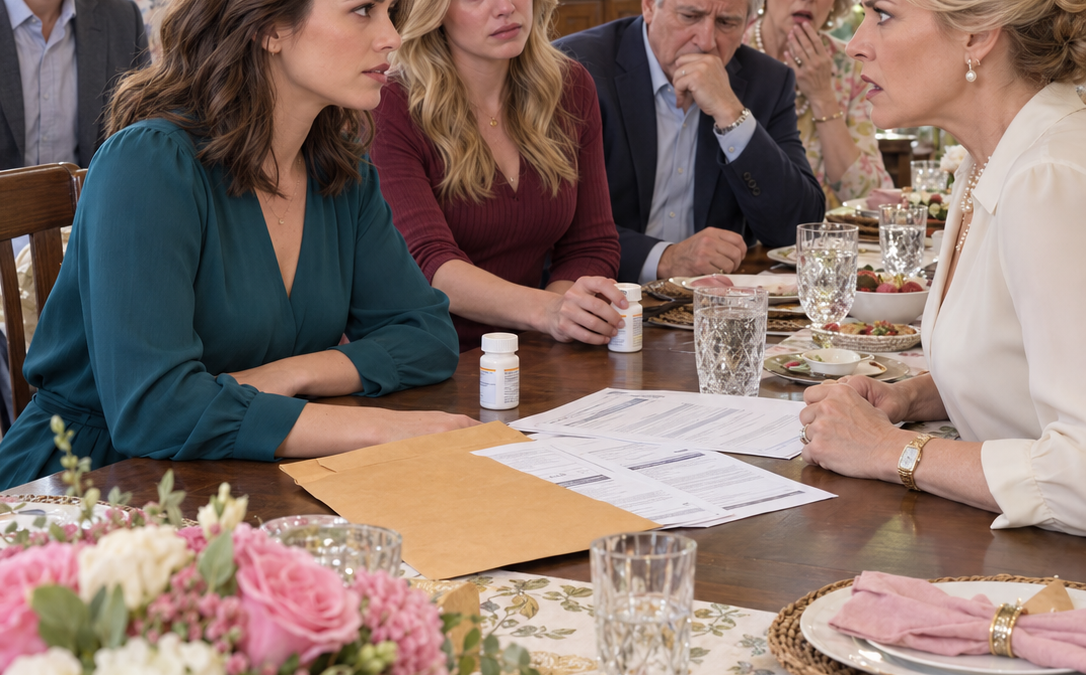
“Please don’t die this week. People will only talk about you.”
My mother said it over an ER rail two days before my sister’s wedding. I had collapsed in a bridal shop, wires on my chest. She didn’t ask the doctor how to help me. She asked if I would steal the day. My father said, “Just get through Saturday.”
I signed out at four in the morning. I spent the wedding fifteen minutes from the church. For ten years, I carried their version of me. Then a stranger put a folder on the table.
“Your parents lied about what the doctor said.”
What they didn’t know was that I kept a piece of that night. Their story was about to hit paper.
My name is Elma. I’m 29 years old.
Welcome back to Hidden Shadows, where family secrets never stay buried for long. If this is your first time here, hit subscribe and join the family. This story is one of the wildest we’ve ever told. Let’s get into it.
To understand that folder, you have to understand a house in Beaver Creek, Ohio, in the spring of 2016. The wedding lived on our refrigerator. My mother had taped a poster board to the door in January, and by March, it had grown columns—vendors, deposits, seating, the names of every bridesmaid with a check mark next to each dress fitting.
My sister Brooke’s name was at the top in green marker. Mine was near the bottom. Third bridesmaid, one check mark out of three.
Brooke was 24 and lived in Columbus. She drove home most Sundays that spring, sometimes with Nolan, the man she was marrying in May. I’d met him once at Thanksgiving for about two hours. He passed me the rolls. That was the whole conversation.
I was 19. I’d just finished my first year at Wright State, twenty minutes up the road, and I still lived in my childhood bedroom because it was cheaper and because nobody had ever suggested otherwise. I drove a used Corolla I’d bought with money from a summer job. I ate dinner at the same table I’d eaten at since I was five.
Sunday dinner in March. Pot roast. My father, Glenn, at the head of the table, reading the same page of the newspaper he’d been reading all week. My mother, Carol, standing more than sitting, refilling glasses nobody had finished.
“Photos at two,” she said to no one in particular. “Which means hair at ten, which means everyone in this house is up at seven.”
“I’ll be up,” Brooke said.
“I know you will, honey.”
My mother touched the back of Brooke’s chair as she passed. Then she looked at me, and her voice did the thing it did when she wanted something to sound like a kindness.
“Wedding photos are forever, Elma. Nobody remembers who was tired that day.”
I hadn’t said I was tired. I hadn’t said anything.
My father turned a page.
“Your mother’s got it handled.”
That was his line. He’d been saying it my whole life, and I’d never once heard him say it as a question.
After dinner came what my mother called the family health check. Every Sunday, the bathroom off the master bedroom, a digital scale on the tile, and a blue spiral notebook where she wrote the numbers. She’d done it since Brooke and I were kids.
Brooke was weighed first, then me. My mother wrote both numbers without comment, which was worse than comment.
That night, when I went to my room to finish a lab report, there was a white plastic bottle on my desk. No label. A childproof cap that didn’t quite seal.
“From the clinic,” my mother said from the doorway.
She had a clinic she went to in Centerville, a place with a name like a spa.
“One in the morning. You’ll have more energy for finals and for the dress.”
I asked what they were.
“Vitamins, Elma. What else would I give you?”
She said it like the question had hurt her.
So I said, “Thank you.”
The first one went down on Monday, April 4th, with gas station coffee in the Corolla outside the science building. By Wednesday, I’d stopped being hungry. By the following week, I was sleeping five hours and waking up sharp, almost electric, my notes cleaner than they’d ever been.
I told myself this was what discipline felt like.
The cap on the bottle never quite caught. I got into a habit of twisting it twice, hard, before I put it back in my bag.
It’s strange what your hands remember.
My friend Paige noticed before I did. We shared a lab bench, and one afternoon she put her hand over mine on the counter to stop it moving.
“Are you okay? Your hands are doing a thing.”
“Wedding diet,” I said. “My mom’s got me on vitamins.”
She looked at me for a second longer than she needed to. Then she let it go because we were 19, and that’s what you did.
Near the end of April, I came into the kitchen early and found my mother at the counter with an orange prescription bottle. The real kind, with a white label. She saw me and slid it into her purse in one motion. Smooth, like she’d practiced.
She didn’t explain. I didn’t ask.
In our house, you learned early which questions made the air change.
The second fitting was the first week of May. Marchetti’s Bridal in Centerville, the back room with the three-way mirror and the smell of steam and fabric sizing. The bridesmaid dresses were sage green. The seamstress had pinned mine at the waist twice already, and it still wasn’t right.
I stood on the little platform and watched three versions of myself not fit.
My mother spoke to the seamstress like I wasn’t there.
“We have three weeks. Whatever it takes.”
Then, lower to me while the seamstress went to find more pins:
“You’re the only one still not ready.”
Not the only one still not thin.
Not ready? As if I’d chosen it.
That night at dinner, she looked at my plate before I’d picked up my fork and said, “Is that what we’re doing?”
My father changed the subject to the weather in Springboro, where the reception was. I ate four bites and pushed the rest around.
Later, I found I’d rather eat alone in my room than at that table, and I didn’t think about why.
Brooke texted me after ten.
Don’t let her get in your head. She did the same to me.
I read it three times.
I didn’t know what the same meant. I thought she meant the comments. I thought she meant the scale.
The next morning, next to my coffee mug, there were two white pills instead of one.
“The dress isn’t going to take itself in,” my mother said, and went to answer the phone. “Two weeks of two pills.”
Then Thursday, May 19th. The final fitting.
I hadn’t eaten since the night before. I told myself it was strategy.
The back room at Marchetti’s was warm, and the seamstress was on her knees at my hem. Somewhere around the second set of pins, my heart started doing something I didn’t have a word for.
Not fast. Wrong.
Like it was skipping a stair and catching itself.
The mirror narrowed. The edges went gray. I remember the sound of the sewing machine in the next room stopping. I remember a pin going into my hip as I went down.
And I remember my mother’s voice above me, not panicked, almost annoyed, saying to the seamstress, “She’s fine. She does this.”
I had never done this.
“Ma’am, call 911.”
“Let me try her father first.”
She was still dialing my father when the seamstress called herself.
I came back in the ambulance. Straps across my chest, a sticker on each side of my collarbone, a man in a blue uniform watching a screen.
He said to the woman driving, “Heart rate’s 150. Ask the mother what she’s on.”
I wanted to say vitamins. I wanted to say ask her.
My mouth didn’t work.
St. Bridget’s Medical Center, downtown Dayton. Curtain bay, not a room. The ceiling was those white tiles with the little holes, and I counted them because it was the only thing I could control.
A nurse named Tammy put a bandage over the pinhole on my hip and asked me gently if I’d taken anything.
“Vitamins,” I said. “From my mom’s clinic.”
She wrote that down.
She asked me to sign a clipboard, consent for treatment, and a second page that let the hospital talk to my parents. I was on my father’s insurance.
I signed without reading it.
I would have signed anything that let me close my eyes.
The doctor was a tall man with reading glasses pushed up into gray hair. Dr. Parin. He crouched so I didn’t have to lift my head.
“Elma, I need you to be honest with me. Your screen came back positive for a stimulant. Did you take anything today besides those vitamins?”
“No.”
My voice was small, and I hated it.
“Just those.”
He looked at me for a moment the way Paige had, a second longer than he needed to. Then he said he wanted to talk to my parents, and he stood up.
Through the gap in the curtain, I watched them follow him into the hallway. I was close enough to hear.
The first thing out of my mother’s mouth was not, What’s wrong with her?
It was not, Is she going to be all right?
“Is she going to be all right for Saturday, or is this going to take over the whole weekend?”
Dr. Parin said something low that I couldn’t catch.
My mother turned, looked at me through the gap for exactly one second, and pulled the curtain closed.
They were gone a long time.
When they came back, it was near eleven. The monitor beside me had settled into something steadier, and I’d let myself believe that meant it was over.
My mother stood a step from the bed. She didn’t sit. She didn’t touch me.
Her phone was in her hand, screen lit, and I could see the seating chart open on it.
“What did he say?” I asked.
“He said a lot of things.”
She adjusted the blanket at my feet without looking at my face.
“Rest.”
“Mom.”
“Please don’t die this week.”
She said it quietly. That was the worst part.
It wasn’t cruel the way people are cruel in movies. It was practical.
“People will only talk about you.”
My father was behind her. He’d never raised his voice to me in my life, and he didn’t now.
“Just get through Saturday.”
Then my mother asked Tammy what I weighed.
Tammy said she wasn’t going to share that.
My mother wrote something in her phone anyway.
I didn’t cry. I want that on the record. I lay there and looked at the ceiling tiles and did the math of how many hours were left until Saturday.
And I didn’t cry.
Around one in the morning, my mother pulled the chair to the bed for the first time all night and sat.
“Listen to me carefully.”
Her voice was soft and close, and I hadn’t heard it that soft since I was small.
“They think you did this to yourself.”
I didn’t understand.
“The test. It shows diet pills. They think you’ve been taking pills to fit into the dress, and to them, that’s an eating disorder. That’s what they’re writing down.”
She let that settle.
“There’s a woman coming at seven, a social worker. If she decides you’re a danger to yourself, they can hold you. Seventy-two hours on a psychiatric floor. Do you understand what that does to your record? To your future?”
“The vitamins?” I said. “The ones you—”
“They’re vitamins, Elma.”
She said it like I’d accused her of something.
“This is about what you haven’t been eating.”
My father had a clipboard. Tammy had given it to him, and he held it the way he held invoices at the warehouse—already decided.
“Your father talked to them,” my mother said. “They’ll let you leave tonight if you sign. If you wait for the morning, it’s out of our hands.”
I looked at the form.
Discharge against medical advice.
Someone had already filled in the box marked Reason for Leaving.
My father’s handwriting.
Family event.
“Sign it,” he said, “and we’ll deal with the rest after the wedding.”
Tammy came to witness it. She stood at the foot of the bed and asked me once.
“This is your decision?”
I nodded.
She leaned down to write her own name, and while her face was close to mine, she said so low my parents couldn’t hear:
“You can stay. You know that, right?”
I knew.
I signed anyway.
4:10 in the morning. Friday, May 20th.
I remember thinking as the pen moved: This is the signature of someone with a disorder. This is what that looks like.
The parking garage smelled like rain and concrete. My mother handed me my bag from the bridal shop, my phone on top. Underneath it, the white bottle.
“You’ll need those tomorrow,” she said. “The photos.”
They dropped me at the house a little after seven and kept the engine running. The reception venue in Springboro needed a final walkthrough, and the florist was meeting them at eight.
My mother told me to sleep.
My father said nothing.
The garage door came down behind them.
The house was completely quiet.
I stood in the kitchen and listened to the refrigerator hum.
Twenty minutes.
That’s how long I was in that house.
And it was the last time.
My room. The sage green dress on the closet door, taken in once more while I was gone. A duffel bag from the top shelf. Clothes. My laptop. My birth certificate and passport from the shoe box where my mother kept our documents.
I was very calm. I remember that.
My hands were steady for the first time in six weeks.
I took my toothbrush and my deodorant. And because it was in the same bag and I wasn’t thinking, the white bottle went in too.
I sat on the bed and wrote them a letter. Two pages, front and back.
Then I folded it and put it in the duffel instead of leaving it on the counter because I read it back and realized it was asking them for something.
And I already knew the answer.
Down the hall, the master bathroom door was open. The scale was still there on the tile. It hadn’t been cleared. The last number on it was somebody’s Sunday.
I texted Paige.
Can I come over? I’m not going to the wedding.
Doors open.
On my way out, I passed the refrigerator.
On the poster board, in the bridesmaid column, my name had been crossed out in pencil, not marker.
Pencil, like they’d decided it could be undone.
Next to it, in my mother’s handwriting:
Jenna, Brooke’s friend from college.
The Corolla was mine, bought with my own money, in my own name.
Nobody could ask for it back.
I drove to Fairborn.
Paige had a two-bedroom apartment off Colonel Glenn Highway with a roommate who worked mornings, fifteen minutes from the church. She didn’t ask questions.
She put a blanket on her floor and a pillow on the blanket and went to make coffee.
And I lay down in my jeans and slept nine hours straight.
Saturday, I stayed on that floor. My phone was face down on the carpet. I heard it buzz and didn’t turn it over until the afternoon.
Brooke had called twice. No voicemail.
My mother had texted once.
You’ve made your choice. Don’t call your sister today.
My father had sent nothing.
I hadn’t expected him to.
I didn’t take a pill that day. Not because I suspected anything, but because the last thing my mother had said to me was, “You’ll need those tomorrow. The photos.”
And I wasn’t going to do one more thing for tomorrow.
Around noon, Paige came in with a sandwich on a paper towel. She set it on the floor near my hand, not in front of my face.
“You don’t have to eat it in front of me,” she said.
Then she went back out.
I ate it after she left.
I cried then, not before.
On Sunday, my mother posted the wedding photos.
I looked because I couldn’t not.
Brooke in the dress. Nolan in a gray suit. The three bridesmaids in sage green. And where the third one should have been, a girl named Jenna who had been a guest two days earlier.
Under the family photo, my mother’s caption:
Elma is home resting. She’s fine.
I was not home.
I had never once been fine.
Paige’s roommate let me stay through June. I got a night shift at a distribution warehouse in Fairborn, pulling orders until three in the morning.
Two weeks in, I noticed I was sleeping.
My hands were steady on the scanner.
My heart at rest was just a heart.
I thought, This is what leaving does.
I thought I’d gotten out.
In August, I tried to register for the fall at Wright State and hit the wall everyone hits at 19. Financial aid needed my parents’ tax information and my father’s signature.
I called him.
He let it go to voicemail.
I emailed him.
He wrote back one line.
We’ll discuss it when you come home.
I didn’t come home.
I enrolled part-time at Sinclair Community College, paid cash for two classes, and kept pulling orders.
And on June 9th, my mother left a voicemail.
I’ve still got it. I could play it for you now.
“Elma, it’s Mom. The doctor told us what you did to yourself. We’re not going to tell anyone. Come home and we’ll never speak of it.”
I listened to it four times.
Then I saved it to a folder on my phone.
I named the folder Proof.
Not proof against her.
Proof against me.
Evidence that whatever I’d become, a doctor had seen it first.
That voicemail sat in my phone for ten years.
Grand Rapids, Michigan. Six in the morning on the river trail, cold enough in April that my breath showed.
I run four miles most days.
And I stop when my heart gets fast. Not when I’m tired. When it gets fast.
I’ll slow to a walk with my fingers on my wrist, counting until it drops, and then I’ll go again.
I’ve done it for so long I don’t think of it as a rule anymore.
I’m an accountant, senior as of last year, at a midsized firm called Puit and Marsh downtown. I like the work because it can’t lie to you.
A column either reconciles or it doesn’t.
I have a second-floor apartment in East Town with a bay window and one plant I’ve kept alive for three years.
And my kitchen is clean the way a ledger is clean.
I eat lunch in my car every day in the parking structure on Ottawa. Engine off. Radio low.
I’ve done it for three years at this firm, and nobody’s asked why.
And if they did, I’d say I like the quiet.
Paige lives ten minutes from me. We came up here together in 2019 when she got a job managing a veterinary clinic and I got hired to keep the books at a plumbing supply company.
I finished my degree in 2022, the year after I turned 24, and the financial aid office finally stopped asking about my parents.
She still says the same thing to me over the phone about once a month.
“You know, you can eat at a restaurant like a normal person.”
“I know.”
I just don’t.
Brooke and I text on birthdays. Hers in August, mine in February.
When her daughter Hazel was born in the fall of 2019, I sent a card to the house in Kettering with a gift card inside, and she sent back a photo of a very small person in a very large hat.
That’s the relationship.
Two messages a year and one photo.
My parents, I don’t speak to at all. I don’t know if they’ve told people I’m dead or difficult or in a facility somewhere.
I’ve never asked.
On the top shelf of my bedroom closet, there’s a shoe box I moved from Fairborn in 2019 and haven’t opened since.
I know what’s in it.
A hospital wristband.
A folded letter I never sent.
A white plastic bottle with a cap that doesn’t seal.
I’ve never been able to explain why I kept the bottle.
I told myself it was so I’d remember what I was capable of.
In 2023, the firm offered a supplemental life insurance policy through work. There was a health questionnaire. One of the questions asked about any history of eating disorders, and I checked yes because I believed it, and I wrote the year.
The insurer put my application on hold and sent a letter requesting my hospital records from 2016.
I could have requested them.
I didn’t.
I let the deadline pass.
The letter is still in my desk drawer under the takeout menus.
That’s the life.
It’s not nothing.
I built it with my own hands, and I’m not going to apologize for the shape of it.
On a Tuesday in April at 7:12 in the morning, an email came into my work inbox from an address I didn’t recognize.
Ms. Halverson,
My name is Nolan Fisk. I was married to your sister until last November. I have something that belongs to you. I’ll be in Grand Rapids on Saturday. I won’t contact you again if you’d rather I didn’t.
I read it standing up, closed it, and didn’t open it again for three days.
I knew about the divorce. Brooke had mentioned it in her birthday text in February. One line, like a weather report.
I did not know Nolan.
I’d met him once, eleven years ago, over a plate of dinner rolls.
Friday night, I called Paige.
“Do you even remember what he looks like?”
“Thanksgiving 2015. He passed me the rolls. That’s all I’ve got.”
“And he has something of yours.”
“That’s what he says.”
I looked him up. An HVAC company in Kettering had a Nolan Fisk on its website, squinting at the sun in a work polo.
Real, at least.
Saturday morning, I wrote back one line.
Roster Coffee, Wealthy Street, 10:00 a.m.
Then I went to my closet and took the shoe box down for the first time in seven years.
And I didn’t open it.
I just set it on the bed.
I didn’t know why.
I still can’t tell you why.
He was already there when I walked in. Corner table, back to the wall. A brown folder squared to the edge of the table with his hand flat on top of it.
He’d driven five hours that morning. There was drywall dust at the cuff of his jeans and a company watch on his wrist, and he’d set his coffee as far from the folder as the table allowed.
“I’m not here to talk about Brooke,” he said before I’d sat down. “I’m here because I read something that isn’t mine to keep.”
“Why now?”
“When we split up, Brooke kept the house. I was clearing my stuff out of the basement in December, and there were two boxes down there that weren’t mine. Your parents’ boxes, from when their roof got torn up in the tornado in 2019. They stored a bunch of things with us and never came back for them.”
He looked at the folder, not at me.
“I opened one because I didn’t know whose it was. Then I couldn’t stop reading. That was December. I know it’s April. I know.”
He met my eyes then.
“I sat through nine years of Sunday dinners at that house and never said a word. I’m done doing that. It took me four months to be sure I wasn’t doing it for the wrong reasons.”
I didn’t ask what the right reasons were.
He took his hand off the folder.
“Your parents lied about what the doctor said.”
I opened it.
The first page was a photocopy of a hospital form.
The first thing I recognized, before the letterhead, before the date, was my own signature.
Four pages.
The first was the form I’d signed at 4:10 in the morning.
Discharge against medical advice.
My name in a hand I barely recognized as mine, cramped and slanted.
My father’s block letters in the reason box:
Family event.
And above all of it, in the diagnosis field, typed by whoever had typed it at the end of that night:
Syncope. Sinus tachycardia. Stimulant toxicity. Amphetamine screen positive. Confirmation pending. Hypokalemia. Dehydration.
I read it twice.
I read every word of every line.
The phrase I’d carried for ten years, the one my mother had said was being written down, wasn’t there.
Not eating disorder.
Not disordered eating.
Not anything like it.
Below the diagnosis, Tammy had added a handwritten note in the margin, the kind nurses add when they want something on the record that the form has no box for.
PT tearful. States family needs her Saturday.
The second page was a letter.
St. Bridget’s Medical Center, Department of Social Work. Dated May 26th, 2016. Addressed to me at my parents’ house in Beaver Creek.
The envelope was clipped to it.
And the envelope had been opened, slit cleanly across the top with a letter opener, the way my mother opened everything.
Dear Ms. Halverson,
We were unable to complete a social work evaluation prior to your discharge on May 20th. Confirmatory laboratory testing has since identified phentermine. We would like to speak with you regarding the circumstances of your visit. Please contact our office at your earliest convenience.
I didn’t know what phentermine was.
Not exactly.
I knew it was a diet drug.
I knew it was the kind of thing that came from a clinic with a name like a spa.
The third and fourth pages were receipts.
Pinnacle Wellness, Centerville, Ohio.
February 12th, 2016. Office visit. Phentermine. Thirty-day supply.
April 15th, 2016. Follow-up visit. Phentermine. Thirty-day supply.
Patient name: Carol Halverson.
“This letter was addressed to me,” I said.
“It was opened when I found it,” Nolan said. “Everything in the folder was together. Rubber-banded, like a file.”
He didn’t say anything else.
He didn’t explain the receipts.
He let me get there.
I’d gotten there before I finished the second page.
But I made myself read the fourth one anyway, to the bottom, to the little line about co-pays, because if I stopped reading, I was going to have to look up.
I thanked him.
I’m not sure what for.
He said he’d be at a hotel by the highway until the morning if I had questions, and that he’d say anything he knew out loud to anyone if it ever came to that.
Then he left me at the table with the folder open and his untouched coffee going cold.
I sat there until a girl came to wipe the table next to mine.
That night, I sat on my bed with the shoe box beside me, still closed, and opened my laptop—the same laptop I’d carried out of that house in a duffel bag.
I typed the word phentermine.
A prescription appetite suppressant. A stimulant chemically related to amphetamine.
Common side effects: rapid heartbeat, insomnia, tremor, dry mouth. Can cause a positive result on a urine screen for amphetamines.
Combined with dehydration or fasting: risk of low potassium and irregular heart rhythm.
Symptoms typically resolve within days of stopping the medication.
Within days of stopping.
I thought about June 2016. A distribution warehouse at three in the morning. My hand steady on the scanner.
Two weeks after I’d walked out of my mother’s house.
And I’d thought, This is what leaving does.
I called Paige.
She picked up on the second ring, half asleep.
“Do you remember when my hand stopped shaking that summer?”
A pause.
I heard her sit up.
“June. Your hands stopped shaking in June.”
Her voice came fully awake.
“Elma.”
“I remember thinking it was because you finally got out.”
“I thought so too.”
“What’s in the folder?”
“I’ll tell you tomorrow. I need to look at something first.”
I hung up and opened the shoe box.
The wristband was on top, brittle now, my name printed in fading dot matrix.
The letter under it, still folded, still unsent.
And at the bottom, on its side, the white bottle.
I picked it up.
The cap gave the way it always had, a quarter turn loose.
Nine pills inside.
Round. White. A shade smaller than an aspirin.
I tipped one into my palm and held it under the lamp.
There was a code stamped into it. Letters and numbers.
I had carried this bottle across two states and seven years, and I had never once looked at a pill.
I didn’t sleep.
On Sunday morning, I drove to the Meijer on Kalamazoo Avenue and waited at the pharmacy counter behind a man picking up insulin.
The pharmacist was a woman about my mother’s age with reading glasses on a chain. Her name tag said Gail.
I put the bottle on the counter and asked if she could tell me what was in it.
She didn’t ask why.
She tipped a pill onto a paper square, turned it with a pen cap, and read the code into her computer.
It took less than a minute.
“This is phentermine.”
She looked up over the glasses.
“It’s prescription only. Who gave you these?”
I hadn’t said it out loud yet.
Not to Nolan.
Not to Paige.
Not to myself.
“My mother.”
Gail held my eyes for one beat.
Then she did the kindest thing anyone had done for me in a long time, which was to turn back to her screen without changing her face.
“Do you want me to print this for you?”
The printout had a photo of the pill and the code and the drug name and the manufacturer.
I folded it into quarters and put it in the folder with Nolan’s four pages.
Five.
At home, I found the patient records request form on the hospital’s website and filled it out for every page from May 19th and 20th, 2016.
At the bottom of the records page, the hospital had posted its retention policy.
Adult records are retained for ten years from the date of last service, after which they may be destroyed.
My date of last service was May 20th, 2016.
I had a little under six weeks.
Fifteen days is a long time to wait for thirty-one pages.
I worked.
I closed a quarter for a client in Holland.
I ran and stopped when my heart got fast and started again.
I ate lunch in the parking structure.
The only thing I did differently was open a spreadsheet at night that had nothing to do with any client.
Two columns.
Claimed.
Documented.
Claimed: eating disorder.
Documented: stimulant toxicity.
Claimed: The doctor told us what you did to yourself.
Documented: blank.
A coworker leaned into my office on the second Wednesday. An older man named Doug, who’d been at the firm since before I was born.
“You’ve been eating in your car for three years, Elma. Everything okay?”
“Everything’s the same,” I said.
And it was the truest thing I’d said in a while.
Nolan texted once.
Whatever you need from me, I’ll say it out loud.
I read it.
I didn’t answer.
I hadn’t called Brooke either.
I didn’t know yet where my sister stood.
And I wasn’t going to find out by guessing.
The email came on a Tuesday afternoon.
Your records are available in the patient portal.
Thirty-one pages.
I opened them at nine that night and didn’t stand up until after midnight.
Most of it was what you’d expect.
Vitals. Lab values in columns I could read because I read columns for a living.
Potassium low.
Heart rate on arrival: 152.
But between the numbers were the notes.
And the notes had names and times attached to every line.
Nursing note. May 19th, 2016. 2040.
T. Risinger, RN.
Mother at bedside states PT has been obsessive about fitting into the bridesmaid dress and probably took something. PT denies. Mother’s primary concern voiced as discharge timing. Mother requests PT weight.
8:40.
I said it out loud to my empty kitchen.
“8:40.”
Two hours before Please don’t die this week.
While I was counting ceiling tiles and trusting the curtain, my mother had already told a nurse I’d done it to myself.
Before she knew what the test would say.
Before Dr. Parin had said a word to her in the hallway.
She hadn’t panicked into a lie.
She’d walked in with one.
I kept reading.
Physician note. 2050.
Amphetamine class positive on immunoassay. Recommend 48H cardiac monitoring given rhythm findings and electrolyte derangement. SW consult ordered. PT denies self-administration. Credible. If not self-administered, consider third-party administration. Discussed with parents at bedside.
Father inquired whether social services involvement is mandatory for an adult patient. Advised that SW evaluation is standard for a positive screen with unclear source.
PT denies self-administration. Credible.
He’d believed me.
A man who’d known me for forty minutes had written down that he believed me.
Consider third-party administration.
He’d suspected.
He hadn’t known, but he’d suspected.
And he’d put it in the chart.
And my father—my father, who had never raised his voice, who let things get handled—had asked the doctor one question.
Not, What’s wrong with her?
Not, What do we do?
Whether social services involvement was mandatory.
At ten till nine.
Two hours before he told me to get through Saturday.
Four hours before he handed me a clipboard with the reason already filled in.
I had spent ten years thinking my father went along with things.
That was the story I’d told myself about him because it was easier than the other one.
But you don’t ask whether a thing is mandatory unless you’ve already decided you’d like to avoid it.
The last two pages were the social work notes.
Two entries.
The first was short.
May 20, 2016. 0705. D. Kowalsski, LCSW.
PT left AMA 0410 prior to SW evaluation.
The second entry was dated Monday, May 23rd.
Three days after I’d left.
10:20.
Confirmatory result received. Phentermine. Called home number on file. Mother reports PT is at a treatment facility out of state and somewhere she can’t embarrass anyone. Declined to provide contact information. Result discussed per signed release on file. Mother states, “We’re handling it as a family.” Letter to be mailed to PT address.
On Monday, May 23rd, 2016, I was lying on Paige’s floor in Fairborn, twenty minutes from that hospital.
If you take the Colonel Glenn exit off 675, you can see the hospital’s sign from the ramp.
My mother took that exit every day on her way to the church.
I called Paige.
It was almost one in the morning.
“Where was I?”
“On my floor.”
“Why?”
“My mother told the hospital I was in a facility out of state.”
Paige didn’t say anything for a while.
When she did, her voice had gone very quiet.
“Somewhere she couldn’t embarrass anyone.”
“That’s the quote.”
“Elma, they were trying to find you.”
Somebody was.
D. Kowalsski.
I looked her up the way you look up anyone.
Denise Kowalsski. Licensed clinical social worker. St. Bridget’s Medical Center. Retired in 2023 after twenty-six years.
There was a listing with a Dayton address and a landline.
I stared at it for two days before I called.
I called on a Saturday morning.
A woman answered with a dishwasher running behind her.
I told her my name.
I told her the date.
She was polite and blank the way you’d be.
I could hear her not remembering.
Then I read her the line.
“Somewhere she can’t embarrass anyone.”
The dishwasher stopped.
She’d walked over and turned it off.
“I wrote that down,” she said.
“You put it in quotes.”
“I only do that when the wording bothers me.”
A breath.
“Twenty-six years of calling families. That wasn’t how mothers usually talk.”
She told me the rest without my asking.
She’d come on at seven and found the bay empty.
She couldn’t compel a 19-year-old to stay.
And once I’d left, there was no basis for a report. Not for an adult who’d walked out on her own signature.
What she could do was call.
What she could do was send a letter.
She’d done both.
“I’m sorry nobody reached you,” she said.
Somebody tried.
I looked at the slit envelope in the folder on my table.
“She opened the letter.”
Denise was quiet for a moment.
Then:
“Would it help if I wrote down what I remember in an email? Something you could keep?”
I said yes.
I don’t think I said it well.
She said she understood.
That night, I did something I hadn’t done in years.
I opened the folder on my phone called Proof and played the voicemail from June 2016.
“Elma, it’s Mom. The doctor told us what you did to yourself.”
I had the doctor’s note open on my laptop next to the phone.
PT denies self-administration. Credible. Consider third-party administration.
He’d never said it.
She’d put those words in his mouth and then handed them to me.
And I’d carried them into a life insurance form.
And there was one more line I couldn’t stop hearing from a text I’d read three times on a night in May when I still thought my sister meant the comments.
Don’t let her get in your head. She did the same to me.
Before I tell you what my sister said when I called her, let me ask you something.
If you’ve ever had a nurse, a friend, or a total stranger see you clearly when your own family wouldn’t, tell me about them in the comments.
I read every one.
Because the next call I made was to the one person who’d been inside that house the whole time.
Brooke picked up on the fourth ring.
I could hear a turn signal, the plastic tick of it, and I knew she was in her car on her lunch break in the parking lot of the dental office in Kettering, where she’d worked as an assistant for six years.
“Elma, it’s not February.”
“I know. I need to ask you something, and I need you to just answer it.”
The turn signal stopped.
“Before your wedding,” I said, “did Mom give you white pills in the morning?”
Nothing.
Long enough that I checked the screen to see if the call had dropped.
“They were her diet pills,” Brooke said finally.
Careful.
Like someone stepping onto ice.
“From the clinic. She gave me some before the wedding so I’d fit the dress. Everybody knew that. I knew that.”
A pause.
“Why are you asking me this?”
“Did she tell you what happened to me?”
“Elma, you found her bottle.”
It came out of her fast, the way a thing does when you’ve had it memorized for a decade.
“You found her bottle and took a bunch of them because of the dress. And your heart went crazy. And Mom said we couldn’t tell anyone because it would follow you around. She was protecting you. That’s what happened.”
I sat down on my kitchen floor.
I don’t remember deciding to.
There’s a version of you that exists in other people’s heads, and you never get to see it.
I’d spent ten years thinking Brooke saw me as fragile, as dramatic, as the girl who ruined her week.
That would have been bearable.
What she actually saw was a thief.
A 19-year-old who’d stolen her mother’s pills and nearly died of them and been quietly forgiven.
“She told the hospital I was in a facility out of state.”
“What?”
“On the Monday after your wedding, a social worker called the house. Mom told her I was in treatment somewhere out of state. I was at Paige’s in Fairborn.”
Brooke stopped.
“Mom said you admitted it to the doctor. She said you admitted it, and that’s why they let you go.”
I opened my laptop with one hand and read her the nursing note.
“2040. Mother at bedside states patient probably took something. Patient denies.”
“That’s not what she told me,” Brooke said.
Her voice had gone thin.
“She told me you admitted it.”
“I told him they were vitamins because that’s what she told me they were.”
Silence again.
Not the ice kind.
The kind where someone is doing arithmetic they don’t want to finish.
“She put a bottle on your desk,” Brooke said slowly. “Didn’t she? The way she—”
“Yes.”
“You didn’t know?”
“No.”
I heard her breathing change.
Then she said, very small, “Oh.”
And I understood that she’d just done what I’d done at the Meijer pharmacy counter.
She’d looked at a pill for the first time.
It took her a while to talk.
When she did, it came out in pieces, out of order, like she was clearing a closet.
Mom had helped her after Hazel was born.
Helped was the word.
A bottle in her purse when she visited.
Just to get you back to yourself.
Before vacations.
Before Christmas photos.
Never a lot.
Never said out loud.
In August of 2022, Brooke had gone to the ER at Kettering Medical with her heart pounding so hard she thought she was having a stroke.
The doctor asked if she took any medications.
She said no.
Because they weren’t mine.
She said they were Mom’s.
It didn’t count.
“You’re a dental assistant,” I said. “You ask people that question every day.”
“I know what I am, Elma.”
Nolan had found out.
There had been a fight. More than one.
He’d said more than once that Carol was doing to Brooke what she’d done to me.
And Brooke had told him what she’d been taught to say.
“I told him, ‘You did that to yourself.’” She said. “I said it to his face. It was one of the last real fights we had before I asked him to leave.”
I thought about a man at a corner table, his hand flat on a folder, saying he’d sat through nine years of Sunday dinners.
I’d thought he was telling me why he’d come.
He was telling me what it had cost.
“When did she last give you a bottle?” I asked.
“March.”
Brooke’s voice was almost inaudible.
“Elma, Mom gave me a new bottle in March. It’s in my purse right now.”
“Read me what’s printed on the pill.”
I heard her purse unzip.
The cap.
She twisted it.
Then I heard her twist it a second time, hard, before it came off.
I closed my eyes because I knew that sound.
I’d taught my own hands to do it in a Corolla in 2016.
She read me the code under the dome light of her car.
Four characters.
I had the pharmacy printout in the folder, and I didn’t need to look at it.
“It’s the same,” I said.
“I know it’s the same. I’ve been taking these for ten years. I know what they look like.”
A sound that wasn’t quite a laugh.
“She still weighs Hazel on Sundays. Says it’s a game. Hazel’s six.”
Neither of us said anything for a while.
Two sisters in two states, each holding a white bottle that had come from the same purse.
“What are you going to do?” Brooke asked.
“I’m going to ask her one question in front of people.”
“She’s going to say you’re doing this because of the divorce. Because of Nolan. You know that’s what she’ll say.”
“Then she’ll say it in front of Aunt Marlene.”
Brooke didn’t promise me anything.
I didn’t ask her to.
We hung up around one, and I sat on the floor until the refrigerator cycled off.
Then I got up and added a line to the spreadsheet.
Documented: Brooke, March 2026. Same imprint.
On Monday morning, my sister called our mother to ask her a question.
I don’t know exactly what Brooke said.
I know it took less than five minutes.
On Tuesday afternoon, my phone lit up with an Ohio number I deleted in 2016 and had never once forgotten.
I let it ring three times.
Then I answered because I wanted to hear what she decided to say first.
“Elma, sweetheart.”
My mother’s voice hadn’t changed.
Soft. Unhurried.
The voice she used at the church when someone’s casserole dish had gone missing.
There were folding chairs being dragged somewhere behind her.
“It’s been so long. I hardly know where to start.”
She didn’t start with the hospital.
She started with Hazel.
How tall she’d gotten. How she’d lost a tooth. How she asked about her Aunt Elma.
Then Brooke, and how hard the divorce had been on everyone.
And how Nolan had turned out to be a bitter man, honey, digging through things that aren’t his.
“Okay,” I said.
“Brooke tells me you’ve been looking at some old papers.”
A pause, exactly the right length.
“Whatever’s in them, that was a very hard week for everyone. You were so sick. We did what the doctor told us.”
“Which doctor?”
Half a second.
I heard it.
“The one at the hospital, of course.”
“Okay.”
She didn’t ask how I was.
She didn’t ask where I lived or what I did or whether I’d ever gotten my degree.
She asked whether I’d seen the photo of Hazel at Easter.
And then she said the thing she’d been walking toward the whole call.
“Ten years is long enough. Come home for Mother’s Day. It’ll be just family. We’ll put all of it to rest.”
Softer:
“We have ten years of family photos without you in them, Elma. Let’s fix that.”
I said I’d think about it.
She said she’d be praying for me.
When she hung up, I opened the spreadsheet and added a column.
Who will be in the room?
My father called the next evening.
I was in my car in the parking structure with a sandwich I hadn’t touched.
He was in his truck.
I could hear the Dayton weather report on the radio behind him, the way I’d heard it every school morning of my life.
“Your mother’s not well over this,” he said.
No hello.
“Don’t do this to her.”
“Dad.”
I’d rehearsed it.
And then I didn’t use what I’d rehearsed.
“At the hospital, did you ask the doctor if they had to report it?”
The radio said 61 degrees and clear.
“I asked a lot of things,” my father said.
And he hung up.
He said a lot of things.
I asked a lot of things.
Ten years apart.
The same door closing in the same place.
Nolan forwarded me a text that night without comment.
It was from my mother, sent to him that afternoon.
If you contact my daughter again, I will speak to a lawyer.
Under it, Nolan had added one line of his own.
She’s not going to sue anyone. She just wants you to think you’re alone in this.
Brooke texted after eleven.
Mom asked me to bring Hazel Sunday and not make it about the past. I haven’t told her about the pill.
Then, a minute later:
I don’t know what I’m going to do.
I didn’t push her.
I understood better than she knew what it was to be halfway out of that house.
On Thursday, I called my mother back.
“I’ll be there Sunday.”
“Oh, Elma.”
She actually sounded happy.
“Your father will be so glad. Marlene’s coming. She’s been asking about you for years. And I’m making that chicken you loved when you were little. It’ll be just family.”
Just family with an audience.
She was inviting the one person in the extended family who kept the ledger of what everyone thought of everyone.
I hadn’t asked for Marlene.
She’d added her.
That was the moment I stopped being afraid of a Sunday.
I took Monday off.
I booked a hotel in Beaver Creek, eight minutes from the house, two nights, because I was not going to sleep in that bedroom.
And I called Paige.
“You know she’s going to perform,” Paige said.
“I’m counting on it.”
Before I closed the shoe box for what I thought would be the last time, I took out the third thing.
The letter I’d written on the bed that morning in May with the wedding dress hanging on the closet door.
I’d never read it back.
I read it now, standing in my closet.
Two pages.
Nineteen years old.
In a hand that wasn’t steady yet.
It didn’t accuse anyone.
It didn’t threaten.
Near the bottom of the second page, it said:
I don’t know what I did wrong. Please tell me what the doctor said.
I’d asked the right question.
I’d asked it at 19 on the worst morning of my life, and I’d folded it up and put it in a bag because I already knew they’d never answer.
I put the letter in the folder with everything else.
On Thursday night, I laid it all out on my kitchen table in the order I wanted it seen.
One: the discharge form with my signature and my father’s handwriting.
Two: the social work letter with the slit envelope.
Three: Gail’s printout with the photo of the pill.
Four: the nursing note and the physician note, three pages, the lines I needed flagged with paper clips.
Five: the social work note from May 23rd.
Six: the email from Denise Kowalsski, which had arrived that morning. Two paragraphs long, and it ended:
I recall the call because of the phrasing. I would be willing to speak to anyone you need me to.
The voicemail stayed on my phone.
The bottle stayed in the inside pocket of my bag, not in the folder.
It wasn’t a document.
It was the thing itself.
I didn’t write a speech.
I’ve never trusted speeches.
I wrote one question on an index card and then threw the index card away because I knew the question.
I put everything in a brown envelope and wrote my name on the flap.
I looked at the signature for a second.
Same name as the one on the form.
Different hand entirely.
Nolan texted a little after ten.
Brooke called me.
First time since November.
“She asked what I saw.”
“What did you tell her?”
“Everything.”
Saturday morning.
I left Grand Rapids at eight.
I-96 to 127.
127 to 75.
Five hours straight south through flat green country that was just starting to look like May.
I stopped once in Findlay and ate a sandwich in the car with the engine running.
I noticed myself doing it.
I didn’t stop.
Coming into Beaver Creek on 675, I took the Colonel Glenn exit without meaning to.
The way your hands take a road they know.
From the top of the ramp, you can see the sign for St. Bridget’s.
Same blue.
Same font as 2016.
I didn’t go in.
I didn’t need to.
Everything that building knew about me was in an envelope on my passenger seat.
The hotel was a Hampton Inn by the highway.
I texted Paige from the room.
In the room. Not the house.
Good. Text me tomorrow before you go in.
At seven, my phone buzzed.
Brooke.
I’m here. I brought it.
The diner was on Far Hills Avenue in Kettering, one of the old ones with the counter and the pie case.
Brooke was in the last booth.
She looked like our mother, and I hadn’t been ready for that.
Thinner than her photos.
She had a to-go box of pancakes on the seat beside her for Hazel, who was with a neighbor.
I sat down and put the folder on the table and pushed it across.
I didn’t narrate it.
I let her read.
She read the discharge form first and stopped at our father’s handwriting.
Then the letter.
She turned the envelope over and touched the slit edge with her thumb.
I watched her recognize it.
Then the notes.
She read the nursing note twice.
When she got to the physician note—
Father inquired—
she put her hand flat over the page for a moment, the way Nolan had in the coffee shop.
Then she took it away and kept going.
I played her the voicemail last.
I held the phone between us on the table and let our mother’s voice come up out of it into the diner.
“The doctor told us what you did to yourself.”
Brooke listened to the whole thing.
Then she said, “I said that almost word for word to Nolan. To my own doctor, in a different way. I told my doctor I wasn’t taking anything. Twice.”
“She taught you that.”
“She taught me too.”
“I signed a form.”
“That’s not the same.”
“It’s exactly the same. She tells you what you are, and then you say it for her.”
The waitress came.
Brooke ordered coffee.
I ordered coffee and a grilled cheese.
And when it came, I didn’t touch it.
Brooke looked at the plate.
Then at me.
And didn’t say anything about it.
And that was its own kind of answer.
“Tomorrow,” I said, “she’s going to tell the story before I sit down.”
“She always does.”
“I know. And when she gets to the part where I stole them, I need you not to look at your plate.”
Brooke reached into her purse.
She set a white plastic bottle on the table next to my folder.
Then she reached across, took my bag off the seat, found the inside pocket without asking, and set the second bottle beside the first.
Two of them.
Same cap.
Same scratch pattern where the childproof teeth had worn.
She looked at them for a while.
“I’m sitting next to you tomorrow.”
“You don’t have to decide tonight.”
“I decided in March. I just didn’t know it.”
She put her bottle back in her purse.
I put mine back in my bag.
She took Hazel’s pancakes and stood up.
And at the edge of the booth, she stopped.
“Let her finish it,” she said.
“The story?”
“Let her get all the way to the end before you say anything.”
“That’s the plan.”
I drove back to the hotel.
I set the envelope on the desk.
I didn’t sleep much, but I wasn’t afraid.
And I lay there trying to remember the last time those two things had been true at once.
The house looked exactly the same.
New roof.
Same shutters.
Same brass numbers by the door.
My mother opened it before I knocked.
She was holding her phone up, and she took a picture of me on the porch before she said hello.
“There she is,” she said. “Look at you.”
She hugged me.
She smelled like the same hand lotion.
Over her shoulder, down the hall, the master bathroom door stood open.
And the scale was on the tile where it had always been.
My father shook my hand.
My aunt Marlene, 65 and sharp-eyed, took both of mine and said I’d gotten so grown up, which is what she’d said when I was 12.
Hazel was in the backyard, a small, serious person in a purple jacket.
And Brooke was at the kitchen counter with her back to the door.
She turned around and nodded at me once.
Then she pulled out the chair beside hers.
Chicken and rice.
The recipe from when I was 12.
My mother had set the table with the good plates.
She said grace.
Then, before anyone had picked up a fork, she set down her napkin and began.
“I want to say something now that we’re all here.”
She looked at Marlene.
Not at me.
“Ten years ago, Elma got very sick right before Brooke’s wedding. She took some of my medication. She was struggling with the dress, with everything, and it was very serious. Glenn and I kept it quiet to protect her. The doctor said the best thing was for her to go home and rest, so that’s what we did. We have never blamed her for that week. Not once.”
She reached across and squeezed my hand.
“We’re just glad she’s home,” Marlene said.
“Well, that’s all in the past now.”
“Wedding photos are forever,” my mother said, and smiled. “But so is family.”
My father was looking at his plate.
Brooke wasn’t.
I let the silence go for one breath.
Then I asked my question.
“What did Dr. Parin say I had, Mom?”
She didn’t flinch.
I’ll give her that.
“Honey, you know what he said.”
“I do now.”
I put the envelope on the table and took out the first page.
I turned it so Marlene could read it.
The discharge form.
The diagnosis line.
My mother glanced at it and looked away.
“They test everyone for everything in those places. It doesn’t mean anything.”
“It says stimulant toxicity. It doesn’t say what you said it says.”
“I’m not going to sit here and be cross-examined at my own—”
“You took them yourself,” she said.
Then she turned to Marlene.
Her voice became reasonable, patient.
The voice of someone explaining a child.
“She found my bottle. She was 19 and desperate about that dress. Brooke knows. Brooke’s known for ten years.”
I took out Gail’s printout and the white bottle from my bag and set them side by side.
“These are the vitamins you put on my desk. One in the morning. You’ll have more energy.”
“Elma, you found my bottle and took—”
Brooke set the second bottle on the table next to mine.
The same worn cap.
“These are from March, Mom.”
Her voice shook and held.
“You handed them to me in this kitchen. Right there by the coffee maker. I didn’t find anything.”
My mother looked at the two bottles.
Marlene put her fork down.
“That’s different,” my mother said to Brooke. “You asked.”
“I was 24, and you weighed me on Sundays. I didn’t ask.”
Nobody spoke.
Out in the yard, Hazel was talking to something in the grass.
My father cleared his throat.
It was the first sound he’d made.
“This is being blown out of proportion. We never even saw a social worker.”
I opened the folder to the last page.
“May 23rd, 2016. 10:20 in the morning.”
I read it flat, the way you read a column.
“Home number on file. Mother reports patient is at a treatment facility out of state. Somewhere she can’t embarrass anyone.”
I looked up.
“I was in Fairborn on Paige Sutter’s floor. Fifteen minutes from the church. Twenty from the hospital. You knew that. You told a hospital I was gone.”
Marlene was looking at my mother now.
My mother was looking at the chicken.
I turned back a page.
“And this one’s yours, Dad. 8:50 that night. Father inquired whether social services involvement is mandatory for an adult patient.”
I let it sit.
“You asked that two hours before you told me to get through Saturday.”
My father didn’t say anything.
But he didn’t say it wasn’t true either.
And Marlene had known him for 62 years.
She knew what his silence sounded like.
“This is Nolan,” my mother said, fast now. “This is a bitter man going through boxes that weren’t his and feeding you—”
“Nolan didn’t write these. Nurses wrote these. A doctor wrote these. Nolan found them in a box you left in Brooke’s basement with a rubber band around it.”
I took out my phone.
Set it in the middle of the table.
Pressed play.
“Elma, it’s Mom. The doctor told us what you did to yourself.”
Her own voice.
In her own dining room.
Off her own good plates.
When it finished, I put the physician note beside it with the paper clip on the line.
Patient denies self-administration. Credible. Consider third-party administration.
I looked at her.
“He never said it. You said it. And you gave it his name. And I wrote it on a form seven years later because I believed you.”
“Carol.”
Marlene’s voice was very quiet.
“Did the doctor say that?”
My mother didn’t answer.
My father did.
“No.”
He said it to his plate.
“He didn’t.”
Two words in the voice he used at the warehouse when a shipment came in wrong and there was nothing left to argue.
My mother turned and looked at him like she’d never seen him before.
“Everything I did,” she said.
Her voice finally cracked.
“I did for this family.”
“You told a hospital I was somewhere I couldn’t embarrass anyone. I was fifteen minutes away.”
She tried once more.
“You’re doing this because of a divorce that isn’t even yours.”
“I signed the form, Mom. Not you. I did. You just told me what I was signing.”
I stood up.
I hadn’t touched my plate.
“Three things. My hospital record is being corrected with these. You won’t hear from me again, and I won’t take your calls. And Brooke decides what Brooke does.”
I picked up the bottle and my phone.
I left the copies on the table.
I had others.
“I didn’t die that week. That’s the only instruction of yours I ever followed.”
Brooke was already standing.
She went to the back door and called Hazel in.
She picked up her purse and Hazel’s jacket.
And at the doorway, she turned to our mother.
“Hazel doesn’t get weighed anymore.”
Marlene stood up without a word to anyone and got her coat.
In the driveway, my father caught up to me at the car.
He looked old.
I hadn’t noticed it inside.
“I asked them if they had to report it,” he said. “That’s all I asked.”
“That’s all you needed to.”
I got in and drove eight minutes to the hotel.
I sat in the parking lot with the engine off until my hands, which had been perfectly steady for two hours, finally started to shake.
Monday, I drove north.
Somewhere around Findlay, Brooke called to tell me Marlene had phoned her that morning and said one thing:
If anyone in the family asked her what happened at that table, she was going to tell them.
Nolan had texted Brooke a single line thanking her for calling him.
Nothing else.
He didn’t need anything else.
Tuesday morning before work, I filled out a request to amend my medical record.
There’s a form for it.
You have that right.
I attached the hospital’s own notes, Gail’s printout, and Denise’s email.
And I explained in three sentences what the 2016 diagnosis actually was and what it had been called for ten years by people who weren’t doctors.
The woman in the records office told me the hospital had sixty days to review it.
“I’ve waited ten years,” I said. “Sixty days is fine.”
I signed the form.
Same name as the one at four in the morning.
My hand didn’t shake.
A week later, a letter came from Beaver Creek.
Four pages in my mother’s handwriting.
I read the first line.
You’ve destroyed this family.
Then I folded it back up.
I put it in the shoe box, in the corner where the bottle had been.
I haven’t read the rest.
I might someday.
I don’t owe it a date.
My father sent one text the Friday after.
I should have said no in that hallway.
I didn’t answer.
I didn’t delete it either.
It’s the only true thing he’s said to me in ten years, and I’m keeping it the way I kept the voicemail.
Except this time, the folder isn’t called Proof.
Brooke went to a doctor and told the whole truth.
And stopped.
Hazel still goes to her grandparents’ house, but not on Sundays and never alone.
Brooke sent me a photo of the wall in her living room—the nail where the wedding portrait used to hang, and under it, a school picture of Hazel in a frame that didn’t quite fit the hook.
“My doctor asked why I never said anything,” she told me on the phone.
“I didn’t know it counted as something.”
The Friday before Memorial Day, I drove to the Meijer on Kalamazoo.
Gail was behind the counter.
She recognized me and didn’t make anything of it, which is the thing I like most about her.
Beside the pharmacy, there’s a steel kiosk for old medications, the kind with a slot and a locked door.
I stood in front of it with the white bottle in my hand.
I twisted the cap twice, hard, out of habit.
Then I laughed at myself a little.
And dropped the whole thing through the slot.
I heard it hit the bottom.
Ten years.
Two states.
One shoe box.
I’d told myself I kept it so I’d remember what I was capable of.
I’d been right.
I’d just had the wrong person in mind.
On Saturday, May 23rd, ten years and two days after a wedding I didn’t attend, my sister and my niece came up to Grand Rapids.
Hazel came up the stairs first, backpack on, and went straight to the bay window like she’d been there before.
I made pancakes.
Three plates from three different sets because I’d never had a reason to own a matching set.
Hazel wandered into my bathroom and came out looking puzzled.
“Where’s your scale?”
“I don’t have one.”
She thought about that.
“Okay.”
Then she sat down.
I put a plate in front of her.
One in front of Brooke.
One in front of me.
At my own kitchen table, with the window open on East Town and somebody’s dog barking two yards over.
And I ate in front of two people.
I didn’t eat in a car.
Nobody looked at my plate.
Nobody said a word about what was on it.
“You eat fast,” Hazel said.
“I’m learning to eat slow.”
Brooke laughed.
And it was the first time I’d heard her laugh in ten years.
She reached for her phone to catch it.
Hazel grabbed it first and took a picture of me with syrup on my chin.
It’s blurry.
Half my face is out of frame.
It’s the only photograph of myself I’ve kept from this year.
And I’ve got it on the refrigerator, held up by a magnet with nothing written under it.
Ten years ago, my mother asked me not to die that week.
I didn’t.
It took me ten more years to start living.
This is what that looks like.
Three plates.
One blurry photo.
And nobody counting.
If you’ve ever had to walk away from a family that only counted what you weighed and never what you carried, I hope you find your own kitchen table.
Thank you for listening all the way to the end.
I’ll see you in the next.








