My brother was always the golden child — parents paid his rent, bought him a house, even cleared his debts. At christmas dinner he found out i quietly built a $25 million company on my own. He fell to the floor crying and demanded i give him at least $15 million while mom screamed that i “stole his future.”
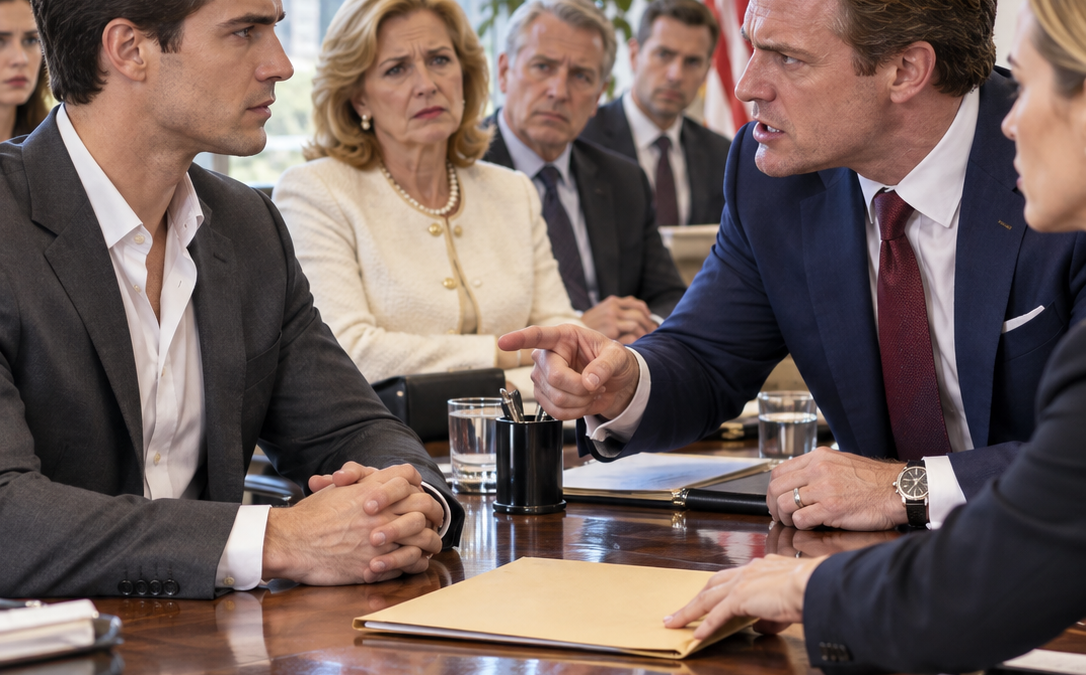
I kept my head down, took every odd job I could, studied business at night, and started tinkering with side hustles. First, it was reselling electronics. Then small e-commerce ventures. Finally, after a lot of trial and error, I hit something real.
I built a logistics software company from scratch, poured every ounce of grit I had into it, and scaled it quietly while my parents kept bragging about Daniel’s accomplishments to anyone who would listen.
They didn’t even know what I was doing because they never asked.
Fast-forward a decade.
My company, after years of long nights and setbacks, got acquired. The deal closed just last year.
The number?
Twenty-five million dollars.
To be honest, I didn’t even celebrate in the way people might think. There wasn’t champagne or an exotic vacation. I just sat in my small apartment, staring at the signed paperwork, and thought, So this is what it feels like to finally win.
But I didn’t tell anyone in my family.
I wanted to see how long it would take for them to notice that maybe, just maybe, the other son had done something.
Which brings us to this past Christmas dinner.
The family house was decorated like a Hallmark movie. Mom had insisted on her traditional feast—turkey, ham, casseroles, pies, the works.
Daniel, of course, strolled in like a king, his wife and two kids trailing behind him. He had a new watch glinting on his wrist, no doubt another gift my parents had quietly funded.
My mom fussed over him. My dad opened his favorite scotch.
And the whole night started off like every holiday before it.
Me, the afterthought.
I sat there quietly, passing plates, half listening to Daniel talk about how stressful his job was and how unfair it was that his bonus hadn’t been bigger that year.
The irony almost made me choke on my drink.
Then, out of nowhere, my aunt—who I’d confided in months earlier—turned to me and asked casually, “Sam, how’s the company doing? Last I heard, you closed that big deal.”
The table went silent.
Forks paused midair.
Mom blinked like she hadn’t even registered the words. Daniel tilted his head, smirking like he thought she was joking.
“What deal?” he asked.
I took a breath, my heart pounding, and said simply, “I sold my company last year.”
My dad frowned.
“Company? What company?”
“The logistics software company I’ve been building for the last ten years,” I explained.
My voice was calm, but inside, I was bracing for their reaction.
“It was acquired for twenty-five million dollars.”
The air got sucked out of the room.
My aunt smiled proudly, but my mom’s face twisted like I’d just confessed to a crime.
Daniel went pale, then red. His fork clattered against his plate.
“Twenty what?” he stammered.
“Million,” I repeated.
It was like dropping a grenade in the middle of the table.
My parents stared at me, then at Daniel, then back at me.
And that was when Daniel started shaking his head, almost laughing in disbelief before his voice cracked.
“That’s not fair,” he said. “That’s not fair. You—you can’t have that kind of money.”
I sat there frozen while he pushed his chair back so hard it nearly toppled.
He stood up trembling.
Then, no exaggeration, he collapsed onto the floor, sobbing. Full-on sobbing, like a child who’d been told Christmas was canceled.
His wife rushed to him, confused, but he just kept crying.
“It’s not fair. I’ve done everything, and he gets twenty-five million.”
And then came the words that would burn themselves into my memory.
“You need to give me at least fifteen million.”
He looked at me through tears.
“I deserve it.”
I blinked, thinking I’d misheard him.
But before I could even respond, my mom slammed her hands on the table and screamed at me.
“You stole his future! You robbed your brother of what should have been his! How dare you keep this from us?”
The entire room descended into chaos.
Daniel was on the floor, begging through tears. My mom was pointing at me like I’d committed some unforgivable sin against the family.
And my dad?
He just sat there stunned, muttering under his breath.
I didn’t say another word. I just sat there watching it unfold, feeling a strange mix of anger, vindication, and disbelief.
For years, I’d been invisible.
And now, the moment I wasn’t, they were accusing me of theft for building something they had never once cared about.
That was when I realized this Christmas dinner wasn’t just going to be another forgettable holiday.
It was the beginning of something much, much bigger.
And as my brother cried on the floor demanding millions, I knew deep down that I wasn’t done yet.
When I replay that Christmas dinner in my head, it still feels almost surreal.
You’d think that if your child suddenly revealed they had managed to pull off something huge in life—something you never had to fund, never had to carry, never had to even acknowledge—you’d feel some pride.
Even if you had complicated feelings, maybe you’d at least nod and say, “Well done.”
But that wasn’t what I got.
Not even close.
After the bomb dropped about the twenty-five million dollars, the mood in the room shifted in a way I still can’t properly explain.
You know those family gatherings where everyone is laughing and telling stories and the atmosphere feels warm and predictable?
That all evaporated.
The warmth was gone.
My aunt, bless her heart, kept trying to lighten the air by making a joke about Sam being the secret millionaire, but nobody else laughed.
My mom’s face looked pinched, like she’d just bitten into something sour.
And Daniel?
Well, he stayed on the floor for a good ten minutes, crying like a man who had lost everything.
When he finally pulled himself up, he didn’t even look at me. He just sat there, red-eyed and trembling, muttering under his breath about how unfair life was.
His wife dabbed his forehead with a napkin like he was on his deathbed.
My dad poured himself another glass of scotch, drained it in one go, and avoided eye contact with me altogether.
“Sam,” Mom said finally, her voice sharp enough to cut through the silence. “Why didn’t you tell us? Why would you hide something like this from your family?”
I felt every eye on me.
My fork sat idle against my plate.
I swallowed and answered as evenly as I could.
“Because nobody ever asked.”
That should have been enough.
But she slammed her palm on the table again, rattling the dishes.
“Don’t be smart with me. You think this is some kind of game? You think we wouldn’t care about something like this?”
I looked her straight in the eye and, for the first time in years, let myself be blunt.
“You never cared about anything I was doing. Every time I tried to share something, you brushed it off. You only had eyes for Daniel.”
The air grew colder.
My mom’s lips pressed into a thin line.
My dad sighed heavily.
And Daniel finally snapped his head up, glaring at me like I’d insulted his very existence.
“You’re jealous,” he spat. “You’ve always been jealous of me, and now you’re trying to make me look bad.”
Then he turned toward our parents.
“But guess what, Mom and Dad? He wouldn’t have gotten that money if it weren’t for me.”
I nearly laughed, but the sheer seriousness in his tone stopped me.
“What are you talking about?”
He smirked—a wet, broken smirk.
“You only worked so hard because you were trying to compete with me. I pushed you. So, in a way, you owe this to me. That money? It’s mine too.”
That was when Mom chimed in again, nodding furiously.
“He’s right, Sam. Your brother inspired you. Even if you don’t realize it, he deserves a share. It’s only fair.”
“Fair?”
I echoed the word, my voice rising.
“Was it fair when you paid his rent while I was eating canned soup every night? Was it fair when you bought him a house and told me to be responsible? Was it fair when you erased his debts but let me drown in mine while I was starting out?”
They stared at me.
“You’ve done everything for him and nothing for me. And now, after I finally build something on my own, you want to call it his.”
My voice cracked on that last word.
Not from weakness, but from the sheer emotional weight of finally saying out loud what I’d bottled up for decades.
Daniel slammed his fist on the table.
“I’m not asking for all of it, Sam. Just fifteen million. You’ll still have ten left.”
He shrugged as if he were proposing something perfectly reasonable.
“That’s more than enough for someone like you.”
“Someone like me?” I repeated slowly.
“Yes,” Mom hissed. “Someone who wouldn’t even have made it this far without this family’s influence.”
I stared at her in disbelief.
“What influence? You didn’t help me with anything. You didn’t even know what I was doing.”
But she doubled down, leaning forward, her eyes burning.
“You grew up in this house. We gave you food, a roof, an education. You owe everything to us and to your brother. If you think otherwise, you’re ungrateful.”
Ungrateful.
That word hit harder than I expected.
I’d worked three jobs at once. I’d slept in my car some nights when rent was too high. I’d skipped doctor visits because I couldn’t afford them.
And they had the nerve to call me ungrateful.
At that point, my aunt finally snapped.
“Are you all hearing yourselves? Sam worked his tail off for years, and none of you even cared enough to notice. Now that he’s successful, suddenly you’re entitled to his money? It’s disgusting.”
My mom whipped her head toward her, eyes flashing.
“Stay out of this, Margaret. You’ve always been jealous of our family.”
“Jealous?” My aunt scoffed. “Of what? Watching you spoil one child rotten while ignoring the other?”
The room felt like a battlefield now.
Daniel’s kids were whisked upstairs by his wife, who looked like she wanted nothing more than to disappear.
My dad kept drinking, silent, but as far as I was concerned, his silence spoke volumes.
It was consent to the madness.
Dinner was abandoned. Plates sat half full, gravy congealing, wine glasses untouched.
Daniel muttered under his breath about how he was owed the money and how he’d never forgive me if I didn’t share.
My mom alternated between glaring at me and patting his shoulder like he was the victim of some great injustice.
Then came the kicker.
My mom leaned across the table and whispered harshly, though loudly enough for everyone to hear.
“If you don’t give your brother what he deserves, you’ll tear this family apart. Do you really want to be responsible for that?”
The manipulation was so blatant it almost made me laugh.
But I didn’t.
I just sat back, folded my arms, and said nothing.
My silence seemed to infuriate her even more.
Over the next hour, the pressure only grew.
My mom kept circling back, asking how I could live with myself if Daniel struggled while I hoarded money.
Daniel sulked in the corner like a child denied dessert, occasionally throwing in passive-aggressive comments like, “Enjoy your millions while your family starves.”
The man literally had a house and a steady job.
He wasn’t starving.
My dad finally contributed one sentence all night.
“Maybe you should just give him something, Sam. Keep the peace.”
That was the moment I realized just how deep the favoritism ran.
Even in the face of logic, even with the truth laid bare, they still chose him.
Always him.
When I finally got up to leave, Mom tried one last tactic.
She grabbed my wrist at the door.
“Think about what’s right, Sam. Your brother’s future depends on you now. Don’t be selfish.”
I pulled my arm free, looked her straight in the eyes, and said, “For once in my life, I’m going to be selfish.”
Then I walked out into the cold December night, my heart pounding, my ears ringing with everything I’d just heard.
But the story didn’t end there.
That Christmas dinner was only the beginning.
The fallout in the days that followed made everything much, much worse.
I didn’t sleep that night.
I lay in bed staring at the ceiling, my mind replaying every word my family had hurled at me like a broken record.
My brother sobbing on the floor, demanding fifteen million dollars like it was his birthright.
My mother screaming that I’d stolen his future.
My father’s one contribution—a weary suggestion that I should just give in to keep the peace.
The longer I thought about it, the more surreal it felt.
I’d spent my entire adult life grinding, sacrificing, fighting for every inch of progress.
And now that I’d made it, my own family acted like I’d committed some kind of crime.
You’d think they’d be proud.
Maybe even a little surprised.
But no.
Instead, they twisted it into another weapon to use against me.
By morning, I’d convinced myself that maybe—just maybe—they would wake up embarrassed by their behavior.
Maybe emotions had simply run high. Maybe, with a little time, everyone would cool off.
I was wrong.
Two days later, I got a phone call.
It was my mom.
No hello.
No “How are you?”
Just straight to the point.
“Have you thought about what we said?” she asked.
I knew exactly what she meant.
“About what?” I replied, feigning ignorance.
“Don’t play dumb, Sam. Your brother is under tremendous stress. He hasn’t slept. He feels betrayed. We’ve always taught you that family comes first, and this is your chance to prove you believe that.”
My grip on the phone tightened.
“So let me get this straight. You expect me to hand over fifteen million dollars just because Daniel cried about it?”
“You make it sound so crude,” she said sharply. “We’re not asking for the world. Just enough so Daniel can feel secure. He’s always carried this family on his back, Sam. He’s earned it.”
That line nearly made me laugh out loud.
Daniel.
The same brother whose debts had been paid off. Whose rent and mortgage were gifts. Who couldn’t manage a credit card responsibly.
He had carried the family?
I bit my tongue.
“No, Mom. I’m not giving him anything.”
There was a pause.
Then her voice dropped low and threatening in a way I hadn’t heard since I was a teenager.
“You’ll regret this, Sam. Mark my words. You can’t turn your back on family without consequences.”
She hung up before I could respond.
For a while, I brushed it off as empty words. Just another manipulative tactic to guilt me.
But I underestimated just how far they were willing to go.
A week later, I went to check my business accounts.
Even though the acquisition had gone through, I still kept a portion of my funds and company-linked accounts active while the final paperwork cleared.
I logged in and froze.
Several transactions had been attempted—large transfers flagged for review.
None had gone through, thankfully, but my stomach dropped when I looked at the requested recipient.
Daniel’s personal account.
At first, I thought it had to be some kind of phishing attempt or fraud.
But when I contacted the bank, they told me the request had been made using security information that only someone very close to me could have known.
And that was when it clicked.
My brother—or worse, my parents—had tried to access my funds.
I remember sitting in my office chair, my hands trembling, feeling my face flush with heat.
This wasn’t entitlement anymore.
This wasn’t just words at a dinner table.
This was theft.
An active attempt to rob me of what I had worked for.
And if the bank hadn’t flagged it, I could have lost millions.
I called my mom immediately.
She picked up on the second ring.
“Did you or Daniel try to access my accounts?” I demanded.
Her silence was answer enough.
Then she said, cool as ice, “We were just making sure things were allocated fairly.”
“Allocated fairly?” I snapped. “That’s not your money. You had no right—none—to even touch it.”
“Don’t raise your voice at me,” she said, her tone sharp and commanding. “We did what needed to be done. Daniel is family. He deserves his share. And if you won’t do the right thing, then we will.”
I couldn’t believe what I was hearing.
My own mother was openly admitting to trying to steal from me.
And she said it as casually as if she were discussing the weather.
“You realize this is illegal, right?” I said, my voice shaking with fury. “You could go to prison for this.”
“You wouldn’t put your own family in prison,” she said smugly. “Besides, who would believe you? You’ve always been bitter. You’ve always tried to paint yourself as the victim. If it comes down to it, we’ll make sure everyone knows how selfish you really are.”
That line cut deeper than I care to admit.
Not because I believed it.
Because I knew how easily they could spin the narrative.
To outsiders, Daniel was the charming golden boy, the one everyone praised.
I was the quiet one, the one who kept to himself.
Who would they believe?
The son who’d been celebrated his entire life, or the one who’d been overlooked and now suddenly had money?
I hung up before I said something I couldn’t take back.
That night, I couldn’t shake the sense of betrayal.
My own family had crossed a line I never thought they would cross.
And it didn’t stop there.
Word started spreading among extended relatives—cousins, uncles, people I hadn’t spoken to in years.
They all suddenly remembered I existed.
I started getting messages like, “Hey, cuz. Heard about your big payday. Let’s grab lunch.”
Or worse:
“Your brother mentioned you were being stubborn about helping family. That true?”
It became clear that my mom and Daniel were poisoning the well.
They were spinning the story to make me out to be the greedy villain hoarding money while poor Daniel suffered.
They conveniently left out the part where he lived in a house my parents had helped buy him, or the fact that he was gainfully employed.
To hear them tell it, Daniel was practically destitute and I was some miser sitting on a pile of gold.
The worst blow came when I showed up at my parents’ house unannounced a few days later, desperate to confront them face-to-face.
I wanted to look them in the eyes and ask how they could justify stabbing me in the back like this.
When I pulled into the driveway, though, something caught my eye.
A brand-new luxury car was parked out front.
I didn’t recognize it, but the license plate frame still had the dealership’s name on it.
Inside, sitting at the table, was Daniel, grinning ear to ear and jangling the keys.
“Nice ride, huh?” he said with a smirk. “Figured I deserved to treat myself.”
My blood ran cold.
“How did you pay for that?” I asked slowly.
He leaned back in his chair, stretching like a cat that had just eaten the canary.
“Family takes care of each other. Mom and Dad knew you’d come around eventually, so they helped me get a head start.”
My gaze snapped toward my parents.
Mom crossed her arms defiantly.
Dad wouldn’t look me in the eye.
“You used my money, didn’t you?” I asked, my voice trembling.
Mom didn’t flinch.
“Consider it an advance. You’ll understand one day.”
That was it.
The breaking point.
It wasn’t just about the money anymore.
It was about trust.
Respect.
Basic decency.
They had taken what was mine without permission, justified it in their own twisted way, and expected me to swallow it.
I stood there with my fists clenched and my heart hammering, staring at the people I once called family.
And in that moment, I knew something inside me had shattered.
There was no going back.
What they didn’t know was that while they were busy betraying me, I was already starting to think several moves ahead.
I remember standing in that dining room, the keys to Daniel’s brand-new car glinting in his hand like some trophy he hadn’t earned.
My parents were glaring at me as if I were the criminal.
My chest felt tight, like I couldn’t get a full breath.
That moment wasn’t just betrayal.
It was a breaking point.
Something inside me snapped.
But instead of rage, what washed over me was a deep, suffocating hollowness.
I didn’t shout.
I didn’t argue.
I just turned around and walked out of the house.
My footsteps felt heavy, like I was dragging a chain behind me.
When I got to my car, I sat in the driver’s seat with my hands on the steering wheel and stared at the front of the house.
All the memories from my childhood came rushing back.
The nights I’d done homework alone in my room while my parents cheered at Daniel’s football games.
The birthdays they’d forgotten until dinnertime.
The excuses they’d made whenever I asked for help.
And now, even after everything—after finally carving out a life of my own—they had the audacity to steal from me and call it fair.
I drove home in silence, the winter night pressing against the windows.
My apartment felt colder than usual when I stepped inside.
I didn’t bother turning on the lights.
I just collapsed onto the couch and sat in the dark, staring at nothing.
For the first time in years, I felt truly defeated.
The following weeks blurred together.
I stopped answering phone calls from my parents. Every time I saw their names light up my phone, my stomach turned.
My brother left smug little voicemails, his tone dripping with fake concern.
“Hey, Sammy, just checking in. Look, I know you’re upset, but you can’t hold on to that money forever. Family shares, you know.”
He said it as if he were the reasonable one.
As if I were the problem.
I avoided extended family too.
The whispers were already circulating.
My cousin messaged me out of the blue.
“Dude, why are you being so cold? Daniel says you’re refusing to help the family after everything your parents did for you.”
That line hit me harder than it should have.
After everything they did for me.
What exactly was that?
A roof over my head when I was a child?
A few meals?
Meanwhile, Daniel got houses, tuition, bailouts, cars.
I didn’t bother replying.
Work, which used to be my escape, didn’t even feel like a refuge anymore.
Every email I opened, every investor call I joined, was tainted by this gnawing thought.
What if they try again?
What if they come after me in court?
Could they manipulate the narrative enough to make it look like I owed them?
I double-checked every account, every legal document, adding extra layers of security.
I barely slept.
The exhaustion ate at me.
I stopped going out.
I stopped seeing friends.
I didn’t tell anyone what was happening because, frankly, I was embarrassed.
Who wants to admit that their own family would stoop so low?
It felt humiliating, like I was the butt of some cruel cosmic joke.
One night around two in the morning, I found myself sitting at my kitchen table with a notebook, writing down everything.
Every slight.
Every instance of favoritism.
Every betrayal.
It was messy at first, just scribbles, but then it turned into something more organized.
Almost like a case file.
Part of me was trying to make sense of it, to see the pattern clearly.
Another part of me, though I wouldn’t admit it yet, was quietly planning.
The lowest moment came when I bumped into an old friend, Josh, at a café.
He hadn’t heard the family gossip yet.
We chatted, caught up, and then he asked, “So, how’s your family doing?”
I froze.
My mouth went dry.
For a second, I almost said, “Good,” out of habit.
But instead, I just muttered, “Complicated.”
Josh smiled sympathetically.
“Yeah, families are messy sometimes. But at the end of the day, they’re all we’ve got, right?”
I nodded.
But inside, I wanted to scream.
The truth was, I felt like I didn’t have a family anymore.
They had chosen greed over me again and again, and now they had taken it to a level I couldn’t forgive.
That night, back in my apartment, I realized I was mourning them.
Mourning parents who never really saw me.
Mourning a brother who treated me like a rival instead of kin.
Mourning the idea of a family I had never truly had.
It was grief.
Plain and simple.
But it came with a strange clarity.
If they wanted to see me as the selfish villain, fine.
If they wanted to call me ungrateful, fine.
I wasn’t going to keep breaking myself trying to prove otherwise.
But I also wasn’t going to let them strip away what I had built.
Slowly, I started taking small steps.
I contacted a lawyer I trusted and explained everything—the attempts to access my accounts, the manipulative demands, the theft.
He listened carefully, then leaned forward.
“Sam, you need to protect yourself legally, financially, and personally.”
So I did.
I started moving assets into trusts they couldn’t touch.
I updated passwords, locked down accounts, installed extra verification layers.
I even drafted documents that would make it impossible for them to lay claim to anything if I were gone.
It was tedious, draining, and heartbreaking to even think about, but it gave me a flicker of control in a situation where I had felt powerless.
Emotionally, though, I was still at rock bottom.
I stopped celebrating small wins.
I stopped cooking.
I lost weight.
My apartment became cluttered. Dishes stacked up. Laundry went undone.
Some mornings, I didn’t even want to get out of bed.
My brother’s smug face haunted me.
My mother’s shrill accusations echoed in my head.
My father’s silence weighed on me like a stone.
But beneath all that despair, a quiet ember started to burn.
It was small at first.
Fragile.
But it was there.
Every time I thought about the luxury car in Daniel’s driveway, that ember glowed hotter.
Every time I remembered my mom’s voice calling me selfish, it flared brighter.
And every time I heard another rumor twisted against me, that ember sharpened into something else.
I didn’t know exactly how yet.
But I knew this much.
I wasn’t going to stay at the bottom.
They wanted me broken, ashamed, compliant.
But I wasn’t that kid living in their shadow anymore.
I started to rise.
Not with fireworks or declarations, but with quiet, deliberate steps.
Planning.
Preparing.
Building something they couldn’t touch.
And one day, when the time was right, they would see just how much stronger I’d become.
The weeks after my lowest point felt like wading through mud.
Every step forward was exhausting.
But I kept moving because I knew staying still would mean drowning.
Rock bottom had done something strange to me.
It stripped me of illusions.
I no longer hoped my parents would suddenly wake up and see me.
I no longer wished Daniel might one day respect me.
That fantasy was dead.
What was left was clarity.
I had built something on my own, and now I needed to protect it, expand it, and let that become the life I leaned on.
Not them.
At first, the rise wasn’t dramatic.
It was small things.
I forced myself back into a routine.
Morning runs, even when I didn’t feel like it.
Cooking proper meals instead of living off takeout.
Scheduling regular calls with my lawyer and accountant.
I started therapy too, something I’d resisted for years.
Sitting in that quiet office, telling a stranger about the weight of being invisible in your own family, about betrayal so sharp it left you sleepless, was both humiliating and liberating.
My therapist said something that stuck with me.
“Sam, your family made you believe love is conditional. That’s not your burden to carry anymore.”
Something inside me clicked when she said that.
For the first time, I realized I wasn’t just angry at them.
I had been carrying shame, guilt, and a desperate hunger for approval that never came.
Letting that go wasn’t easy.
But acknowledging it was like taking the first breath after being underwater too long.
Meanwhile, business opportunities kept rolling in after the acquisition.
My name was quietly circulating in certain circles.
Investors reached out.
People wanted me on advisory boards or asked whether I’d consider starting something new.
At first, I hesitated.
I was still licking my wounds.
But eventually, I said yes to a few projects that sparked real excitement in me.
One of those projects was a mentorship program for young entrepreneurs.
I partnered with a nonprofit that helped kids from underprivileged backgrounds learn business basics.
Standing in a classroom full of teenagers and telling them about how I’d worked nights in a diner and failed more times than I could count before finally finding success, I felt something I hadn’t felt in a long time.
Purpose.
These kids listened.
They asked questions.
They saw me.
And unlike my family, they didn’t look at me with jealousy or entitlement.
They looked at me with respect.
That fueled me.
Slowly, I rebuilt my confidence.
Financially, I grew smarter too.
My lawyer helped me create multiple trust structures and shell companies—layers upon layers that not only protected my assets, but also ensured transparency for regulators.
I wasn’t just guarding myself against my family anymore.
I was future-proofing everything.
My accountant joked that Daniel could hire the best lawyers in the world and still never untangle the web.
That gave me peace of mind.
But it also gave me freedom.
With less fear of being blindsided, I started taking calculated risks again.
I invested in a logistics startup run by two brilliant engineers out of Chicago.
I quietly bought into a commercial property that was undervalued but sat in the path of a new development project.
I even dipped into the tech space again—not as the face of a company this time, but as the silent power behind it.
The funny thing about success is that it snowballs.
Once people know you’ve pulled off one big win, doors start opening everywhere.
I went from being the ignored son to the guy people sought out for advice.
And the more I said yes to the right opportunities, the more leverage I gained.
On a personal level, I started traveling.
At first, it felt indulgent, like something Daniel or my parents would sneer at.
But I realized I wasn’t doing it to flaunt wealth.
I was doing it to breathe.
I spent weeks in Japan, wandering through Kyoto temples and journaling in quiet gardens.
I hiked in Patagonia, something I’d dreamed about for years but never thought I’d have the time or money to do.
I even took cooking classes in Italy, learning how to make pasta from scratch.
Every trip felt like reclaiming pieces of myself I’d been too scared to embrace.
I also reconnected with old friends I’d drifted away from.
Some were surprised by my success, but most were simply happy to see me doing well.
Unlike my family, they didn’t demand a cut.
They wanted to share stories, laugh about the past, and dream about the future.
Those friendships reminded me what real connection looked like.
Something my family could never give me.
Meanwhile, my parents and Daniel didn’t back down.
They kept spreading their narrative.
I heard from more distant relatives who messaged me with thinly veiled judgment.
“It must be nice to have all that money and not share with your family.”
One even said, “Your mom told me you’ve changed since the deal. You’re too proud now.”
At first, those words stung.
But then I realized something.
Let them talk.
Their gossip was powerless against the reality of what I was building.
Every lie they told, every manipulation they spread, only highlighted how little control they had over me anymore.
Then something shifted.
A mutual friend of Daniel’s, someone who had always been in his corner, reached out to me privately.
“Sam,” he said, “I know your brother’s been bad-mouthing you, but honestly, people are starting to see through it. He complains too much. Everyone knows he’s had everything handed to him, and now that you’ve made it, he just looks bitter. Be careful, but people are on your side more than you think.”
That moment was like a crack in the dam.
For years, the narrative had always favored Daniel.
But now people were starting to notice the truth.
The golden child’s shine was fading.
And the shadows he’d thrown over me were lifting.
By spring, I felt stronger than I had in years.
My projects were thriving.
My health was better.
My mind was clearer.
And I realized something.
Power wasn’t just about money or influence.
It was about freedom.
Freedom from the chains of needing their approval.
Freedom from their manipulation.
Freedom to define myself on my own terms.
But with that freedom came an idea I hadn’t let myself consider before.
If I had the power to rise above them, I also had the power to turn the tables.
For the first time, I stopped thinking only about defense and started imagining offense.
Not petty revenge.
Something deeper.
Something that would expose the truth for everyone to see.
The ember that had burned quietly at rock bottom now roared into a fire.
And I knew the day was coming when I wouldn’t just protect what I’d built.
I’d make them regret ever trying to take it from me.
After the slow rebuilding of my life, the part that came next felt less like revenge and more like strategy.
Revenge gets a bad reputation in stories because it’s often shown as a hot, ugly thing.
Shouting.
Smashing plates.
Dramatic confrontations.
That wasn’t what I wanted.
I wanted something cooler.
Inevitable.
I wanted the truth to land so clearly and so precisely that there would be no room left for their stories or their gaslighting.
That meant planning.
Patience.
And patience felt oddly good to me.
Like power you could measure.
First, I tightened every loose end around me.
I doubled down on the legal and financial armor.
I’d already started building more robust trusts with staggered releases of funds, so nothing large sat in one place. Multiple custodians. Independent trustees who reported to law firms I trusted, not to family friends.
My lawyer, Clare, who smelled faintly of espresso and had the kind of stare that made people fidget, became my closest ally.
She ran through scenarios with me like a chess player.
What would they try first?
Second?
Third?
What would family courts look for?
How would public opinion react if this blew up?
For every what-if, we had a countermeasure.
But law and paperwork weren’t enough.
Stories are shaped by people.
And people talk.
If I wanted to blunt their narrative, I needed witnesses who could confirm the truth.
That I had always been the one scraping and building.
That Daniel had been spoiled.
That the attempted transfers had been orchestrated from inside the house.
That was where digging quietly paid off.
I started collecting small confirmations.
Emails.
Bank notifications.
Receipts.
Even voicemail messages.
I asked my accountant to provide a timeline of every payout and loan the family had made to Daniel over the years, with dates and amounts.
My accountant, a sensible woman named Priya, pulled it together reluctantly at first, then with a kind of clinical disgust once she realized how much money had flowed in one direction.
The spreadsheet she created was damning.
Mortgages paid off.
Credit cards cleared.
Rent covered for years.
A down payment wired from an account with my parents’ names listed as the origin.
We labeled each entry with a note about whether it was a gift or a loan. When nothing existed in writing, we marked it as an oral promise or family assistance.
It was messy.
But the pattern was impossible to miss.
Next, I hired a private investigator.
I didn’t like the idea of snooping into people’s lives. It felt dirty at first.
But the PI wasn’t digging for gossip.
He was looking for documents and confirmations.
Dealership invoices.
Transaction authorizations.
IP logs from the bank showing the times and addresses used during the attempted transfers.
Any signature forgeries.
Anything that proved a hands-on intrusion rather than rumor.
He found the dealership receipt for Daniel’s new car and, crucially, a string of emails between the dealership and my parents confirming payment arrangements.
He found warranty paperwork for appliances purchased by my parents the month after the alleged bank transfer attempt.
Those receipts matched the dates of suspicious banking activity.
It was the kind of mundane paperwork people don’t think about.
But mundane things become evidence in uncomfortable, practical ways.
I also started quietly talking to people who knew my family from outside the house.
Old neighbors.
A teacher from high school.
The woman who ran the little bakery where Mom loved to gossip.
Nobody wanted to get dragged into a family fight, but most were willing to confirm simple facts.
That Daniel never worked nights.
That my parents had frequently offered him financial help.
That they had celebrated him in ways they never celebrated me.
Those confirmations were small, human things.
No one’s morality was on trial.
They were just context.
I recorded conversations where people agreed to be recorded—legally and with consent—so there would be no “he said, she said” later.
At the same time, I played a longer game.
Reputation.
I began telling the truth about myself publicly, but on my terms.
I did interviews, but not the flashy kind where you brag about numbers.
I spoke about failures.
About long nights.
About the charity mentorship work that had become important to me.
The more I talked about the truth of my journey—working in a diner, sleeping in my car, paying my own way—the more the public narrative shifted.
People liked a comeback story.
They liked grit.
My mom’s little campaign of “he’s changed” started to look like sour grapes when juxtaposed with the reality I was telling: that I had built something from the ground up without family help.
It wasn’t a PR stunt.
It was reclaiming my voice.
There were other, quieter levers I pulled too.
I started contacting people in my brother’s professional circle.
Vendors.
Small clients.
The landlord of a commercial property where he had briefly sublet a small office years earlier.
I didn’t threaten anyone.
I just asked for honesty.
The landlord admitted that Daniel had a habit of making late payments and had once been rescued by my parents.
A vendor confessed that the “big idea” Daniel claimed credit for was actually something I had pitched to him years earlier during a casual conversation.
Little by little, those threads built a fabric of reality I could point to.
Meanwhile, Clare and I filed two quiet but strategic legal items.
One was an injunction request to the bank, demanding a forensic audit and full logs of the attempted transfers.
We framed it not as a family dispute, but as suspected financial fraud.
The bank, alarmed at the prospect of liability, obliged and produced records showing IP addresses that traced back to the house, along with timestamps that lined up with calls my mother had made the day before.
The other move was preemptive.
A formal cease-and-desist notice to my parents, warning them against any further attempts to access or coerce me regarding my funds.
It was a gentle-sounding legal letter.
Polite.
Precise.
Unemotional.
But beneath the calm prose was a very clear message.
I was serious.
One of the most satisfying discoveries came from an unexpected source: Daniel’s mortgage agreement from years earlier.
In the fine print, there had been a guarantor clause that my parents had used as collateral.
They had signed as guarantors for family reasons, which was how the house purchase had initially been funded.
But buried in the fine print was language that, under certain circumstances, allowed the guarantors to claim reimbursement if the borrower defaulted.
It was a messy, morally questionable provision—essentially a back door that let them later classify funds as advances to themselves rather than gifts to Daniel.
Clare’s eyebrows shot up when she read it.
“They’ve been cleaning their tracks,” she said softly. “But that actually helps you.”
It was a strange kind of victory to find evidence that their careful bookkeeping could be used against them.
I also began quietly tipping the scales of public perception in ways I couldn’t have predicted.
A former colleague of mine, someone who had left the startup world to become a reporter, reached out after one of my public talks.
“There’s a story here,” he said. “Not a smear. A human piece about family dynamics and wealth. How success changes relationships. If you’re ever ready, I’d like to profile you.”
I hesitated.
I didn’t want to weaponize public sympathy.
But the possibility of a neutral third-party profile that told the plain truth without my family’s spin felt useful.
It could be the kind of article that tilted conversations at family gatherings and among relatives who were still on the fence.
Still, with all the evidence, the allies, and the legal layers, nothing felt final.
I wasn’t hunting for petty payback.
I wanted a reckoning that left no ambiguity.
That they had tried to steal from me.
That their claims were self-serving.
That the moral authority they had wielded for years was, in fact, purchased and fragile.
To get that reckoning, I needed a method that combined legal consequences, social exposure, and undeniable documentation.
That was when the plan started to take shape in my head.
A multifront move that wasn’t about theatrics.
It was about pressure.
First, the bank audit and forensic logs would provide the legal backbone.
Second, a carefully placed profile in a reputable outlet would present the narrative to the public in a way that couldn’t simply be written off as vindictive.
Third, a civil suit for attempted theft and fraud would force them either to face depositions under oath or settle quietly.
Depositions meant sworn testimony.
Sworn testimony meant they couldn’t simply lie without consequences.
Fourth, I would line up the witnesses.
My aunt.
The landlord.
The dealership owner.
People whose stories matched the paper trail.
I spent nights mapping the sequence like a military campaign, assigning contingencies for every likely countermove my parents might make.
Would they go to a lawyer and file for a declaratory judgment?
Probably.
Would they try to reach out to my investors and smear me?
Maybe.
Could they file for slander?
The thought made Clare laugh.
“Truth and documentation are great defenses against that.”
But there was one thing that still nagged at me.
The human element.
Even with evidence, family fights get messy.
People get hurt.
And the collateral damage can become more than financial.
I didn’t relish the idea of the aunt who had once been kind to me getting dragged into court, or my father’s slow decline accelerating under stress.
That was why my strategy had boundaries.
I wanted truth and restitution.
Not ruin.
I wanted accountability that made them confront what they had done, not humiliation for the sake of spectacle.
In the end, I kept returning to the same image.
Not a headline screaming FAMILY FEUD.
A quiet courtroom.
Facts laid out.
Human beings forced to answer for their choices.
That image felt fair and final in a way no melodrama ever could.
So I set the last pieces in motion.
The bank audit came back with logs tied to my parents’ IP address.
The dealership confirmed wire instructions that overlapped suspiciously with the dates of attempted transfers.
A few reluctant relatives admitted off the record that Mom had been pushing her narrative with a vengeance.
Clare drafted the initial complaint not as an angry broadside, but as a surgical document referencing specific incidents, dates, and legal claims.
The reporter’s interest grew into a promised profile.
Priya finalized the financial timeline.
The PI gave me a thick folder of receipts and timestamps that read like a chronology of entitlement.
One evening, sitting at my kitchen table with the folder spread open in front of me, I felt something I hadn’t felt in a long time.
Calm.
The ember was no longer a flame.
It was a mapped operation.
I could see the next steps clearly.
File the suit.
Let the bank records speak.
Let the witnesses corroborate.
And allow the truth to do what manipulative narratives never could.
Become undeniable.
I called Clare and told her I was ready.
She asked one question.
“Are you prepared for how this will look in the moment?”
I thought of the keys in Daniel’s hand.
Of my mom’s smugness.
Of the nights I had spent feeling invisible.
I thought of the mentorship kids who looked at me with new eyes.
I was ready.
The next morning, I sent the file to Clare with a single line in the subject:
Proceed when ready.
Then I sat back and waited for her email to come through.
For the moment when everything I had gathered—quietly, steadily—would finally be put into motion.
When Clare filed the complaint, it felt oddly anticlimactic.
Paperwork submitted.
Copies served.
The legal equivalent of setting the first domino upright.
But the real work—the satisfying part—was watching the machine we had built begin to move with quiet inevitability.
The bank logged the forensic report as evidence.
The reporter promised the profile would run the week the complaint hit.
Priya emailed the spreadsheets to our counsel with notes in the margins.
The PI dropped off a fresh folder with the dealership invoice sitting loose in the middle like a smoking pistol.
Everything I had collected for months—receipts, recordings, timelines—now had a stage on which to be heard.
The first call from opposing counsel came the afternoon the complaint was filed.
His was the kind of voice that tried to sound reasonable while feeling you out.
“We’d like to discuss an early resolution,” he said. “Your client must understand the family damage this will do.”
It was the same old play.
Weaponized guilt.
An attempt to deflect.
Clare’s response was cool and clinical.
“We can discuss a resolution,” she said, “but it must account for attempted unauthorized transfers, misappropriation of funds, and the emotional distress caused. We have logs, receipts, and witnesses.”
She didn’t raise her voice.
She didn’t need to.
The man on the other end tried a softer tone, but it didn’t change anything.
He asked for a meeting.
We scheduled one.
Before the meeting, Clare walked me through strategy like a general.
“Don’t do theatrics,” she said. “Let the evidence speak. If they come with offers, we evaluate them. If they threaten, we file countermeasures. And remember, this is a civil case, not a carnival. People respect facts more than fury.”
Her calm steadied me.
For the first time since seeing those keys in Daniel’s hand, I felt like I wasn’t simply reacting anymore.
I was directing.
The meeting took place in a small conference room with glass walls that made everything feel intentionally visible.
Opposing counsel brought one of their own, a woman known for shepherding delicate family disputes into settlements.
My parents showed up with Daniel perched beside them like a wounded animal who still believed himself entitled to comfort.
Their faces had that brittle composure of people who desperately wanted to appear reasonable in front of strangers.
Mom kept trying to meet my gaze and failing.
Dad avoided my eyes entirely.
Daniel kept clearing his throat.
We sat down.
My parents’ lawyer opened with a plea for family unity and a vague warning about the pain public litigation could cause.
Clare handed over the bank logs first with a steady, practiced gesture.
The room grew quiet as the auditor’s timestamps and IP addresses scrolled across the lawyer’s tablet.
Clare explained succinctly that the attempted transfers had originated from an IP address registered to their home and that the dealership wires coincided with calls placed from the same numbers.
She didn’t make accusations.
She presented facts.
Then she sat back.
Mom’s face turned an odd shade.
“Those timestamps… there must be an explanation,” she said.
Her voice trembled between disbelief and anger.
“We were worried. We were trying to help.”
It was the same justification she had used before, softened for a conference room.
I felt a strange detachment listening to her.
Every excuse they offered had been rehearsed.
They had practiced how to sound repentant without actually admitting culpability.
I’d heard it at dinner.
In phone calls.
In voicemails.
Nothing new.
Then Clare brought in my aunt’s recorded statement.
Not a legal witness stand, of course, but she had the folder containing the recorded conversation.
My aunt’s voice, calm and honest, described the timeline.
How I had confided in her months earlier about the deal.
How shocked she’d been by my parents’ reaction.
How Mom had begun making comments about “fair shares.”
Hearing my aunt recount that truth in a neutral room felt like a private exoneration.
Opposing counsel shifted uncomfortably.
We didn’t get an immediate settlement.
Instead, the meeting dissolved into threats veiled as logic and negotiations cloaked as concern.
“If we settle quietly,” Dad’s lawyer said, “we can avoid the spectacle.”
Clare replied, “If they settle, it will be a settlement that accounts for documented harm and closes the door on any further attempts to access his funds.”
She looked at me, waiting.
I nodded.
I wanted two things from any settlement.
Transparency.
And safeguards that kept my family away from my finances in the future.
If they wanted to stop the lawsuit with money, fine.
But only if it came with signed agreements, public corrections, and legal assurances.
No secret deals.
No hush money.
The reporter called the night after the meeting and said his piece would run the following Thursday.
He had interviewed me at length about the grind, the mentorship work, the slow accumulation of small wins, and had balanced it with quotes from my aunt, the landlord, and a couple of vendors.
He promised fairness.
He meant it.
This wasn’t a hit piece.
It was a human-interest profile showing how success affects family dynamics and how entitlement can disguise itself as righteousness.
I read the draft and felt strangely exposed and vindicated at the same time.
When the article was published, the reaction was immediate.
Messages flooded my phone.
Not just from friends, but from people I hadn’t heard from in years.
They offered support.
Disbelief at my family’s behavior.
And, more importantly, concrete evidence that people outside the family were finally seeing what had happened.
Comments highlighted the receipts, the bank logs, and the timeline that discredited my parents’ narrative.
The press isn’t magic.
But the combination of clinical evidence and human storytelling shifts opinion in ways cold facts alone sometimes can’t.
The piece gave people a lens through which to view things that had always been dismissed as “family business.”
And that lens was not flattering to my parents.
Then the depositions began.
That part felt like walking into a very dry, very controlled storm.
Each family member was required to give sworn testimony.
Depositions are surgical.
They cut away the drama and examine the tissue of truth.
I sat in an adjacent room while Clare guided the process, watching through one-way glass as my parents answered questions.
Opposing counsel tried to frame my actions as sudden cruelty.
But the documents told a more precise story.
The PI’s receipts sat on the table like small, undeniable facts.
The dealership invoice.
The IP logs.
The mortgage guarantor clause.
Every time a question required a factual answer, the evidence bent the light toward the truth.
I’d always imagined that if it ever came to a legal showdown, I would be exhausted by the rhetoric.
That the emotional cost would be unbearable.
But the opposite happened.
There was something strangely cleansing about sworn testimony.
Under oath, words mattered.
Lies had consequences.
The idea of my mother and brother being forced to answer specific questions about dates, phone calls, and payments made me feel less like a victim and more like an arbiter of truth.
During one deposition, something unexpected happened.
Opposing counsel, trying to undermine my aunt’s credibility, asked about a long-ago family dispute that had nothing to do with the case.
It was a cheap tactic, meant to paint her as biased.
Instead of flinching, my aunt—calm, measured, honest—recounted specifics about my early years.
The nights I worked.
The college tuition I paid myself.
The nights I had slept in my car.
Her words landed like stones.
People in that room shifted.
The air changed.
It was one of those moments when the cumulative weight of small truths suddenly became impossible to ignore.
Outside the legal theater, everything else tightened.
My parents’ friends started distancing themselves.
Invitations to family events dried up.
Daniel’s online persona, previously polished and blameless, began showing cracks as people who knew the family started whispering and then speaking openly.
It’s funny how power sometimes evaporates on its own once the social scaffolding supporting it begins to shake.
For years, my parents had relied on that scaffolding.
Their neighbors.
Church friends.
Casual acquaintances who knew just enough to repeat a sympathetic line.
The documentary evidence and the profile pierced that illusion.
There were offers along the way.
Opposing counsel called with settlement numbers that were generous if all I wanted was money and silence.
“Think about the emotional cost,” he said. “A quiet settlement protects everyone.”
Clare forwarded the offers with annotations.
If they accept, insist on public correction and enforceable protection measures. Otherwise decline.
I thought about the car keys.
The attempted transfers.
The looks around the Christmas dinner table.
I thought about being powerless.
Then I thought about the calm legal scaffolding I now controlled.
I thought about the mentorship kids who deserved to see me stand up for myself.
What I didn’t think about was humiliation.
I didn’t want to humiliate anyone for sport.
I wanted accountability.
The idea of a settlement that included a formal admission of wrongdoing, joint statements correcting the record, and legally binding protective measures appealed to me far more than a quick financial fix.
It would mean my parents had to confront what they had done publicly.
It would mean there was a record.
It would mean they couldn’t simply repeat their manipulations.
The day before the scheduled mediation, opposing counsel called with an odd tone.
He floated the idea of a televised family reconciliation special.
“A chance to show unity,” he said, trying to tempt us with language about public healing.
Clare didn’t miss a beat.
“If they want to heal, they can start by addressing the attempted transfers, paying restitution for unauthorized expenditures, and publishing a correction using our agreed language. Then we’ll talk. Reconciliations on camera are for television, not legal compromise.”
The guy tried to recover the pitch, but it was clear they were grasping for optics.
They had misjudged that chill I had cultivated.
The part of me that measured risk and no longer bent for spectacle.
Mediation morning arrived crisp and cold.
I drove to the center alone, my hands steady on the wheel.
I had rehearsed nothing.
Rehearsed truths don’t need rehearsing.
Clare carried the folder.
Opposing counsel carried the counteroffers like chess pieces.
My parents carried something else.
Defensiveness stitched together with fear.
Daniel still clung to the idea that some payment would restore him.
The mediator opened with platitudes about family and restoration.
Then we began.
And the slow, methodical reality of it took over.
Each time my parents’ lawyer tried to reframe an incident as a misunderstanding, Clare produced a date-stamped email.
A bank report.
A dealership invoice.
The mediator’s face, neutral at first, grew increasingly concerned as the timeline unfolded.
Opposing counsel shifted strategies, then lost a little more ground.
At one point, Dad’s voice cracked.
The stiff veneer began to chip.
Mom tried to maintain control, but a question about the source of the dealership wire made her hands tremble.
Daniel, who had been leaning on the idea of entitlement like a crutch, suddenly looked small.
He kept asking, “Can’t we just fix this? Can’t we come to an agreement?”
His tone was part panic, part calculation.
Clare let them talk themselves into a corner.
She didn’t gloat.
She didn’t unleash rhetoric.
She simply asked for specific commitments.
Restitution for unauthorized purchases.
A signed correction to be distributed to family members and certain community contacts.
And, most importantly, a legally enforceable no-contact clause regarding my financial accounts.
Opposing counsel tried to pivot.
Dad’s lawyer muttered about pride and dignity.
Clare’s face stayed calm.
“You either agree to these terms,” she said quietly, “or we proceed to depositions and trial. The evidence speaks for itself.”
There was silence.
The kind of silence that exists in the space between heartbeats.
I felt that ember inside me grow steady and hot.
Different from rage.
Cleaner.
More purposeful.
The mediator asked whether my parents understood the seriousness of giving testimony under oath.
They nodded, but their faces said otherwise.
Mom’s lips were pursed.
Daniel’s jaw was clenched.
Then, just when it felt like they might cave—or at least offer something meaningful—opposing counsel’s phone buzzed.
He glanced at it.
Then paled.
He read a text, excused himself, and stepped into the hallway.
The corridor outside the mediation room smelled like coffee and paper.
I could hear muffled voices.
His.
Someone else’s.
He returned wearing a forced smile and sat down.
“We need a brief pause,” he said. “There’s new information that’s come to light.”
Clare didn’t blink.
“What information?” she asked.
He hesitated.
“It’s about your aunt.”
His tone tried to be neutral.
But underneath it was something else.
Calculation.
I felt my stomach drop in a way it hadn’t in months.
For one moment, the careful architecture we had built felt precarious.
Then Clare’s face hardened.
Not with anger.
With focus.
“If this is an attempt to intimidate or deflect,” she said, “we will pause this mediation and proceed with whatever filings are necessary.”
Opposing counsel looked at me, then back at Clare.
“We just…” he said. “We should step out.”
The mediator agreed.
The room emptied, leaving Clare and me alone for a moment.
She looked at me with an unreadable expression.
“Whatever they bring,” she said quietly, “we’ll handle it. Don’t react. Wait.”
I breathed in slowly.
Steadily.
As the hallway filled with the murmur of lawyers, I realized this was the real test.
Would I let them drag more people into this labyrinth to protect their story?
Or would I stand firm and let the evidence do its work?
The pause stretched on like the quiet before a storm.
I didn’t know what the text said.
Who it implicated.
Or how far they were willing to go to deflect responsibility.
But I knew this.
I had come too far to be startled into surrender.
And at that exact moment, just as the mediator returned and the room refilled with cautious faces, the door at the back of the conference room opened.
Someone stepped inside carrying a folder.
And the smile on opposing counsel’s face disappeared.
The folder the assistant carried was slim, but heavy with implication.
For a moment, my chest tightened.
Was this some desperate attempt to sling mud?
To drag my aunt or another witness through the dirt just to save face?
Clare didn’t flinch.
She leaned back, crossed her arms, and waited.
The mediator asked the assistant to explain.
The man cleared his throat and set the folder down.
“This,” he said, “is a statement from the bank confirming that the attempted transfers originated from the defendants’ home IP address, and that both parents’ personal devices were used in the login attempts. The dealership has also confirmed in writing that the funds for the vehicle came directly from their joint account, not from any loan or third party.”
The room went still.
I looked at my mother first.
Her skin had gone pale.
Her lips were thin.
Her eyes darted toward Dad.
He stared down at the table like it might open up and swallow him.
Daniel shifted in his seat, fidgeting, trying to look confused.
But his eyes betrayed him.
Wide.
Panicked.
Cornered.
Clare slid the folder toward herself and glanced over the pages with the cool detachment of someone who already knew what was inside.
Then she looked up.
“That corroborates everything we’ve claimed. Thank you.”
The mediator turned toward my parents.
“Do you contest this evidence?”
My mother opened her mouth.
Closed it.
Then opened it again.
The words that came out were thin and desperate.
“We were… we were just trying to ensure fairness. We didn’t mean—”
“Intent does not change the action,” Clare interrupted softly.
Her voice wasn’t cruel.
It was final.
The mediator leaned back in his chair.
“At this point, the record is clear. Unauthorized access attempts were made. Misappropriated funds were spent. The bank and dealership have confirmed it. The only question left is how you wish to resolve this before trial.”
Daniel slammed his palm onto the table.
“This is ridiculous! He’s my brother! He has twenty-five million dollars, and he can’t even give me fifteen. Do you know how humiliating this is for me? Everyone thinks I’m—”
His voice cracked.
Tears threatened.
“I deserve it,” he said. “I deserve it.”
I stared at him.
For years, I had envied him.
Hated the golden glow around him.
But now, all I saw was a man-child stripped of the scaffolding my parents had built around him.
Thrashing because reality no longer bent the way it always had.
For the first time, I didn’t feel envy.
I felt pity.
The mediator raised a hand.
“This isn’t about who deserves what. This is about facts. Mr. Sam has presented evidence of theft and misrepresentation. Unless you wish to proceed to trial, I suggest you listen carefully to the terms.”
Clare slid a typed page across the table.
“Our terms remain the same. Restitution for the unauthorized purchases. A written and notarized statement admitting fault and retracting defamatory claims. And a binding agreement prohibiting any future contact with Mr. Sam’s financial institutions or accounts. Any violation of that agreement will result in immediate legal action.”
My mother’s hands trembled as she read.
“You want us to sign something that says we stole from our own son? Do you have any idea what that would do to our reputation?”
Clare’s gaze didn’t waver.
“Your reputation is already in jeopardy. Signing this shows accountability. Refusing means trial, depositions, and likely public exposure of everything you’ve done.”
For a long moment, no one spoke.
The only sound was Daniel’s shaky breathing and the faint shuffle of paper.
Then, finally, my father whispered, “We can’t win this.”
My mother snapped her head toward him, horrified.
“Don’t you dare.”
But he cut her off.
“It’s over. We’re not dragging this into court.”
The mediator nodded gravely.
“Do you agree to the terms, then?”
Silence stretched across the room.
Heavy.
Suffocating.
My mother’s eyes met mine for the first time all day.
Her glare wasn’t just anger.
It was betrayal.
The kind she believed belonged to me.
But behind it, I saw something else.
Fear.
She signed first.
Her hand shook, but she signed.
My father followed.
Quiet.
Resigned.
Then the paper slid toward Daniel.
He stared at it as if it were poison.
“I’m not signing that. I didn’t do anything wrong. This is between you and them. I was promised—”
Clare’s voice sliced through his protest.
“Your name is on the attempted transfer logs. The bank confirmed it. If you would like to proceed to trial, we can amend the complaint to include you individually.”
She held his gaze.
“Do you want that, Mr. Daniel?”
He froze.
His lips parted, then closed.
Finally, with a trembling hand, he scrawled his name.
And just like that, the weight shifted.
The mediator confirmed the agreement.
The documents were collected.
Sealed.
Filed.
It was over.
Not with shouting or slamming doors.
With ink drying on paper that couldn’t be undone.
As we left, my mother hissed under her breath.
“You’ll regret this, Sam. You’ve destroyed this family.”
I stopped at the door and looked back at her.
For once, my voice didn’t shake.
“No, Mom. You destroyed it when you chose greed over love. I just stopped letting you take me down with you.”
Her face twisted.
But she said nothing.
Outside, the winter air hit my face like a baptism.
Clean.
Cold.
Final.
Clare walked beside me, quiet and professional, but I could see the flicker of a smile at the corner of her mouth.
That night, I sat alone in my apartment, looking at the stack of papers Clare had given me.
Copies of the signed admissions.
The protections.
The restitution agreement.
My phone buzzed nonstop with messages.
Support from friends.
Relief from my aunt.
Even silence from relatives who had once sided with my parents.
For the first time, I didn’t feel like I was fighting uphill.
I felt steady.
I felt free.
Daniel sold the luxury car within a month to cover part of the restitution.
My parents retreated from their social circles, their endless narrative about me unraveling beneath the weight of their own signatures.
The golden glow around Daniel dimmed until it was nothing but dust.
And me?
I kept building.
Kept mentoring.
Kept living.
Not for revenge anymore.
For myself.
The fallout didn’t leave me bitter.
It left me lighter.
Because I finally understood something.
Family isn’t who shares your blood.
It’s who respects your soul.
And as I locked away the final folder of evidence in a drawer, I whispered to myself the truth that had carried me through every betrayal, every sleepless night, every bitter meal eaten in silence.
They wanted my future.
But it was never theirs to—








